I was out at school today with my son James (age 5) when he looked up at the windows between Caroline's office and Laura's and asked, "Are those mirrors or windows? I can sort of see through them but they're reflecting, too." Without thinking too much about it, I asked him to go to Laura's office and see if he could notice any difference between the two rooms. He returned to report that Caroline's was messier and that the lights were off in Laura's. We then let him play with the lights in the two rooms to see what he noticed about the mirror effect. Sure enough, he observed that when the light was off in Caroline's and on in Laura's he could see into Laura's better. This is science at Prairie Creek.
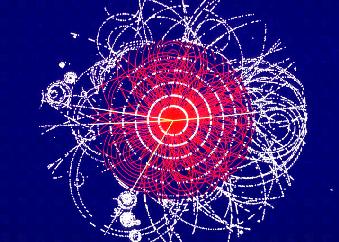 When I'm asked to record all of the science units we've done in a year, it's sometimes difficult. We do formal units like electricity or plants. But we also do a huge amount of what I've come to call "serendipitous science." Something comes up in class and we have a discussion or a mini-theme or, occasionally a full blown theme (to follow a great example from the Sequoias start with this blog then move forward). Last year, we had a great discussion of particle physics when they were going to try out the new super collider from CERN that was going to look for the Higgs Boson. Not all scientists, it seems, were convinced that the trial couldn't possibly end the universe. We're constantly answering students' questions with "Hmmm…how could we find out?" Our window sills are crowded with experiments at various stages (don't worry, no super colliders). Does this science "count?"
For the past two years, Prairie Creek students have scored significantly better than the state average and their counterparts in the Northfield schools on the science MCA. The test is administered on-line and really focusses on the process of science, not on multiple choice content. Students are given situations and asked how they would find out more. It's the kind of science we do almost every day. It's the kind of science that's very hard to get students to understand from a chapter in a science text book.
The hope is that students will be excited by the possibilities of science and will know how to approach a problem or question as scientists. I have no hope that any of my fourth or fifth graders really understands what a boson is but they're excited by the idea and they want to know more and they're learning how to answer their own questions. MM


 The Rookery