Ah, the child-created game. The latest outdoor game to pop up has been dubbed "human bowling" by the kids. During PE today, the Robins begin by clearing a long patch of ice to serve as the lane. Four students stand at one end and act as pins. Then other students take turns being the ball. The ball runs as fast as he/she can, then launches across the ice toward the pins. If the ball knocks over a pin, then that pin becomes a ball and the the ball becomes a pin. If not, the ball goes back for another try.
Now, if you're a parent or a teacher (or just generally concerned about the welfare of children), you might wonder why we allow this to go on. I have learned during my years here to hold back that first urge to shut something down without at least watching and listening (unless it's blatantly dangerous, of course). So today I asked for an explanation of the game, and it was explained in detail, with rules designed to keep everyone safe. No grabbing people around the legs, for example. I am always fascinated by the way the students seem able to design rules that keep their games fair, safe and fun. My class played this game for 40 minutes today, happily reminding others of the rules, taking their turns, calling themselves down when it was ambiguous, and generally having a great time. These skills have been developed over their years at Prairie Creek. Students also seem to have developed the ability to assess their own tolerance for this kind of activity. Students modulate their participation. Some of the "balls" ran more slowly and slid in with their backs to the pins. Others ran full tilt and put their shoulders down for maximum impact. The pins similarly knew how to participate up to the level of their skill and confidence. Not all students participated. Some chose to bury themselves in snow or slide down the drifts. Everyone was participating at a personally challenging level, and classmates were respectful of those varying levels of participation. One student enjoyed playing, but was a bit timid about being a pin. She tended to move to avoid the balls, which she understood was technically against the rules. She modulated by calling herself down when a ball made contact with her, and happily going to the line to act as a ball herself. The other students accepted this variation.
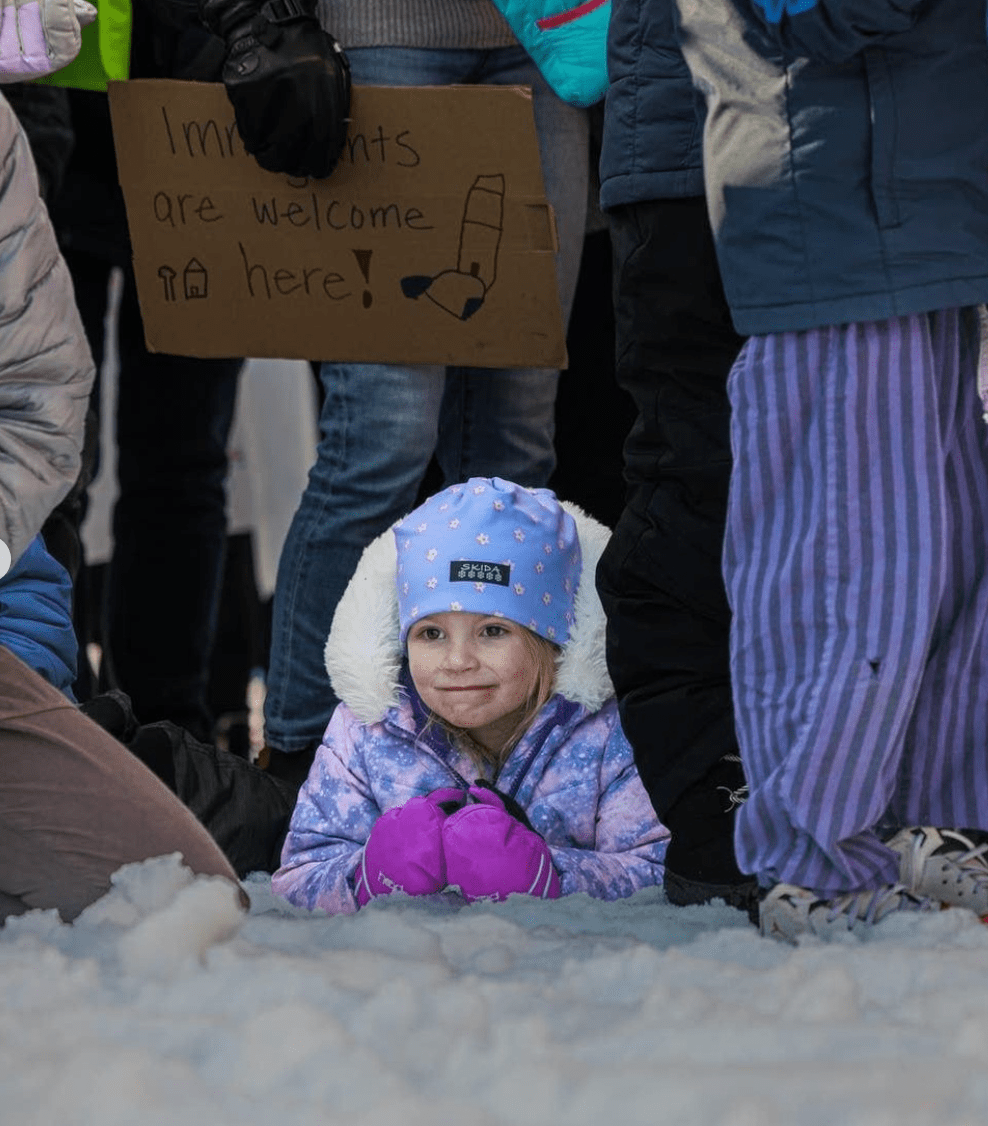
This game has been going on at recess, too, and we teachers are even more watchful when there are younger children involved. The playing area at recess is much smaller than the one the Robins used today, so the speed is slower, making it more accessible to younger children. During my observations at recess, I've seen mostly 4/5s playing, with a few third graders (and one kindergartner who was more than holding his own). As always, we teachers step in at the first sign that something is unsafe. But I think this game is a great example of the creative games that students will design when given the freedom to do so. – CTO

 The Rookery
Leave a comment