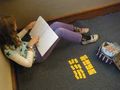
 Word work began today. Students meet with me in groups of 1-4 to do the sort. Initially, they work together without any guidance from me, trying to find patterns among the words. Gradually, I point out features and patterns in the words and we use that information to refine their categories. Finally, we come up with 2-3 new words that fit in each category. A day or two later, students repeat the sort as quickly (automatically) as they can. They then record their work (and the new words they've found to fit each category) in their word study notebooks.
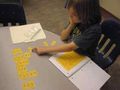
 One of the most challenging habits of mind for fourth and fifth graders is "metacognition" or "thinking about thinking." Word Works offers a great opportunity for students to learn about how their brain handles information and we talk about what's going on in their heads as they do the sort.
- Finding patterns by oneself – inductive reasoning forces one's brain to try out hypotheses and test them based on observation. The confused feeling that occurs during this kind of activity is an indication of the brain re-sorting its "schema" or information. New connections are being made between brain cells.
- Extending the pattern with new words – generalizing the patterns further strengthens the new neural connections. By tying the newly learned pattern to already familiar words, students strengthen their understanding and further secure the newly learned information in their brain's schema. The hope is that this new information will be readily accessible when they write first drafts (we talk about this, too, as it is a great motivator for kids this age.)
- Revisiting the sort independently later – again, accessing the information again in a new setting strengthens the child's ability to retrieve the pattern when writing.
- Working quickly on the re-sort – speed demands efficient organization of information in the brain. By asking the students to work quickly, they will hopefully be able to access the patterns automatically when writing first drafts.
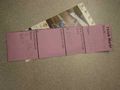 We also meet in book circles every Friday. Students use a "Think Mark" to record
 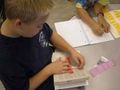 interesting language and author's craft they find throughout the week and then share it with a small group of peers on Friday. These casual book shares last only a few minutes but often spark good conversations about books as children make connections among the books they are reading and, very often, find new books to read based on their peers' recommendations.
On a completely different note. H.S. brought in a huge puffball mushroom today. It was the kind of share that creates an explosion of questions and excitement. After lunch, the Herons fairly quivered with anticipation as H. cut into the mushroom to reveal its innards. I took the puffball around to other classes and they were just as excited as the Herons.


 The Rookery
Leave a comment