Greece is hurtling forward at a pace that makes it difficult to stop and share what's been going on. I apologize.
First: How have we been spending our days? We began a month ago by receiving characters through whom we would experience the events between 520 and 320 BCE. Students did some initial research to get a better idea of what their life would have been like. Students sketched their houses, scanned maps to pick their locations, imagined a typical day, drew the tools they would use, named their children, picked a patron god and other activities that were part of their character's scrap book.
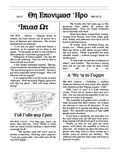 With that foundation we began getting editions of the Eponymous Hero (The Monument for the Eponymous Heros was the location in the Athenian agora where notices were posted and people gathered to gossip.) You can click on the link to download a copy of our second newspaper. I write these newspapers to highlight the things the students have shown interest in and make sure to weave references to them and quotes from them throughout the text.
The articles are dense and necessitate group reading — we discuss and react as we read together. I highlight the reactions different individuals would have had to the same event. This is key learning — history tends to be presented from a single perspective but it is much messier when it is actually happening. When differences of opinion arise, they see how complex the historical narrative is. After we read the paper, students respond to the news of the day in their diaries. Many also record the goings on in their rich imaginary life — full of children who won't listen and spouses who gossip to much at the agora. I am always amazed by the power of role play to transform a child's understanding of a different time and place.
Now, we are nearing the end of the golden age of Athens. Students are preparing to teach what they've learned to others. We continue to have special lessons — Rachel taught us about the aulos instrument, we played with syllogisms, we made a water clock, conducted a raucous assembly meeting debating the best god. We've read versions of the Odyssey and different myths, and our gym continues to be the very popular agoge training — but students are also researching and writing brief overviews of topics that have interested them. They're creating an example of a visual glossary, cutaway diagram or flow chart to share information and they're also starting to make plans for how they will teach at our Greek Finale. Our brainstorming sheet is bursting with possibilities.
Today a crew of volunteers worked to hammer out the outline of our play. (It's always exciting to hear fourth and fifth graders say things like, "I'm not sure if that framing device would make sense.") I'm going to work on a skeleton script this weekend so we'll have a starting point for revisions and expansions on Monday.

 The Rookery
Leave a comment