A recent discussion among the teachers regarding the Pledge of Allegiance lead me to reflect on how we prepare kids to be citizens at Prairie Creek. I realized that it might not be obvious to someone who didn't spend every day in the classroom how much time we spend on that preparation.
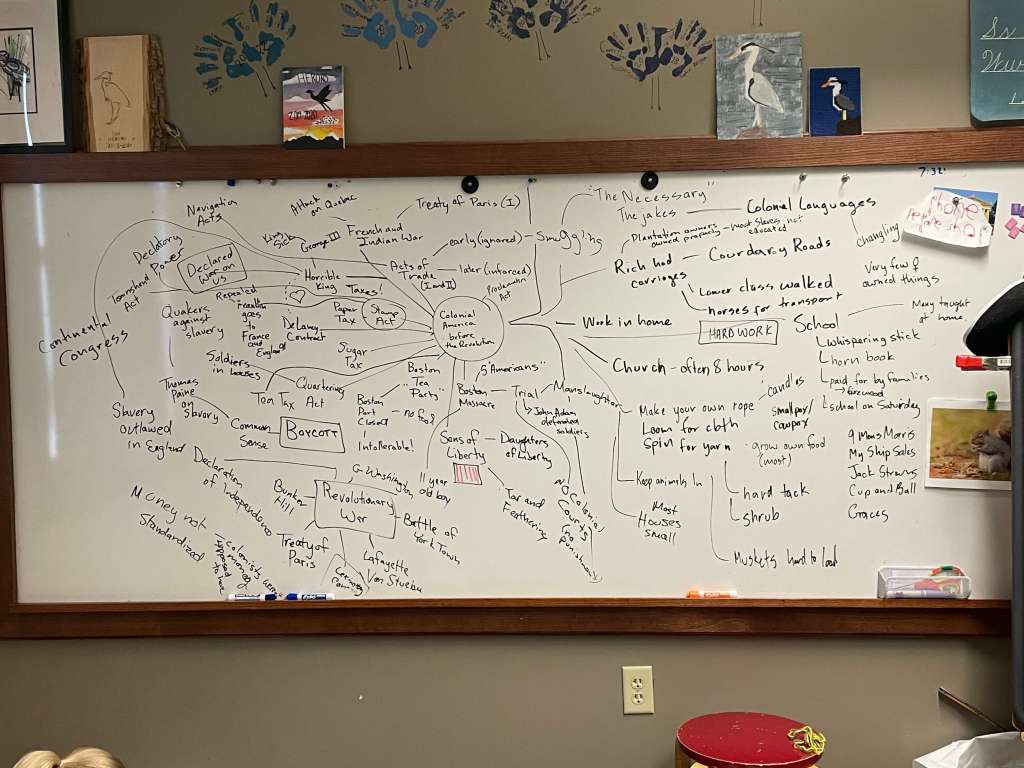
Some of it occurs in formal units: my classes have re-lived the events leading up to the Revolutionary War and then written the Bill of Rights based on their experiences ("We can't let them put soldiers in my house! I hate that!") We helped Simon decide to become a citizen and then helped him prepare for his citizenship test. We've polled voters as they came out of voting booths and had the results of our research published in the Northfield News. We've visited the state capital and I've taken small groups to talk to our legislators about charter schools. We've gotten involved in local issues such as the use of Way Park site and the "Northfield First" campaign. I almost always find a way to have kids learn the pre-amble to the Constitution or memorize part of the Gettysburg address. This year, we learned about the roots of our political system in the direct democracy of ancient Athens. And of course, every year in Village, students learn about how governments work and the cost of not being an involved citizen ("WHAT! I didn't vote for that! When did they decide that?! You mean I have to go to meeting to be a part of decisions?")
But much, much more of our civics curriculum happens through the conversations we have almost daily as a class. On Monday, with the inaguration of Mark Dayton, we had a great conversation about the wonder of the peaceful transfer of power in the U.S. We talked about Ivory Coast and the struggle that country is going through because its former president is refusing to step down. (There were many giggles as we imagined Tim Pawlenty holding onto his desk and calling out, "No! I'm not leaving!") Not surprisingly, the Herons had a hard time imagining a president not conceding if he had lost. We talked about corruption and about armies that choose sides — and we talked about the measures in our Constitution and laws that help to ensure a peaceful transfer of power.
Then, today the start of the Minnesotan legislative session was a great opportunity to talk about the three branches of government and the role of the legislature. We talked about the biggest challenge facing the state this year — the budget — and the different ideas that legislators had proposed. We also talked about what the state government currently pays for and where its money comes from. The Herons asked insightful questions about the economy (even connecting that, since people buy less (and lose their jobs in a recession, there must be less tax money that comes in.) That spurred a discussion about the Great Depression and several questions that I couldn't answer including, "Yes, but, where does the money 'go'? If people once had it, it must still be in the system…" While I could start on an educated guess, I didn't get much farther and we'd be obliged if one of you could field that one!
And so it goes. It is, perhaps, a more hidden civics curriculum than some — but my hope is that by making it such a part of the everyday fabric of our classroom life, the idea of being a connected citizen becomes second nature for our students.

 The Rookery
Leave a comment