The Big Birds have started our first rotation for math workshop. As a review, our math time has three main components: a "two minute math" routine that checks in on math facts daily; "foundation math", where kids work to build and extend foundational skills such as algorithms; and "math workshop", where kids are engaged in solving problems, explaining their math reasoning, and generally applying math to a variety of contexts.
For math workshop this time around, we've chosen the theme of money and we're using it to introduce/review decimals and percents, rounding, adding and subtracting, estimating, negative numbers (debits), among other things. The students are in three mixed groups (with Robins, Kestrels and Herons in each each group) that rotate among the three teachers for three-day lessons.
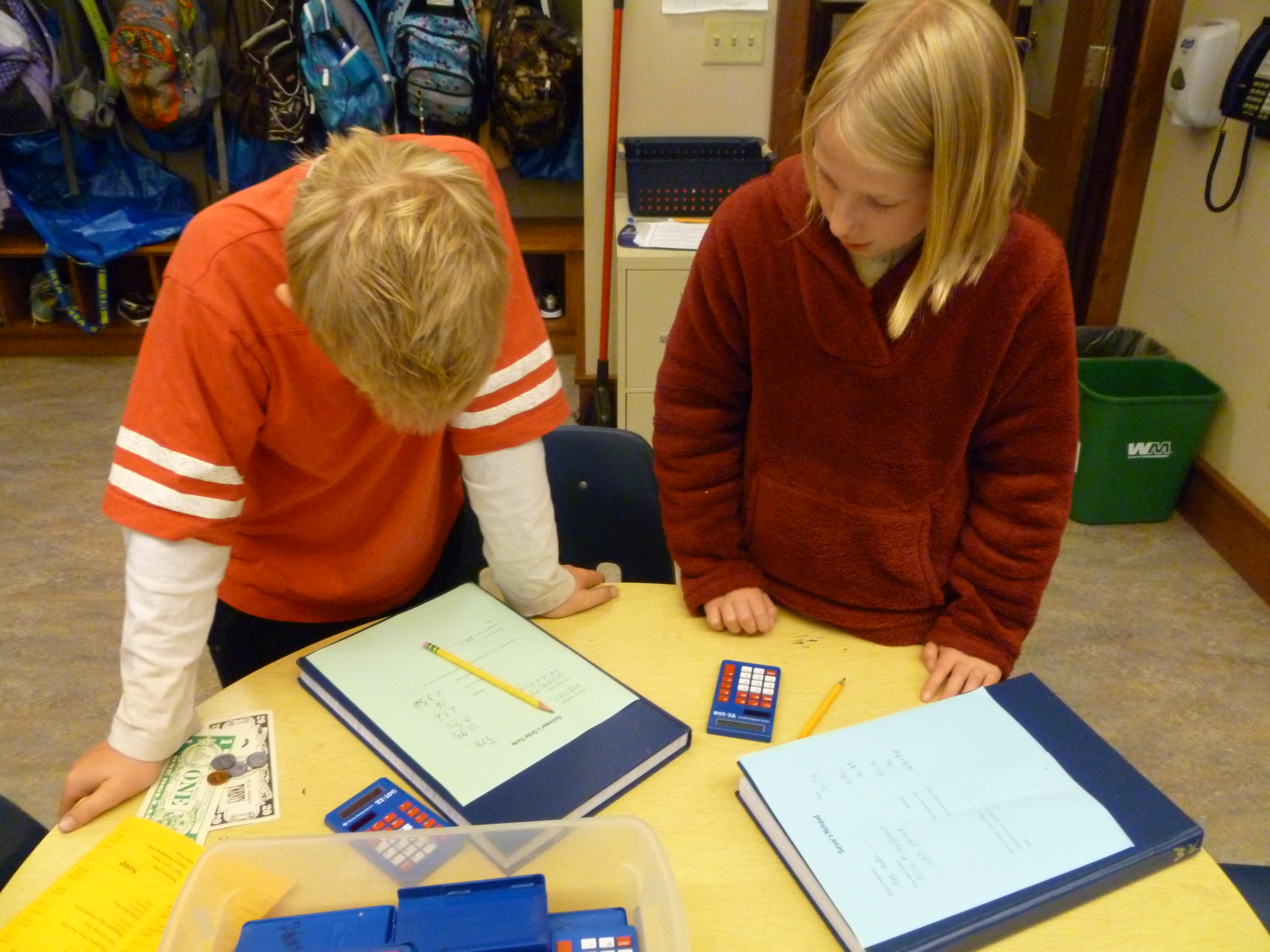
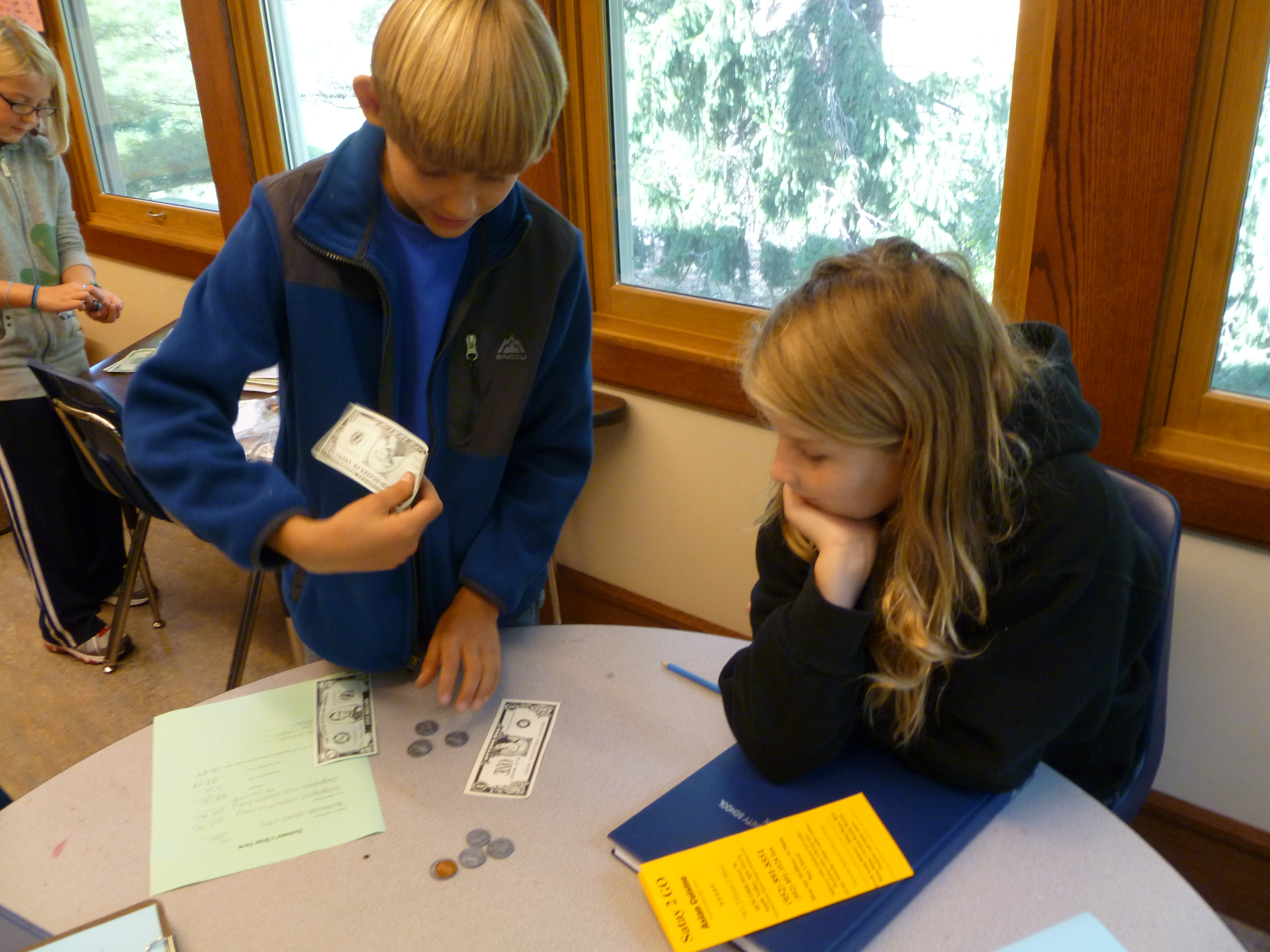
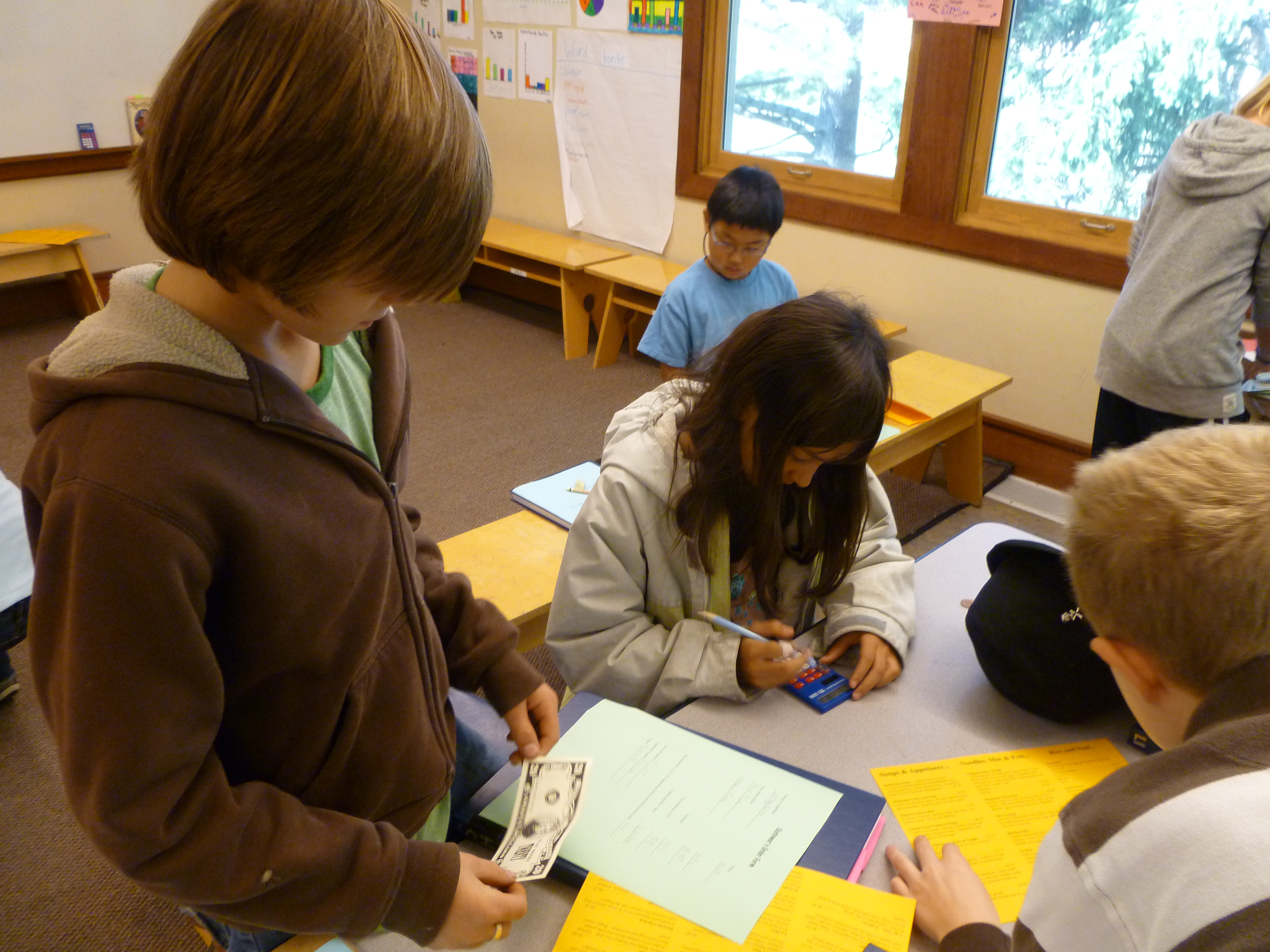
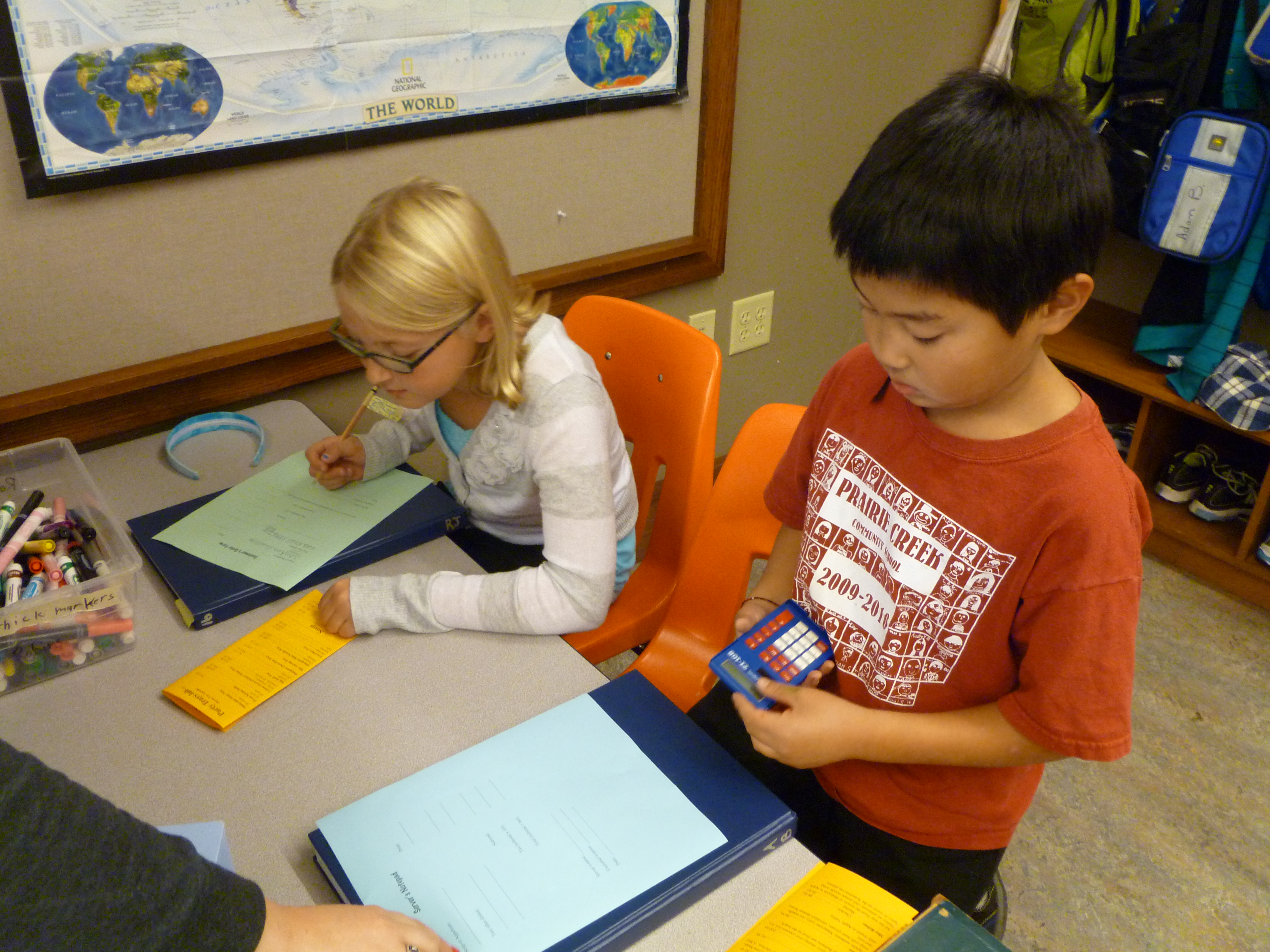
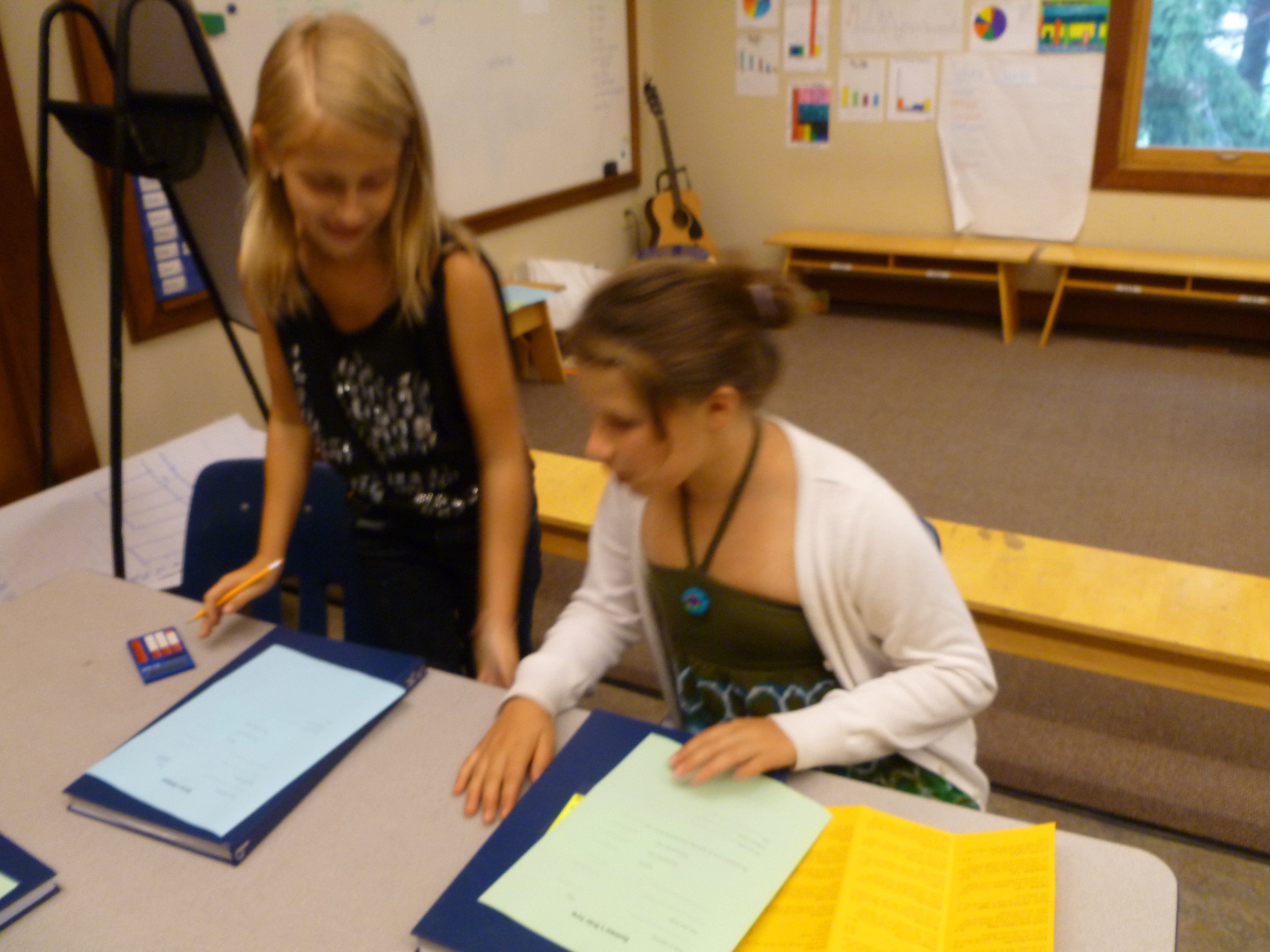
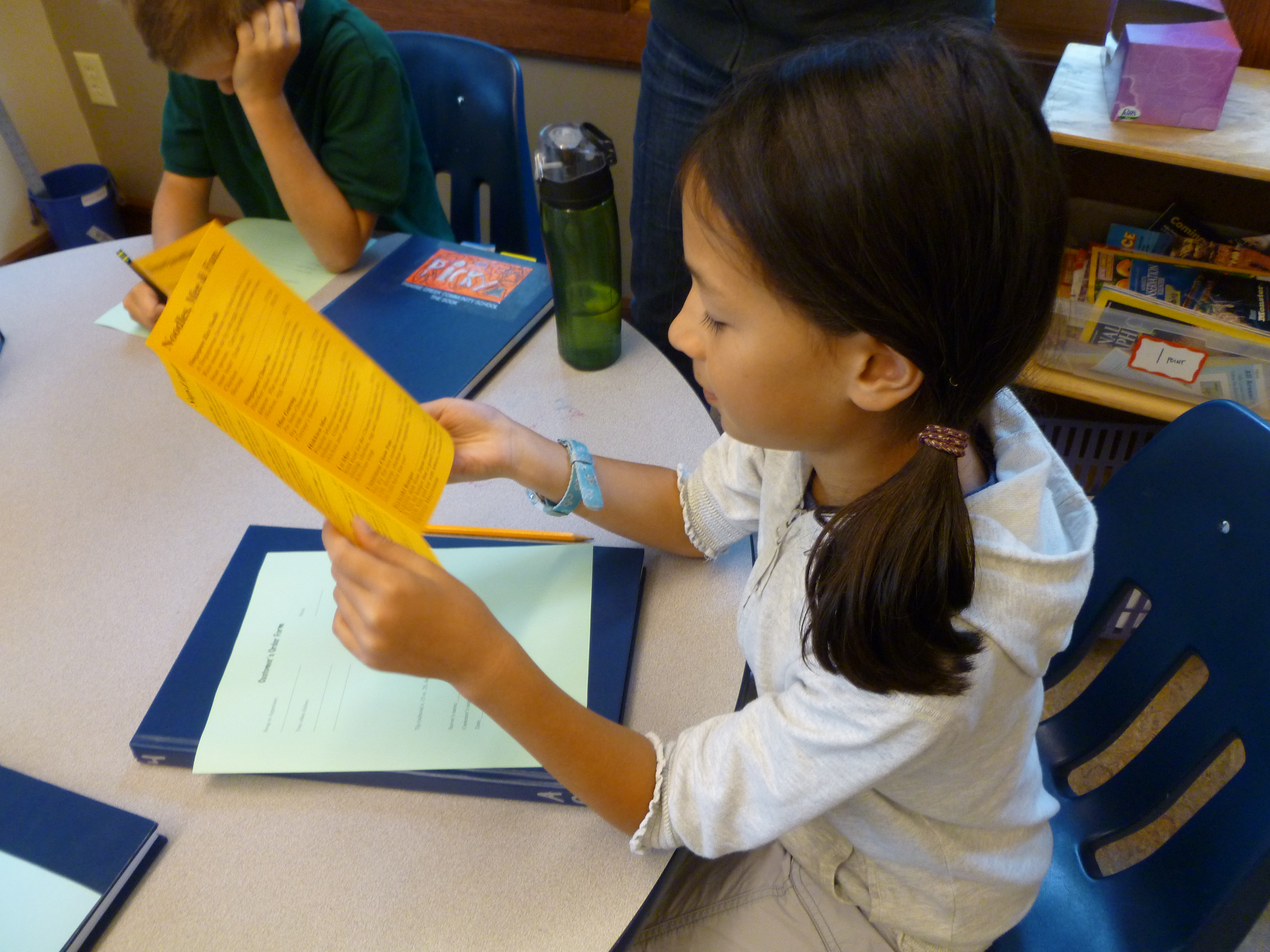
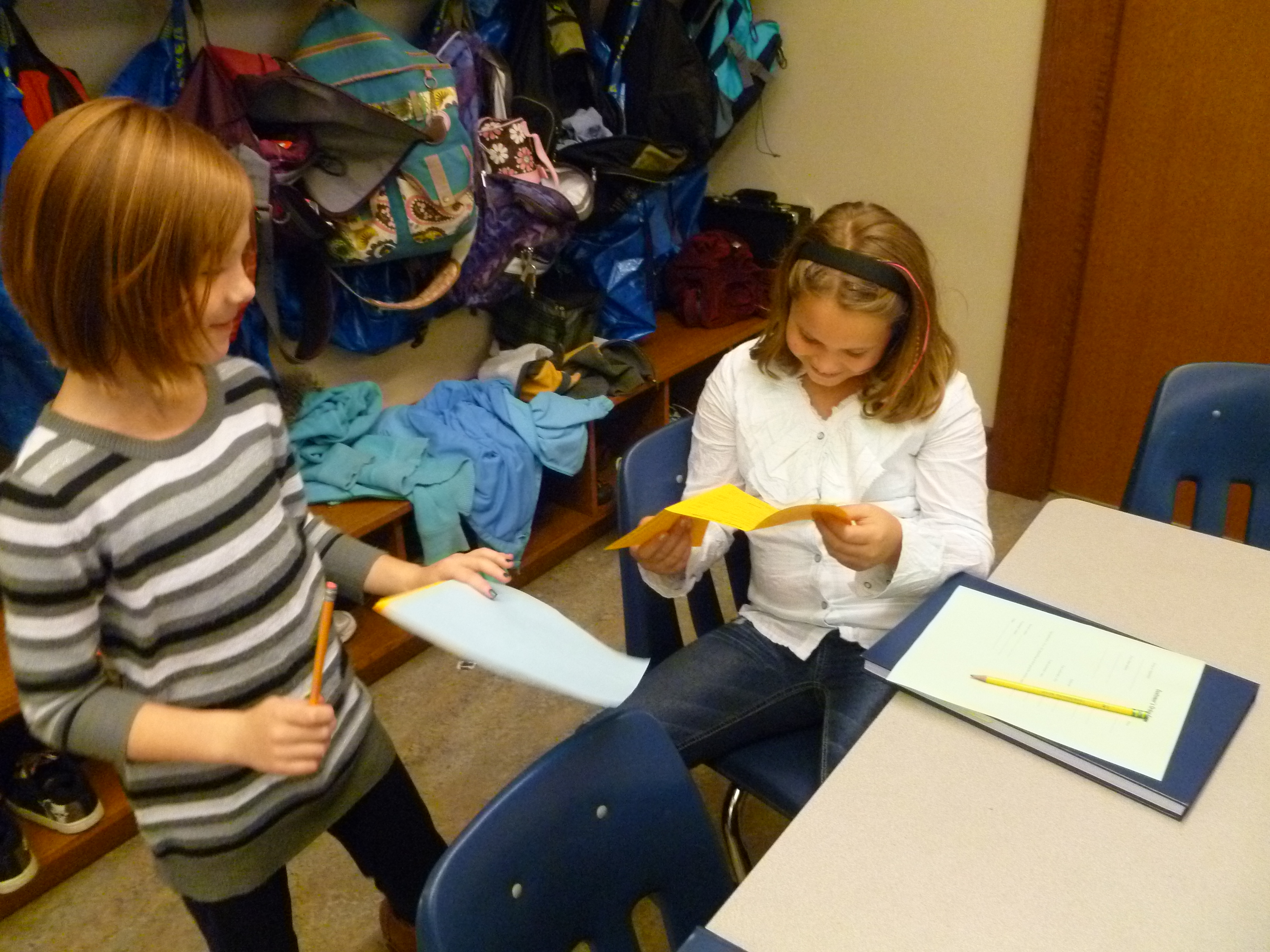
My lesson revolves around the skills needed in a restaurant. Working from the Satay 2 Go menu (I highly recommend this restaurant!), kids are taking turns being servers and customers. They place and record orders, add the total, figure sales tax and tip, then pay the bill and practice counting back change. Students are in very different places with their math skills, and a series of lessons like this allows them to work where they are. Students self-assess to decide if they need to use a calculator, and for what: most use it for calculating tax (we're pretending 5%, except for those who want the challenge of the MN general sales tax rate of 6.875%). Most use it only to check their addition, but not for the first try. Some students set themselves the challenge of running up the largest possible bill (there are some party trays available on the menu).
To structure the activity, I provided a "server's notepad" and a "customer's order form" that were nearly identical. This way, each student got two chances to try the math while getting some variety in the pretend play aspect. Most students reported feeling much more secure with the procedure on their second try. A few students did get to the challenge worksheets I'd prepared, and I overheard one student saying to his partner, "No, you don't need a calculator. To calculate 5% tax, you…" He went on to show her how to start with 10%, where to move the decimal point, etc.
One key to successful multiage math teaching is designing lessons that are engaging for students of varying skill levels that allow them to engage at different levels of difficulty. It's one of the challenges that I enjoy about teaching in a progressive environment. – CTO


 The Rookery
Leave a comment