 Two posts ago, I mentioned four things that I could be writing about. Since then, the pile of "to writes" has grown. One of the challenges of busy times at school is that it can be hard to stand outside of the fray for a bit to reflect and write.
SCRATCH — every time we have open work, the students ask if SCRATCH is an option. They really enjoyed their introduction to this programming language and I've enjoyed watching them learn. SCRATCH is designed in the spirit of progressive education. Students explore the tools they have in order to make the program perform the task they want to accomplish. Often, they share their discoveries with other kids who then build on them. I love doing programming with children because of the critical thinking involved. When things don't work, you have to analyze the possible problems, isolate and test variables, and develop creative solutions. It can be frustrating but when your little big of code makes the computer do what you want it to do it's extremely rewarding.


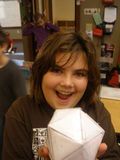
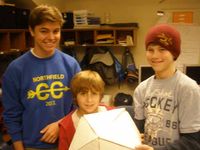
POLYGONS — We wrapped up our work in geometry by creating three dimensional polyhedra. We began by constructing prisms, pyramids and cubes from templates. Then we created our own nets (the flat version of a polyhedron that can then be folded into three dimensions). Finally, we made octahedrons and icosahedrons using equilateral triangles. Thinking spatially is a skill that comes easily to some and is very challenging for others — it gives us a chance to shake up students' perceptions of themselves as mathematicians.






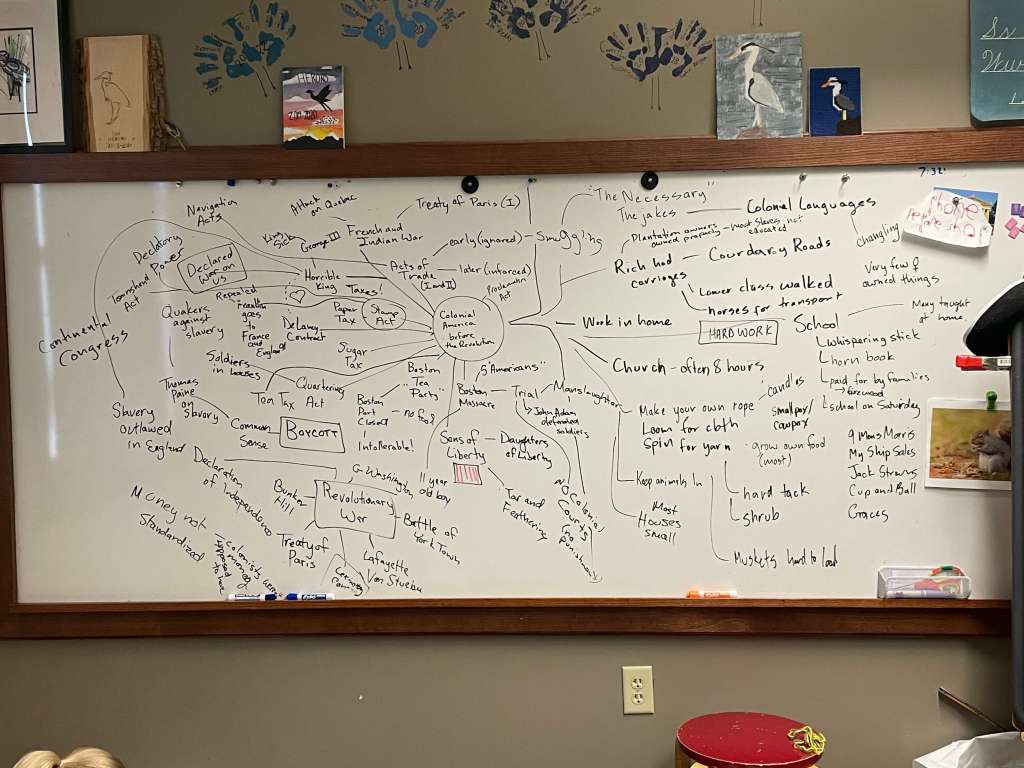
INDUSTRIAL REVOLUTION - Most days in theme now begin with a newspaper that shares the events of the day (or the past several years — as I explained to the students, exciting events don't happen every day). Right now, the War of 1812 has just begun and students were very upset about impressment. I ask them, as much as possible, to view the events that are "happening" through the eyes of their character. This gets easier as their understanding of the time period builds up and they become more at ease with the imaginative work of role play. There are no right answers and that can be difficult.
The newspapers share a lot of information and events that students won't see again until they take AP American History. I don't expect them to master all of this information, indeed as 21st century learners, all of these dates and facts are only a key stroke or two away. Instead, I want them to grasp the complexity of the time (of any historical period, for that matter) and I want them to understand that every event is perceived in many different ways by the people who live through it. On Friday, I polled the students about the War of 1812. About 2/5 were excited we were going to war "and showing the British they had to respect us." About 2/5 were nervous about the war and afraid that we might lose or that their businesses might suffer. About 1/5 weren't sure how they felt. They could see both sides. Exactly.
Some of the other key learning for this unit:
Key Learning:
- Advances in technology fundamentally changed the human experience beginning in the early 1800s.
- As more people began to earn money, social structures shifted often causing conflict and unease (Great Awakening, Women’s Rights, Abolition)
- One’s perception of historical events depends on one’s class, education and geographic location.
- There are many different interpretations of historical/political events. There is no one story.
- Primary sources provide insight into people’s perspective
- The shift from an agrarian to an industrial economy occurred in the U.S. in the 1800s (It occurred a bit earlier in England and is still occurring in developing countries)
If you want to take a look at a newspaper, here's Download 1807_Newspaper.
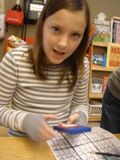
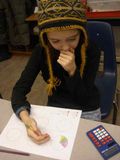
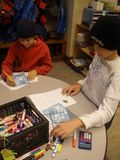
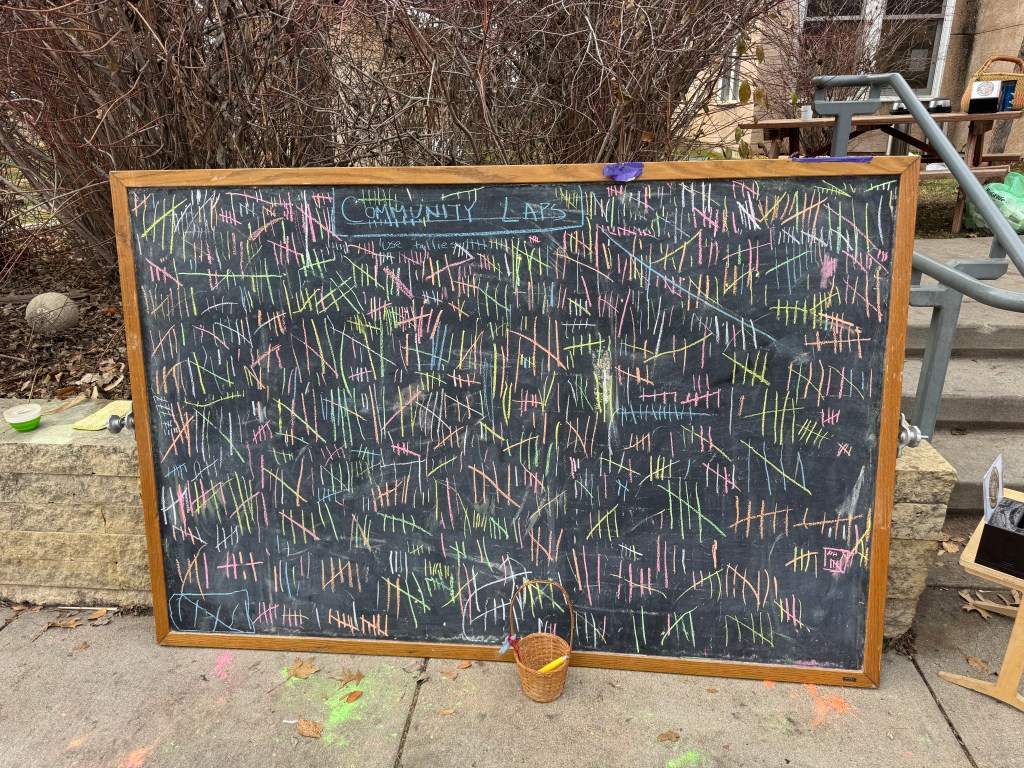
We're also blending a lot of math and science into this theme. On Monday we collected data about the how many people in 2011 have skills that would have been universal in 1811. On Wednesday we collated that data, grouping data by age and gender. What we ended up with was a white board full of tallies — not very useful for seeing trends and drawing conclusions. On Friday, students began turning that information into fractions and then percentages that could be graphed. Suddenly, relationships started to emerge. As students handle data, it's important for them to really understand why we create graphs and which graphs are useful for different types of relationships.

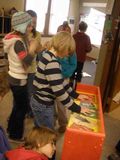
THE RETURN OF THE BOOKCASE – Devyn Gardner is now a high school student but when she was an Elm, her class made a bookcase decorated with their favorite books and it was put into the school auction. As she got ready to head off to college, her family contacted me to see if I might want the bookcase back in the classroom. Of course we did. When it arrived, the students crowded around it, exclaiming at all the books they had in common with their predecessors. Connor, our beloved high school volunteer, pointed out hish contribution (Coraline) and we're still trying to figure out M.K.'s sister Gabby's. Of course, the Herons would now love to make their own bookcase. Anyone out there good with decoupage?


 The Rookery
Leave a comment