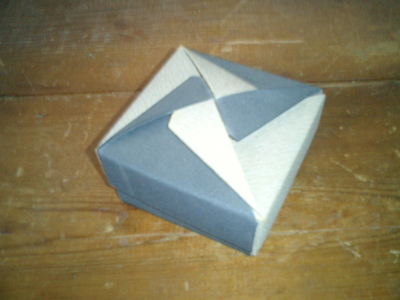
 Today we experienced the factory model and interchangeable parts first hand. I broke down the instructions for an origami box into individual folds and had students work in assembly line fashion to complete the units.
Each child had a single fold to complete and then passed the unit along to the next child. In the end, we assembled them together. Our goal was to complete 10 boxes in half an hour (typically, a new folder takes about an hour and fifteen minutes to complete a box.)
The Herons never shy away from the challenge and soon the room was buzzing. There was only one challenging fold and as the pile started to grow in front of the children assigned to that fold, tensions rose. In the Lowell Mills, workers would move from simpler jobs to more complex ones over time but the Herons didn't have that luxury.
At the end of a half hour, we had the units ready to assemble over 30 boxes! I decided to do assembly together as a group and we had a chance to talk about the experience:
Feelings — "It was fast," "I got confused" "I was angry" "Despair" "Frustration" "I felt competent" "I felt confident because I could do my fold well." "I felt overwhelmed." "Once I figured out what I was doing, it was exciting!" "I could do it all day." "I'm exhausted."
Observations: "I got to take a break sometimes but the kids at the end of the line didn't" "We needed more training." "Some of the folds weren't made carefully — we needed quality control." "There was a focus on speed" "I didn't know what we were making" "I didn't have an idea of our final product."
While most of the Herons worked in our factory, S.W. toiled away as an artisan box maker. He created one box from start to finish, carefully picking out matching papers. When I saw him at extended day, he was teaching a few other children how to make the box, inadvertently modeling the apprenticeship system.
The benefits and drawbacks of the factory model were clear to the students. We were a lot faster than the artisan — our boxes could be produced more cheaply. However, none of the students knew how to make a whole box (I'm doubting any of them excitedly showed you how to do his or her fold this evening). And, because they were disconnected from the finished product, we had a lot of quality control issues (read: sloppy folding) that weren't evident in the artisan made piece. Many students found the whole experience stressful, while they usually find origami as a relaxing pass-time.
Today we talked in a qualitative way about the differences between the two systems — on Wednesday's problem of the week we'll quantify the differences.


 The Rookery
Leave a comment