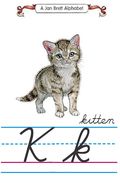
 As a tangential part of our industrial revolution study, I have begun to teach/review cursive letter formation. I often write the morning message in cursive so that students become more comfortable reading it, but I'm ambivalent about taking large amounts of class time to teach cursive handwriting. At least when I was in school, cursive was a huge part of how we spent our time — frankly, we have a lot of other things to do.
However, it can be a useful tool for students to learn, especially when they have poor manuscript writing and have manuscript writing habits that are hard to break (like forming letters from the bottom up which is a harder movement to control and can lead to illegible hand writing.) Students get a fresh start with cursive.
They're old enough to understand why I'm asking them to form letters a certain way. When students learn to print, the reasons for letter formation can seem arbitrary, especially if a child writes a lot before school. As fourth and fifth graders I can be explicit: cursive is a way to write quickly, clearly and in a small amount of space. One has to have enough practice for one's muscles to remember how to make the letters, otherwise, one is laboriously drawing each letter. I also explained that I would watch their work carefully because if they are not making the letters correctly or neatly, they were wasting their time and giving their muscles bad habits.
Much to my surprise, the Herons have been loving cursive instruction. They clamber for the next letter  and are disappointed if I haven't found time in our schedule. So far, we've covered a, e, d, l, i, and t. If your Heron would like to work on cursive at home, please keep an eye out to ensure they are making letters in the correct way and not drawing them or adding extra swoops and loops. Pages and instructions are in the "Mastery Matters" list of links on the right side of this blog.
Who knows, maybe soon we'll tackle some Spensarian hand. (See image to the right).


 The Rookery
Leave a comment