 Today was a special day in the Herons. For weeks the fifth graders have been pestering me, "When will you give us our mentees?" Last year, they were guided through their personal projects by a fifth grader and now they were eager to pass on the knowledge they learned.
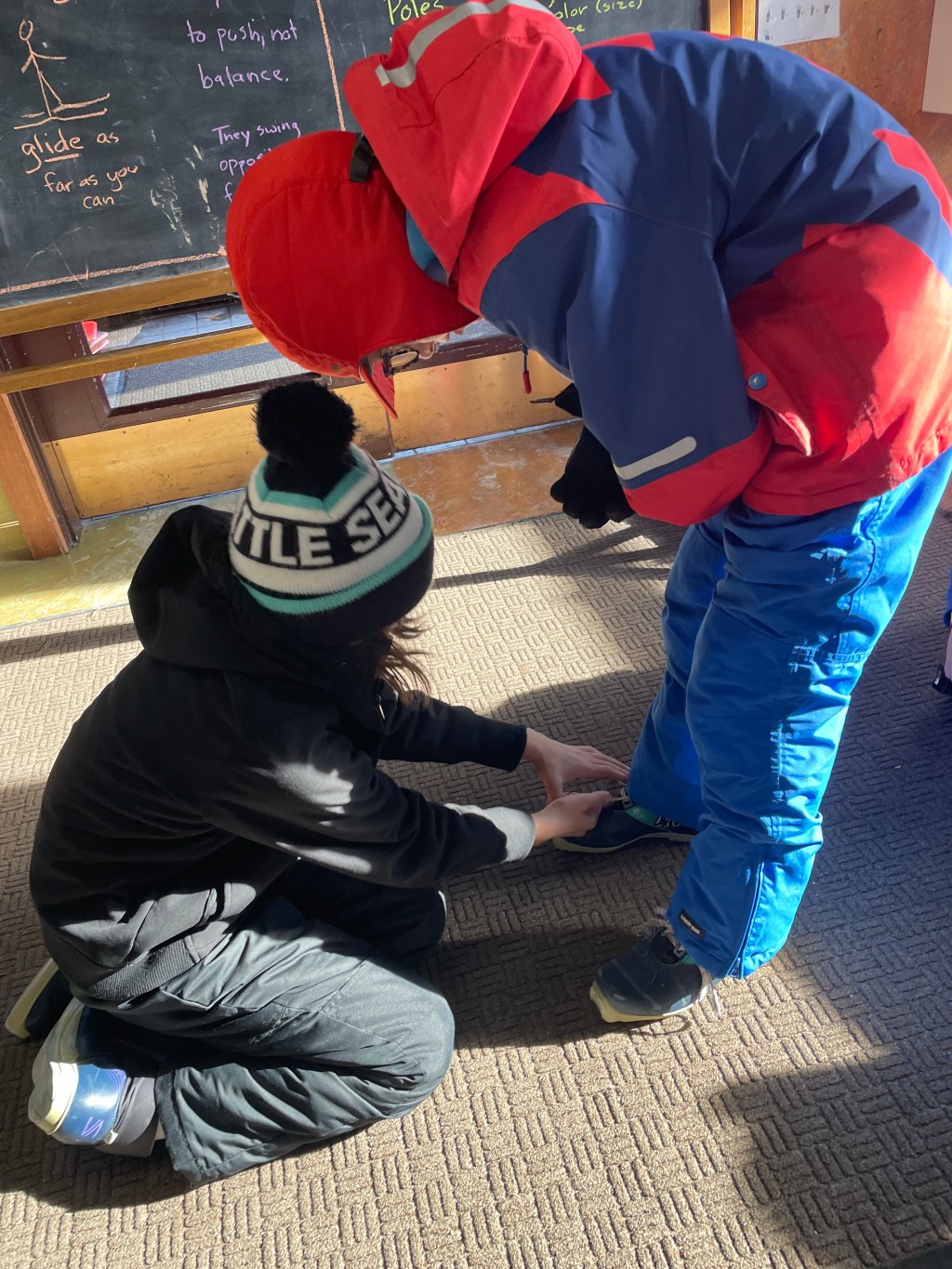
I gave the fifth graders their mentors this afternoon and the new pairs greeted each other almost shyly. For each group, I shared a little about why I had paired them — sometimes it's a familiar partner but often I've chosen someone new, but someone with whom I think he or she will have an affinity. Many fifth graders experience the same thing with their adult mentors – it's often someone familiar but someone with whom they'll be working in a whole new way.
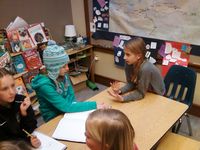 The task for the day was to pick a topic and begin to identify key questions. We do this using a "know and wonder" chart. Not all topics are created equal and we talk about the criteria for a good topic and the depth with which fourth graders are expected to study. Some topics are too well known and students have hardly any questions they wonder about. Others are too unfamiliar and students have a difficult time forming questions that move beyond the very basic.
We code questions in three categories. Dot questions can be answered in a sentence ("How tall is the Burj Dubai?") A dash question can be answered in a paragraph or two ("How do the elevators in the Burj Dubai work?) and a star question requres multiple sources ("What were some of the key challenges that shaped the design of the Burj Dubai and what impact did those challenges have?")
 A key insight for the students today as I was modeling with my won topic was that some questions could expand or contract depending on how deep you want to go. I am studying vikings for my personal project this year and one of my questions was about the language they used. M.K. pointed out, "You could spend your whole life studying the language of a society and how it changed over time. Or you could just learn some simple phrases."
It was a great opportunity to share a metaphor I really like to use with kids when we talk about research. It's a journey. We are beginning and we have a very basic map, but we'll start to fill it in with more details as we move through the landscape. We may find some dead ends, we may find some promising new paths. I may find a few great resources on language and find that it opens up a lot more questions and I end up shifting my focus to just that. On the other hand, I may find that it's just too complex a topic and I want to touch briefly on it and move on to something else. It's not a finite process. Good research engenders more questions.
 Topics in the Herons (right now) include: Studio Ghibli, The Big Bang, Honey, Dissection, Spanish Mustangs, the Bermuda Triangle, Japan, Glass Blowing, magnets, Falabella horses, the Terra Cotta Warriors, Pascal's Triangle, Apple Computer, Painting Techniques, computer programming, conducting, play directing. (Whew! That was from memory!)
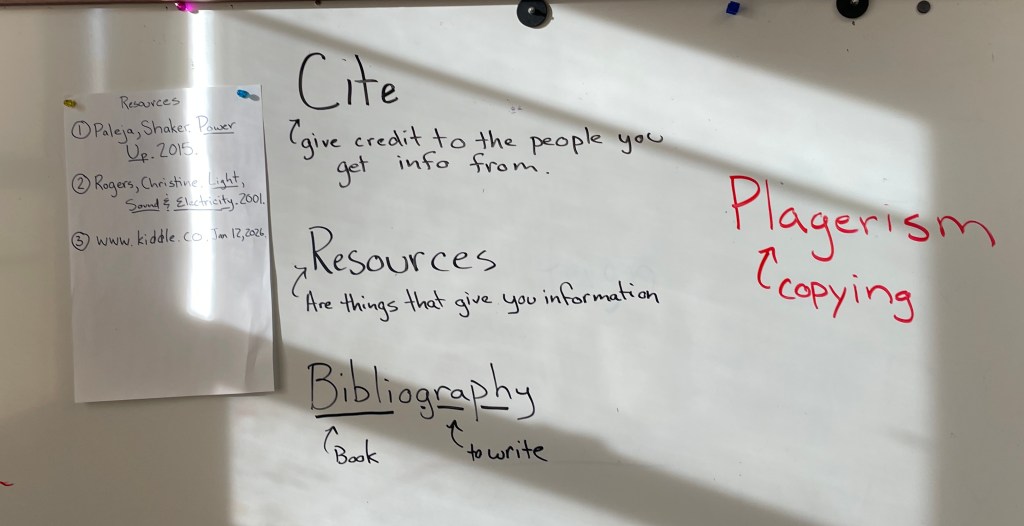
The process the fourth graders will be following mirrors the honors project completely but on a smaller scale. We will use the same note taking process, keep track of our sources, organize our research, and share what we've learned through writing, speaking, creating and engaging our audience in a hands on way. The fifth graders present their research for up to half an hour — fourth grade presentations are 10 minutes.
It's always exciting to see the students become experts and teachers — I always learn so much from them.





 The Rookery
Leave a comment