
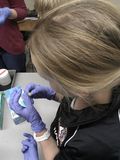
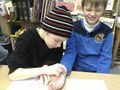
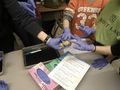
Besides touching eyes and brains, we explored our sense of touch in other ways. Getting to poke your friends with the end of a paperclip (with a teacher's permission!) was entertaining in itself. Through this experiment on touch, the students learned about receptors and what parts of our bodies have more receptors and which parts have less. It was an experiment that took a lot of precision, careful poking, and measuring in millimeters. They took their time and were diligent in their efforts to find the most accurate results.
 Things were a bit smelly around here on Thursday (in addition to the smells wafting from the Kestrels' classroom where the floor was getting cleaned and polished, which marked the completion of their classroom reconstruction. Hooray!). The students explored a variety of smells by having to guess what they were and whether or not they thought they were edible. Many found the shampoo, dish soap, and apple to be appealing smells, but turned their noses up at the kimchi, perfume, and vinegar. Simon even got in on the fun of "What's that Smell?" (much to his dismay when he smelled the mustard).
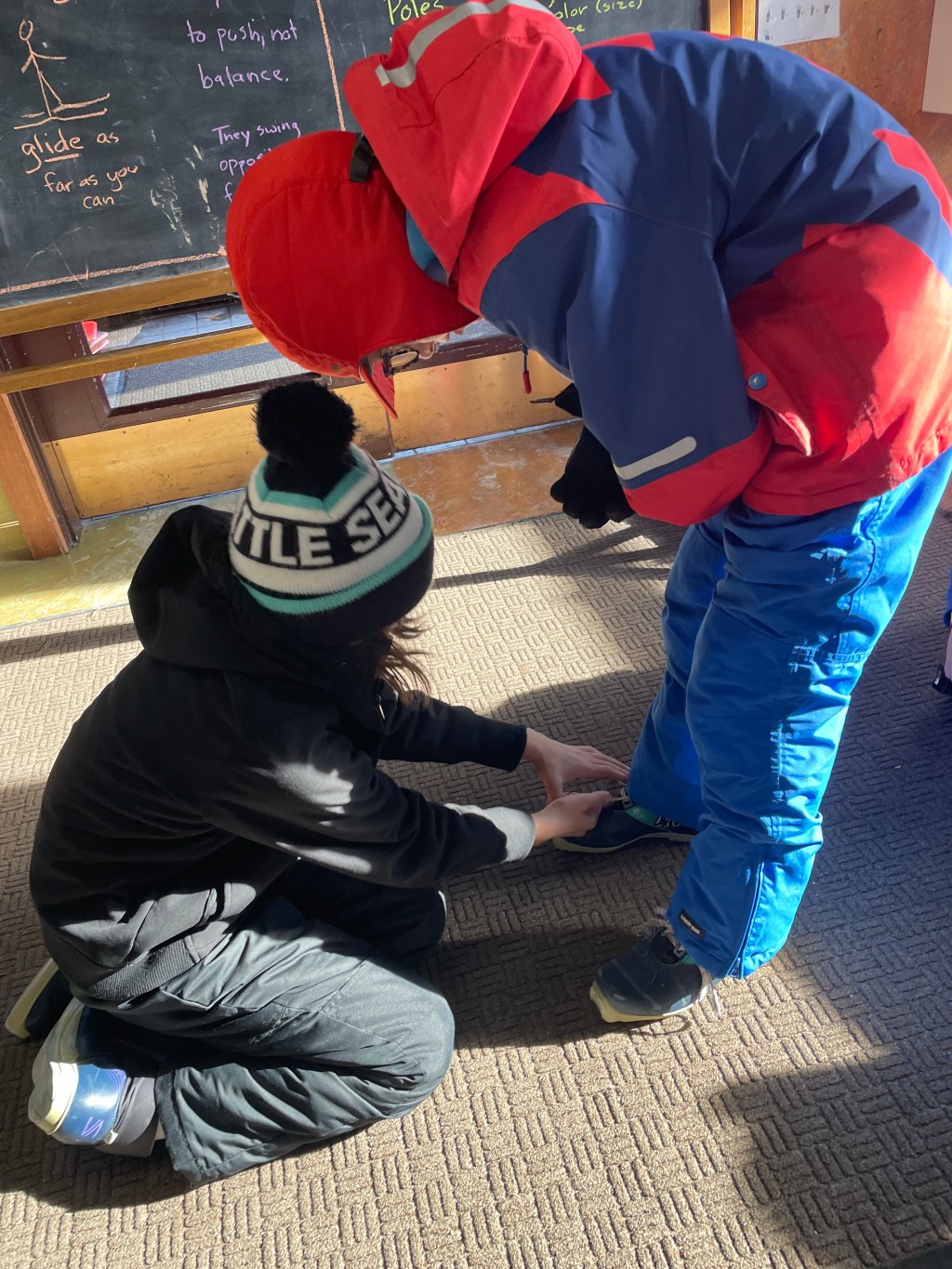
 On top of all the fun exploration and study of the senses, we took advantage of all the newly fallen snow and went cross-country skiing yesterday afternoon. The only complaint I heard was our skiing time wasn't long enough. I saw lots of habits of mind in play during our ski – persisting, striving for accuracy, taking risks, and finding humor. Falling over as you ski down (and up) the hill calls for humor and persistence!
The creative juices were really flowing during our poetry study. Teaching poetry to young children is one of my favorite things to do. I always get the initial groan from kids when I say "poetry", but then quickly the children's attitudes shift 180 degrees. Then I sit back and observe with wonder and awe at the beauty these children create through their words. It really is amazing the profound thoughts and images young children can express through their poetry writing. We incorporated poetry into our theme of the 5 senses by writing color poems and describing a color through every one of our senses. The children learned about and did a lot of practice writing similes and metaphors. We discussed what makes a poem interesting and meaningful. The poet needs to: show and not just tell; use figurative language such as similes, metaphors, and personification; use vivid, colorful adjectives and interesting and creative adverbs; avoid dull, over-used words such as big, small, nice, pretty, good, and fun.
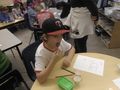 Today we tested our taste buds. Placing drops of sugar water and salt water on different parts of the tongue revealed where certain tastes are strongest. Students concluded that eating ice cream with the tip of your tongue would maximize its sweetness. But, what better way to wrap up our week than to eat jelly beans. The students did one final experiment where they plugged their nose, ate a jelly bean, and tried to guess the flavor. Sound easy? Find out for yourself next time you're snacking on jelly beans.
 Gabe and I had a wonderful time with your children this week. They are creative, inquisitive, playful, and confident. As the week progressed, I saw them come together as a whole small community as opposed to 3 separate classrooms as they did at the beginning of the week. Having this opportunity for the 4th graders to be the biggest birds in the school for a week was an honor for them and one they celebrated.

 The Rookery
Leave a comment