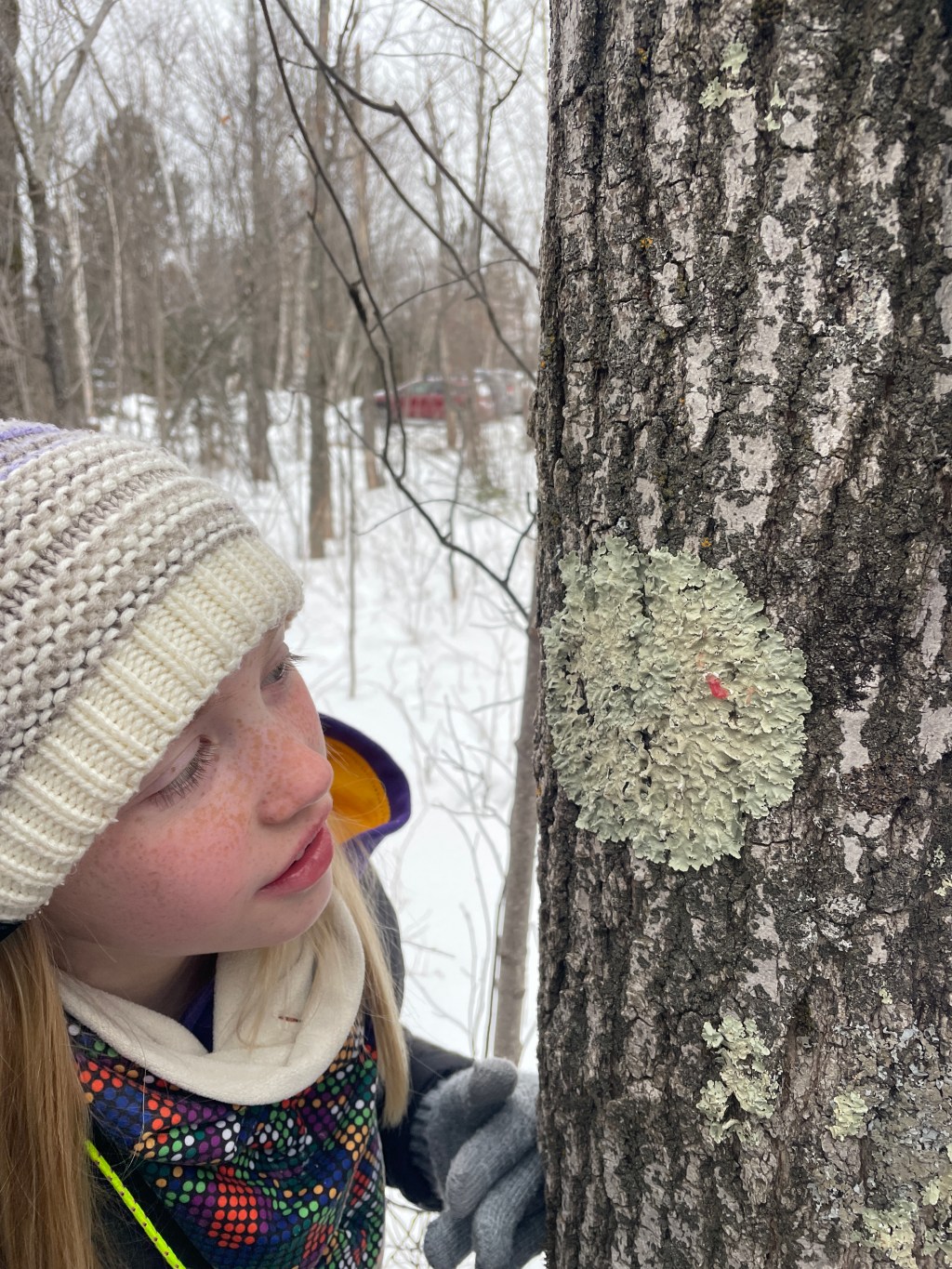
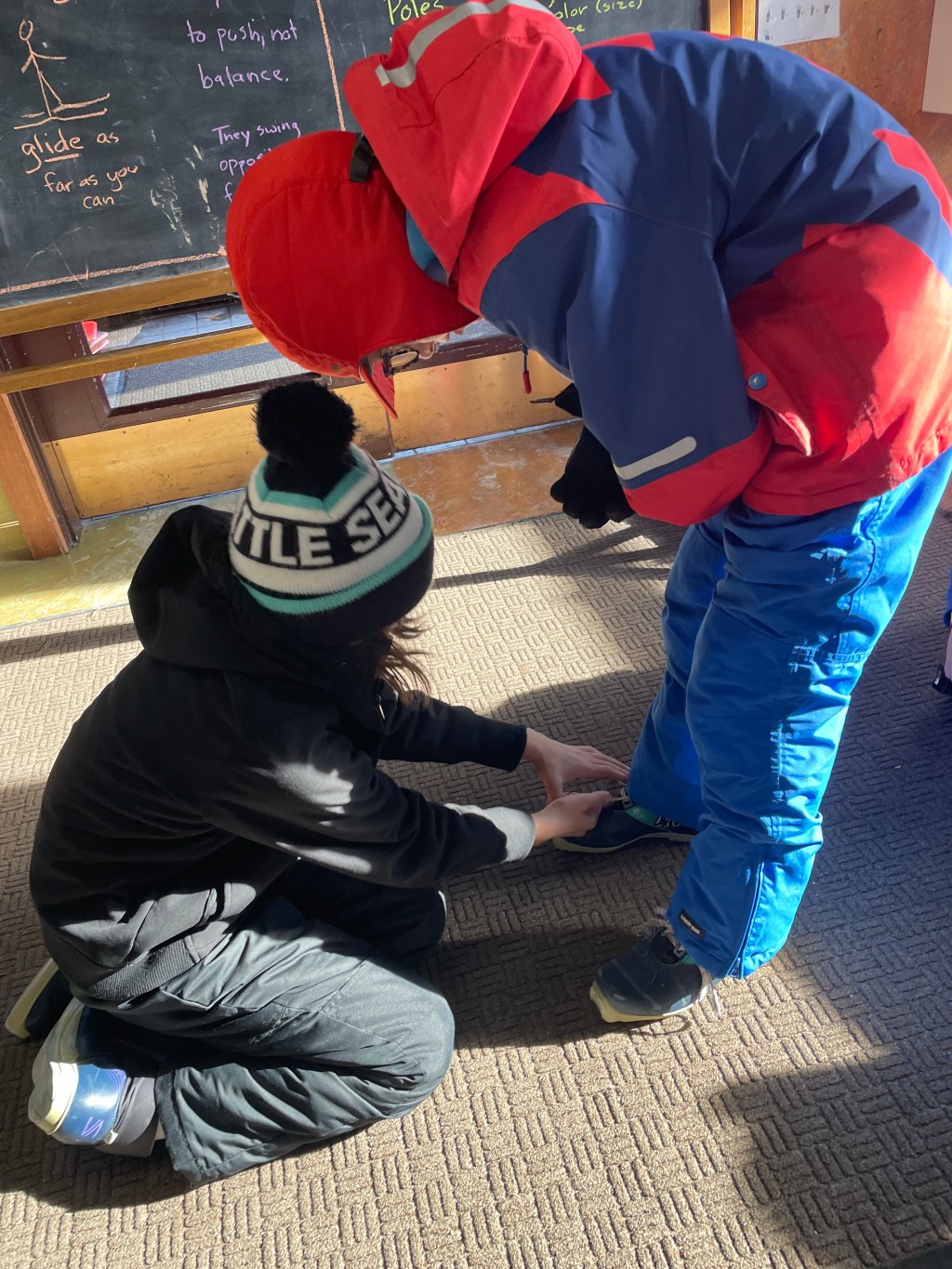
We have gotten to the sweet spot in the year when getting the skis on and hitting the slopes (well…slope) can happen during our regular PE time. The Herons are experts at getting into their skis by themselves and they are capable enough to get a fair amount of skiing in during a half hour.
On Monday, we took advantage of the new snow and headed out to the far end of the fields. The slushy bits proved very interesting to some students. Others practiced their down hill skiing, perfecting their balance and, in some cases, finding ways to head down hill cooperatively in trains.
Today we headed out again and had a great time at the hill nearest school. The students set goals before we head out — some work on their gliding motion, others work to get into their skis independently, some work up the courage to go down the hills, others work on using their poles more efficiently. Setting goals has become a regular part of our PE practice this year and I've found it's really accelerated students' growth. They are able to identify key skills in an activity and they work diligently to improve.
Cross country skiing is one of my favorite PE activities because it is truly a life long sport. Many Prairie Creekers participate in nordic skiing and getting started early will ensure this is an activity they can comfortably engage in for many, many years.
Here are two videos of us – shot on my antiquated cell phone.
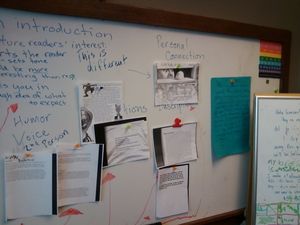
We had a great mini-lesson today on introductions. I shared 9 different introductions from old Honors Projects, magazine articles and non-fiction books. We categorized the introductions by the "author moves" they used — questions, interesting facts, rich description, second person, humor, unexpected information. The students developed the categories we used. Then we identified the purpose of an introduction — to bring the reader in, to set the tone, "it's an appetizer, it gets you hungry," it shares a little information but not too much, it lets you know what to expect.
I couldn't have come up with better categories and ideas — and that's the point. Using inductive reasoning is a powerful tool. Instead of being told what a good introduction is or does, students develop these ideas for themselves. The cognitive work involved in developing categories is much more engaging than simply memorizing categories someone else has made up. Because students have done the work of organizing the information within their heads, the work is much more meaningful.



 The Rookery
Leave a comment