Personal Projects
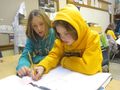
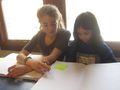
Just before winter break, the 4th grade Herons received their 5th grade mentor. During the 4th grade projects, the 5th graders shepherd the 4th graders through every step. We do mini-lessons together and then the 5th graders support the 4th graders as they attempt this kind of research for the first time. The 4th grade project mirrors the honors project so the 5th graders are also receiving valuable review that helps them do their research more independently.
Before we got our mentors, some of the 5th graders wanted to review what "good mentors" do – they had a lot of opinions from their experiences last year. They created a list — and, as usual, I learned that I couldn't have articulated better than they did. And, since it came from them, it has a lot more power than a mandate from me would have. Here's what they said:
5th Grade Mentors should:
- Give recommendations
- Support – don't do it for them.
- Persist, even when it's hard
- Be professional (not personal)
- Ask good questions
- Find some info
- Remind them it's not all about answering questions
- Attach, pay attention to mentee, be friendly
4th Grade Mentees should:
- Stay with your mentor
- Remember the 5th graders want to help you and expect to help you
- Go to your mentor first
- Be kind to your mentor
- Do what you can — don't get your mentor to do things you can do.
- Support your 5th grader, too
- Keep an open mind, listen to suggestions
- Don't goof around

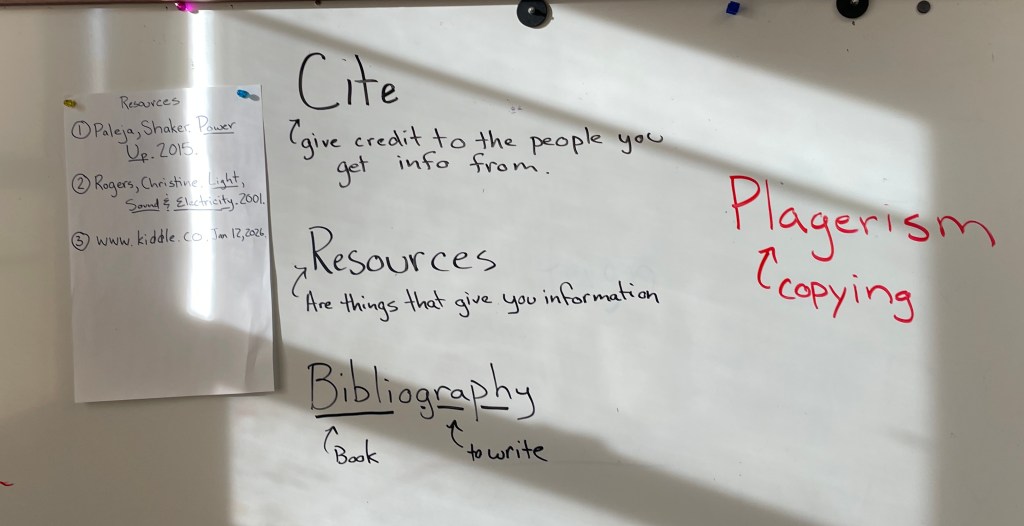
 So far, things are going beautifully. All of the 4th graders have a topic, have written good questions and have grouped the questions into categories. Everyone in the class has had some detailed lessons on how to take notes. Today we learned about how to avoid plagiarism and how to keep track of resources. Fifth graders also learned some tricks to having successful Internet searches. The 4th graders don't need that lesson quite yet because I provide a selection of pre-screened websites for them to use (many thanks to Kerry Hanifl for finding the websites). Whew! Onward.
(remember, you can click on a photo to make it bigger!)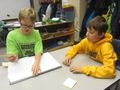




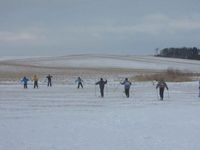 It's Ski Time!
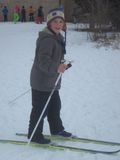
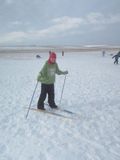
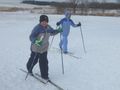
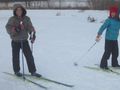
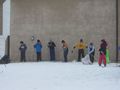
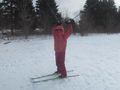
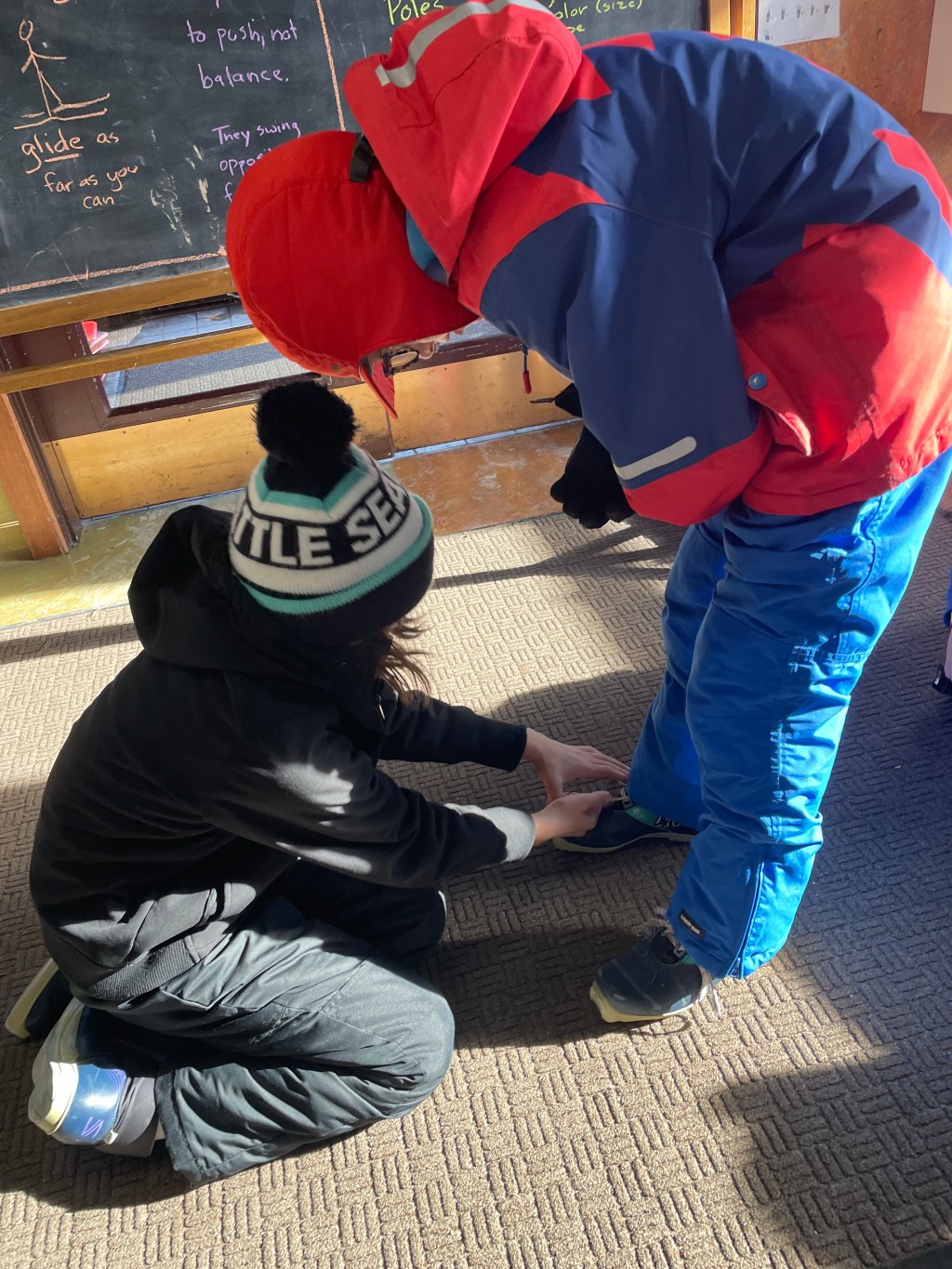
When I downloaded the photos from my camera, I realized I hadn't shared with you that we had been able to get a few cross country ski outings in before break. The Herons and I are working to stremaline our system but on our last trip outside, it only took us 5 minutes from the time we left the classroom to when we all out and skiing! Because 4/5s are so capable, we're able to make skiing a regular part of our winter fitness routine.
Skiing takes a lot of persistence. I always share with the students that I hated skiing the first dozen or so times I did it — and I didn't feel that I was O.K. at it for several years. They have to be willing to take risks. They also have to remain open to new learning. I am not content to let them just shuffle along. Once they've gotten used to shuffling, I begin to help them hone their technique so that they can begin to glide and balance. I insist that they be able to glide before they use poles and, when they do get poles, they must learn to use them correctly. Working with them on technique ensures they will gain the confidence and competence they need to truly enjoy skiing.




Headline Math
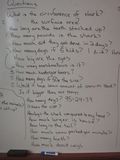 I am very excited about a new math exploration we've begun. The idea is a routine from the Think Math! Curriculum (PCCSified, of course). Some of their journal pages have a made up "Headline" and students are supposed to create a word problem or two from the information in the article snippet. We have been doing it with real news events such as the Dubai New Years Fireworks and a giant shark made out of snow by three Minnesotan brothers.
I challenge the students to read the article and come up with as many questions as they can based on the numbers in the situation. At first, the students could only get the questions most obviously suggested by the facts — How much snow is in the snow shark? How many hours would it take one person to make it? But with a little practice, they started to be able to expand much more broadly — How many marshmallows would fit in the shark? How many gallons of water will it make in the spring? How long would the column be if you stacked its teeth end on end? How big is the shark compared to our room? We make sure to honor the "non-number" wonder and awe questions that come up, too.
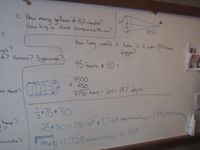 We then chose a question or two and solve it. Sometimes, we have to make estimates and we round numbers to ball park figures since we're making assumptions as we work, anyway. The students quickly realize their is no way to have a "right" answer — you can just make better assumptions or worse assumptions. It's very similar to the challenge "Fermi" math questions some students are beginning to work on because they have completed the foundation math curriculum.
I love watching the students get better at finding the math in the article. I love watching them explode with wonder as they consider the numbers involved. The Herons are learning that there is math everywhere and it's fun to think about. I really hope that you consider using this routine at home, too. I have been very excited by its impact on the Herons.
Making Some Magic
Our current theme (besides opera – which I'll share more about in the next few days) is computer science. We learned a little Logo back in the fall and the students enjoyed it and have been returning to it as a choice activity. I wanted to go a little farther with them.
Coding has recently been all over the news as the new skill that children should have. Computer scientists are desperately needed to keep up with all of the things that have to be made. Right now, there aren't enough people (especially women) going into the field.
I think it's important for more than career security. So much of our lives have a digital element now. Computers and tablets are so intuitive and do so much for us. But, for most of us, they are magic. They simply work and we have no idea how they do what they do. When kids write code, they take back the controls. The computer follows their directions. The students squeal with joy when they make the computer do even the simplest task like making a rectangle.
The determination and independence the Herons show when they code is remarkable. At the outset I told them that code never works the first time you type it. You have to keep fiddling with it to get the computer to do what you wanted. (I also explained that the computer doesn't make mistakes…it just can't understand you because you've typed something in a way it doesn't understand.) I decided to have them learn some JavaScript – it's a real language and it's syntax based, meaning you type commands instead of using tiles of pre-written commands the way one does in a language like Scratch. It's harder (the tutorial suggests middle school) but it's also very satisfying to watch your words and numbers turn into things on the screen.
The tutorial we used is from Khan academy which uses audio, visuals and a special feature where you can change the code that is written while you watch the tutorial and, by trial and error, discover what the different commands and parameters do. The tutorial (as well as several other programming activities) are at right. They might be fun to try out for yourself!


 The Rookery
Leave a comment