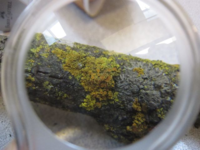
 Yesterday, we began a mini-theme on lichen. Let me take a moment to rhapsodize about lichen. They're crazy. They are an organism that contains both fungus and algae – the fungus provides the structure for the organism. The algae (or, in some cases,cyanobacteria) make food for the organism through photo synthesis. Unlike a symbiotic relationship between two different completely separate organisms – a lichen's fungus and algae are inseperable. It is a single form that joins different classification kingdoms into a new thing. Every time I think about them, I'm overwhelmed — how could such a thing have evolved? Some scientists think certain kinds MIGHT NOT AGE! And these intensely strange beings are everywhere once you start looking.
The fifth graders got a chance to start exploring lichens at Wolf Ridge and while they were there, they mentioned to their naturalist, Tessa, that they wanted to create a lichen museum. We also got a chance to share the idea with Joe Walewski, the Director of Naturalist Training at Wolf Ridge and author of Lichens of the Northwoods.
Amazingly, he and Tessa asked if they could come down to work with the Herons to create the lichen museum! We had to get the whole class up to speed for their visit.
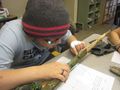
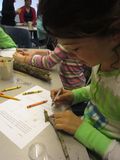
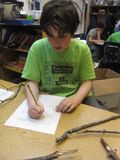
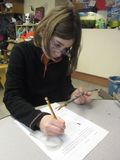
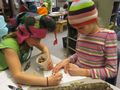
We began by examining sticks. Students were asked to observe and sketch anything besides bark that they saw on their sticks. We measured samples and tried to record their textures, shapes, and colors. The Herons were so excited by what they were finding. They often called other tables over to look at something and soon everyone was categorizing the things they were observing.
After over a half hour of each child looking at a single stick I called the Herons back to the rug to share their observations. There were groans and protests all around (this is what I love about teaching your kids. After staring at a stick for a half an hour they wanted more. In fact, many labeled their sticks and asked to take them home for further work.)
They were filled with questions: Was everything lichen? (no) How could you tell what wasn't lichen? Some things were wet feeling, others were dry — maybe the wet things were fungus. How do fungus get food? How do lichen get food? If fungus get food out of the soil, how do they do that? Do fungus need to grow on dead trees? Do lichen? What are moss? How can you tell them from lichen? Do the cyanobacteria give lichen different colors than algae? When you lick a lichen, why does it change color? Are lichen poisonous? (some, but not very poisonous) Are these poisonous? (no) How do lichen grow? How do they spread? Some things look like little mushrooms – are they part of the lichen? How fast do they grow? Why are they growing on each other? What does a lichen need to grow?
I provided a little bit of background information such as the symbiotic structure of lichen and a reminder about what photosynthesis was. We then talked about three ways to categorize lichen – crustose (crusty), foliose (leafy), and fruticose. We had found a lot of crustose and foliose on our samples…but only one fruticose…hmmm. What makes one type of lichen grow instead of another?
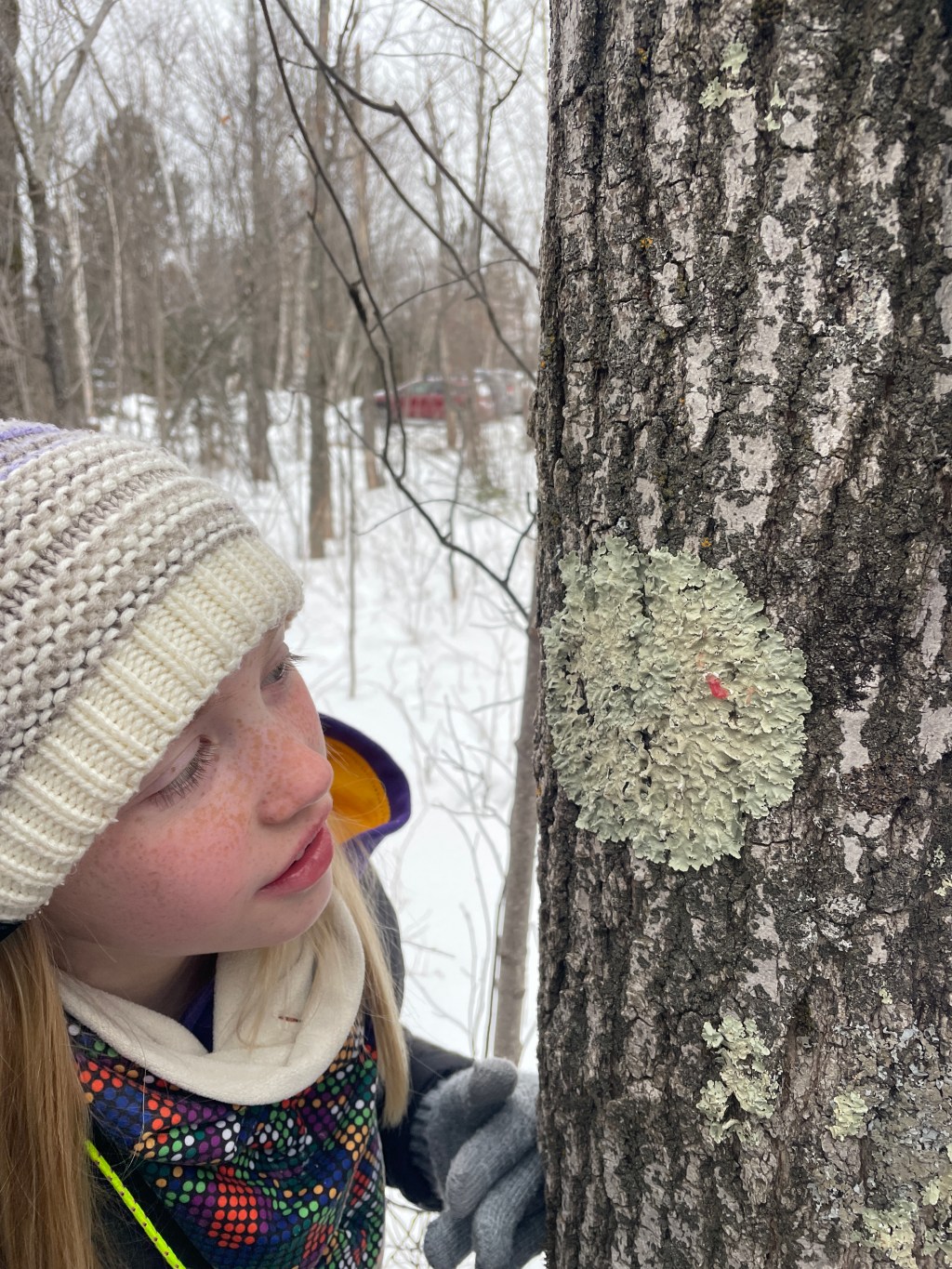
At recess today, kids came up to me repeatedly – "Michelle! Lichen! I found lichen!" One seemingly innocent tree was covered with samples once you got up close. Another pair of students found a branch with lichen growing on lichen growing on lichen. As we were examining it, a crowd grew. They were all fascinated – perhaps our museum will have some eager visitors. Perhaps we will need to make a field guide to Prairie Creek lichen.
We're really looking forward to our visit with Joe and Tessa. The details are still coming together but it looks like we'll be working with them and Carleton students to explore lichen and get our museum set up. We sure have a lot of questions to find answers to.





 The Rookery
Leave a comment