
 Several days last week, I loaded children onto the bus while they were still
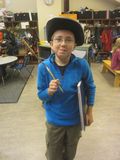
chanting "Join the Sons of Liberty" or "Long live the King" at each other. I overheard students talking at lunch about the "blockish King" and before school times have been a frenzy of flag making. This is the power of role play in the progressive classroom.
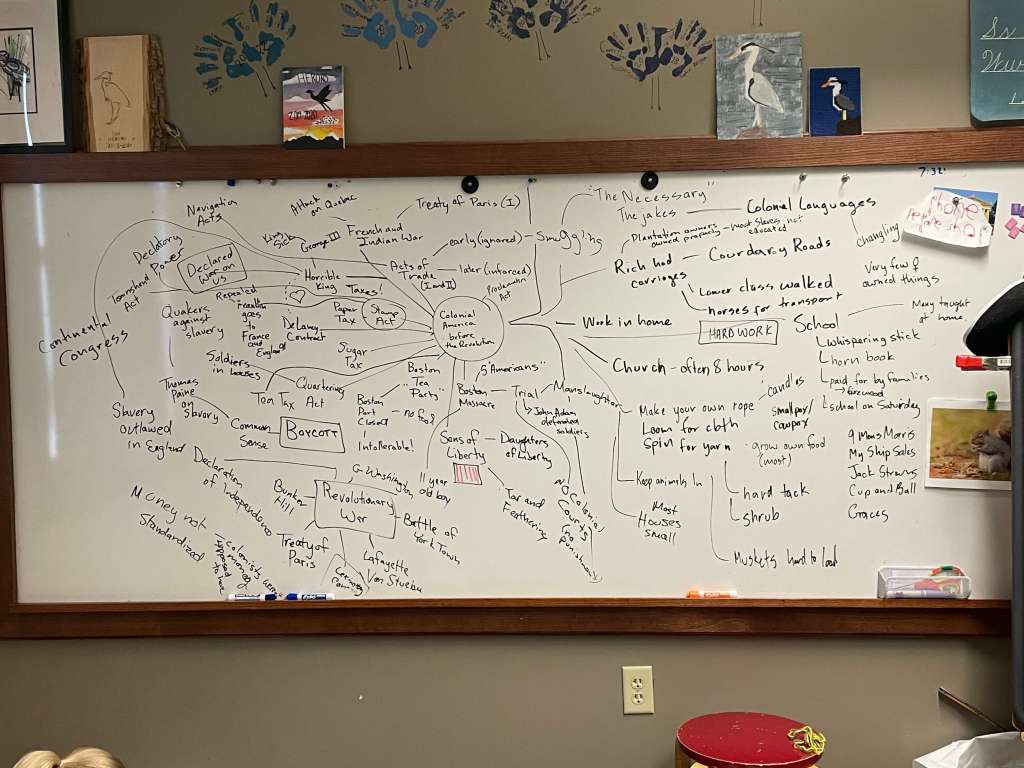
Each child received a character at the beginning of the theme. The detailed information provided in the character description gave rise to lots of questions. "It says I'm Puritan, what does that mean?" "I am a milliner, what's that?" "Where is Charleston?" "What would I eat?" "What kind of house would I live in?" "Was I born here?" We spent a little more than a week researching our character so that we would have a better sense of what his or her life was like and what was important to him or her. It's not easy research to do – one thing students learn very quickly is that what was true for some people in the colonies was not necessarily true for everyone.
This understanding of the multi-faceted nature of experience and perspectives in history is something that I know I did not fully grasp until I was in high school. Role play, however, brings different perspectives to the forefront of learning. One's best friend (in real life) may feel very differently about what is going on than you do. Eventually, students learn to ask "who says" when they read historical accounts and "facts" in text books.
One of the things I love most about teaching fourth and fifth graders is their ability to play. They are so willing to lose themselves in an imaginative world (witness the gourd wedding complete with red carpet 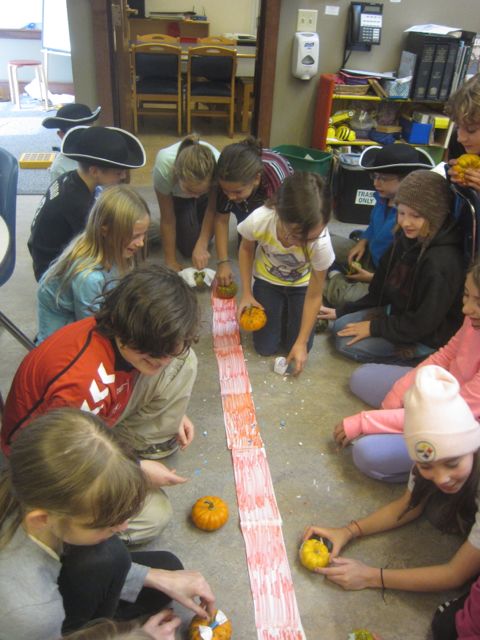 and "flower gourd" that the whole class was invited to a few days ago at lunch.) When we do role play, their engagement is palpable (and voluble – we can get pretty loud.) They chide me when I break character to explain something like a poorly copied paper, "Praytell, Master Campbell, what is a 'Xerox' machine?" Their ability to lose themselves in the game means that they feel a real need for the information we are learning. They want to know, really know, what is happening. Today, when we read a story about the Boston Massacre that mentioned an eleven year old boy being shot a few weeks previous to the riot, there were gasps in the class. "I have an eleven year old boy! It could have been my son!" "I'm not letting my children out on the streets…it's too dangerous!" This is the gold standard of a progressive education – children feel an authentic need for the information they are learning.
Tomorrow, Simon is joining us as a guest British Captain to explain his decisions during the mob. Other students will share the depositions of various witnesses to the riot and students will be able to decide the fate of the British Soldiers.
Before we learned of the tragic events at the Customs House, 35% of the Herons declared themselves completely loyal to the king. 45% were neutral, frustrated with the British rule at times but unwilling to violently protest what was going on. 20% were ready to risk their homes and lives and join the Sons of Liberty. Those percentages are close to those in the colonies during the time that we are portraying. We'll see if the tumultuous times ahead change the viewpoints of the colonists.



 The Rookery
Leave a comment