
We celebrated Pi Day last Friday — a day early as it was 3/13/15 not 3/14/15. We had a lot of fun, all the same. For some students, pi is already a concept they use when finding area and volume of circle based objects. For other students, this is a somewhat bewildering set of numbers – but they are game to go along and have fun.
We briefly explain the concept of pi: the Greeks discovered that it always takes a little more than 3 diameters of a circle to go around that circle. That "little more" was the same fraction of the diameter, no matter the circle one was working with. They gave the "3 and a little more" the name "pi" as shorthand. The value crops up again and again in nature and that's pretty cool.
That's as far as we take the official math. We spend the rest of the hour of our celebration listening to and writing pi songs, making pi greeting cards and hats, using compasses to make circle constructions and circle fractals, exploring the history of pi, finding area with pi, graphing the digits of pi and, of course, memorizing pi.
In the afternoon, students can recite all of the digits they can remember either for fun or competitively. And it was during this part of the day that I had a sudden "aha" moment about the value of Pi Day and activities like it. Several students who had begun the year really disliking all things math stood up to recite digits of pi. These were kids who would have chosen to do almost anything else but something that had to do with numbers and here they were smiling, sharing their digits and being loudly applauded.
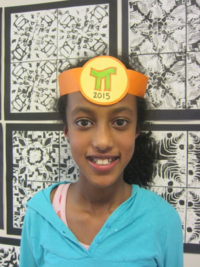
Pi Day helps kids see that they can have fun with numbers and that math is more than getting the right answer. Until they are able to let their guard down to play and explore, they cannot learn. They are afraid to risk failure and don't even begin to engage with the work at hand. Play is essential in discovery and discovery is essential to understanding.
Throughout the year, we have many open-ended, playful explorations in which students can participate meaningfully at many different levels. They make new discoveries about the numbers they've been able to recite since kindergarten. Some of these discoveries are simple, some are complex but, for the discoverer, the insight is always profound.
It is through these discoveries that students begin to "own" their math. They see math as something that they connect to, something that makes sense to them (and if something doesn't make sense right now, they have confidence that it will in time.) And all of this begins with lighthearted play – celebrating numbers and the wonder they bring us.

 The Rookery
Leave a comment