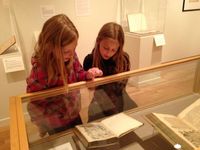
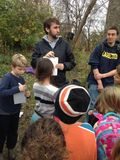
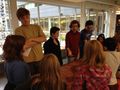
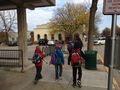
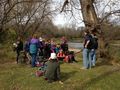
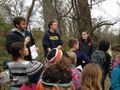
 It's been too long since I shared about our theme work. It is a multi-faceted theme and our work has taken many different forms. As you know, we began the theme with a look at the geology, geography and ecosystems of the Straight, Cannon, and Mississippi. We learned about how rivers change over time as well as the energy cycle of creatures that live in rivers. We were able to take a tour of the Cannon River with geology students from Carleton as well as explore the impact of humans on rivers using a stream table designed by a Carleton student. Carleton history students taught us about the ways that Italian rivers were understood and used during the European Renaissance. During our trip to Carleton, we also got to view ancient maps and sketches that showed plans for damming and controlling rivers.
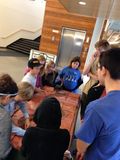
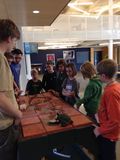

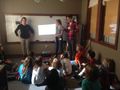
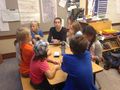


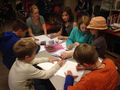
After our visit to Carleton, our focus shifted to ancient China. Specifically, we became members of Kublai Khan's court in 1279 CE, charged with exploring the newly conquered land of the south along the Chang Jiang, the Long River (modern day Yangtze). Students created a character for the trip, choosing a Chinese name and receiving a civil service rank (which they can raise by passing Civil Service exams.) Almost alone among cultures at this time, the Chinese had a meritocracy which enabled people to gain rank through their abilities (albeit, one had to have access to education in order to prepare for exams – something the majority of Chinese did not have.) Also somewhat unique among ancient cultures, there were many accepted belief systems and we'll be learning about three of them – Buddhism, Taoism and Confucianism. But I digress.
The compass was invented in ancient China and we learned about the nature of magnets and magnetic fields then made our own compasses. Students tweaked their designs to create the best compasses possible. Interestingly, compasses were initially used to orient buildings auspiciously according to the principles of feng shui. It was only later that they were used for navigation.
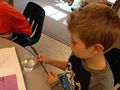

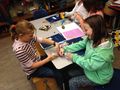

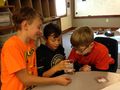
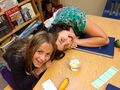
Students provisioned their boats (sampans) and prepared to travel to the headwaters of the Yangtze on the Tibetan plateau. They used their geological understanding of rivers and applied the math we learned about scale and flow rates to make plans for their voyage. Students are also receiving a hidden lesson in probability as we role dice to determine their fates and they have to make decisions based on the odds of various events happening.
We've stopped along the way to sample Tibetan airag, learn about Budhism and visit Budhist cave grottoes, use ink stones and brushes to create paintings (one of the three perfections), create name chops, try some tea, study Chinese farming innovations, try our hand at Naxi hieroglyphics and listen to ancient Naxi music. Students created a "Yam Card" (the Yam was the mongol postal system) that captured an image from the trip so far and reported back to the Khan some key information they had learned.
Students are now portaging past Tiger Leaping Gorge. Luckily, they were all wise enough to purchase a map of the portage route (well, one group found a map on the ground and are trying to use it…sadly, they have a greater chance of getting lost than the groups with an official map and a compass.) To try to navigate the rapids would have been impossible. Groups are struggling to find food after leaving the good fishing of the river. Several, though, have been successful at hunting and have even had the foresight to purchase salt at the market so they can preserve some of the food they get.
Role play is a powerful tool for learning about another time period. Students, especially younger students whose imaginations are very active, yearn for information to make the new world complete. They develop a greater understanding of the challenges of a time and the ideas that informed the decisions people made. When you are inhabiting a time and place you feel an authentic need to learn about it – and that authenticity is at the heart of progressive education.
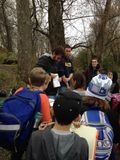
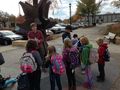
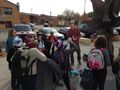
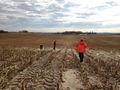
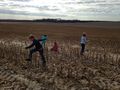
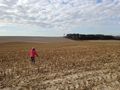
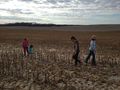
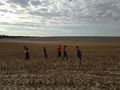
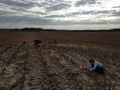
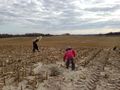
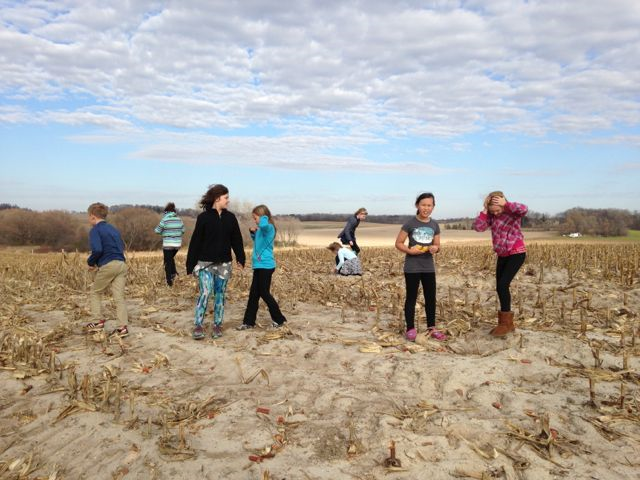 And, in late breaking news, we celebrated our safe passage through Tiger Leaping Gorge by a ramble to "The Rocks" (which is a hill in the field behind the school.) Several years ago, the boulders that adorned the hill were bulldozed over and the farmer has been trying to grow corn there - but the sandy soil and glacial till have rebuffed those efforts. We had a glorious walk and found a lot of nice rocks. The Herons were unanimous in their desire to visit again soon.


 The Rookery
Leave a comment