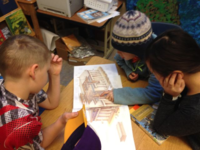
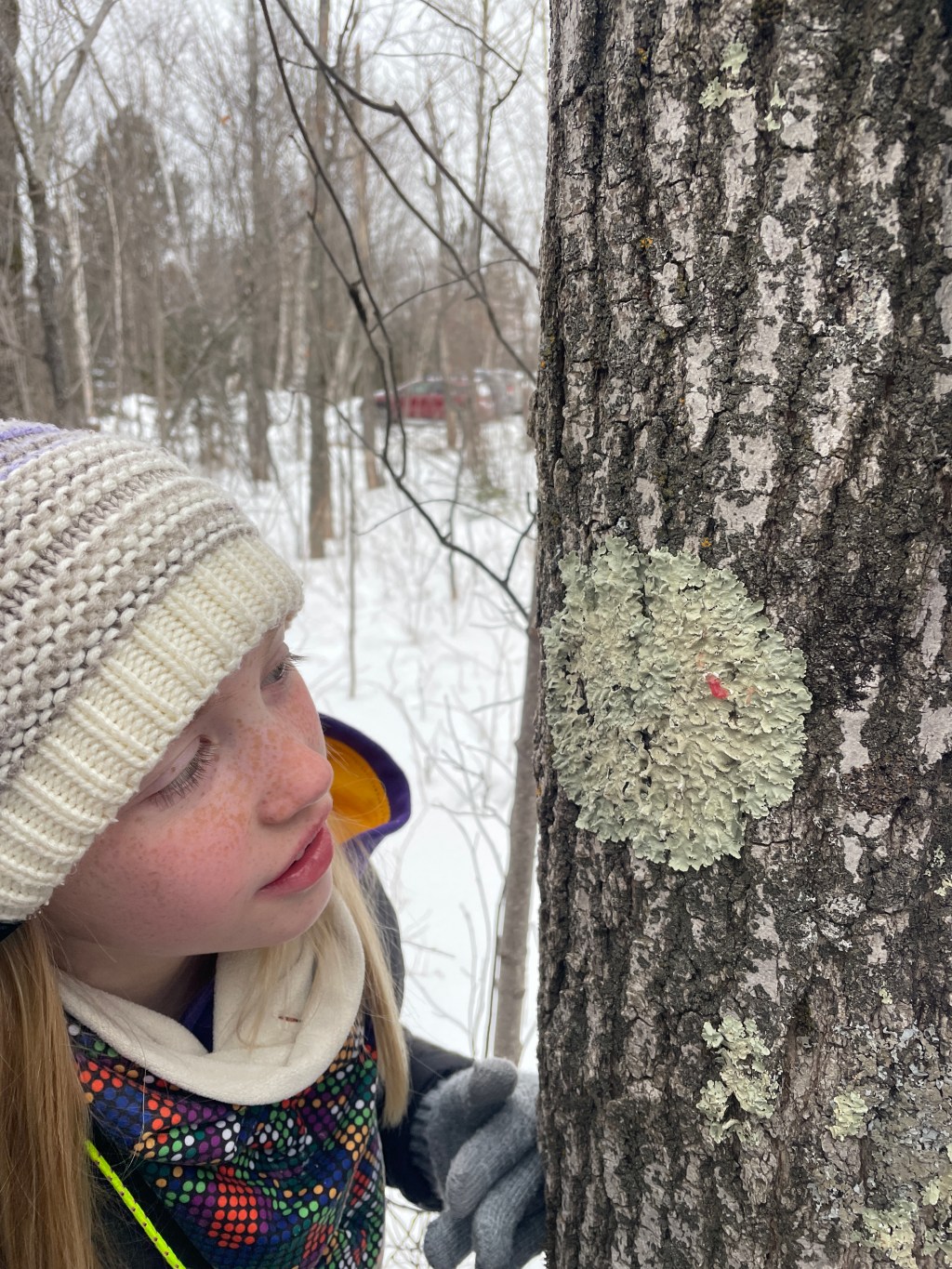
I need to be up front. I would like to keep this class for at least five more months. We have a lot that we need to get to and our "to do" list seems to grow every day. Right now, here are the topics that have come up in the past month that at least half the class has said we have to study: Shakespeare, Ancient Greece (or Rome), poop, March Mammal Madness (more on this later), building a bridge across the creek, creating a green roof, putting on a play, circuits, space/stars, making a new calendar, dropping eggs off the roof, hosting a café/coffee house, making a word market, pi, catapults, lichen, writing a play, and making a cartoon book of idioms. It's very exciting to be a part of the Herons right now – and a little overwhelming. After all, these are things they want to do on top of their projects (which will be presented in three short school weeks).
The aim of a progressive classroom is to create a culture and an environment in which students are brimming with questions and empowered to find answers. To that end, we try to fill the classroom with intriguing books. We have (seemingly) random cool "stuff" around. We build in time for conversation so that ideas can sprout. When everything is going as it should, it can feel a bit like surfing on a wave. It can also feel busy.
So, what have we been up to?
Introductions and Conclusions - introductions and conclusions are often the most challenging part of writing anything. For that reason, we advise students to create the middle of their writing first. Sometimes, we use a metaphor of a giant sandwich with buns on the top and bottom to keep the meaty (or veggie-burger) middle contained. They organize their information and write it out in paragraphs before they tackle how to lead their reader into the writing.
This week we read many different kinds of introductions, analyzed them for the author's "moves" and categorized them. Several students were ready to write their conclusions and began to read examples from alumni honor projects and our model texts. We gathered as a class to listen to what they found and come up with different approaches to conclusions. I then created a brainstorming sheet they could use based on the categories they developed (how you have been changed, lingering questions, the future of the topic, why the topic is important, closing snapshot). It was great work and we have shared our sheet with the Robins and Kestrels.
Rockets and Variables – In the past week we have been designing straw rockets, testing them and modifying our designs. The engineering design cycle was familiar to the Herons from our work in coding. Once each pair had a final design, we tested the affect of changing the force of launch and then the angle of the launch. As you have seen from our science homework, the ideas of changing one variable at a time is key to careful science. Students graphed their results for each experiment and identified the patterns they saw. We also talked about what to do when a piece of data didn't match the pattern (retry that experiment to see if you got the same thing, hypothesize why it might be different.) Our final challenge in this mini-unit will be to see what percentage of the class rockets can reach a target given three tries.
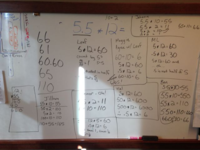
The Sun and Seasons - Last October, we observed a ray of sun traveling down our whiteboard and we recorded its placement throughout the morning. Recently, we looked at sunrise and sunset patterns and realized that they were symmetrical. The Herons used that fact to predict when the sun would match back up with our observations from October. We expected a match on March 3 or 4 at 7:56 in the morning. Sadly…it was cloudy both days. When we checked earlier in the week, the sun shafts seemed to be longer and lower than what we were expecting. Sometimes I know what is going on, but stand to the side as the Herons figure things out…sometimes (my favorite times) I'm not sure what's going on and we get to hypothesize together. We don't yet have an answer for our sun shaft mystery and I welcome your thoughts. Why don't our observations seem symmetrical?
March Mammal Madness - Back by popular demand, the Herons are filling out brackets for March Mammal Madness. Hosted and organized by a group of biologists, people all over the country pick which animal's adaptations would best their opponent's. The conversations we are having are ridiculous and hysterical – but the science is solid. We are trying to decide on a class bracket. Two people can speak for each animal in a match and then we pick our projected winner by voting. Recently one student defended the Thor Hero Shrew, "It has a backbone that is four times stronger than a human's. And shrews have insane metabolism. Two shrews were put in a cage and they ate like, everything and then one shrew ate the other and it still died from starvation. They have sharp teeth and can chew through anything…skin, bone!" The class still voted for the giant panda to win — "The panda will just sit on it." "Pandas are surprisingly aggressive…" As silly as it sounds, the herons are doing a lot of thinking about adaptations and recognizing the diversity that is key to sustaining an ecosystem. Get in on the fun at our Google Doc.
Arcadia's Stefanie Hero – on Friday we were treated to a performance of Stefanie Hero by Arcadia's middle school theater group. It was a lot of fun to see so many former Prairie Creekers shining on stage. Bob Gregory-Bjorkland's promenade staging was, as always, innovative and kept the 4/5s on their toes as actors charged through the middle of the ever-moving audience.


 The Rookery
Leave a comment