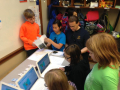
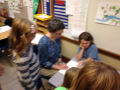
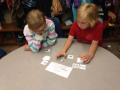
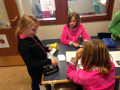
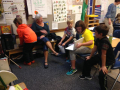
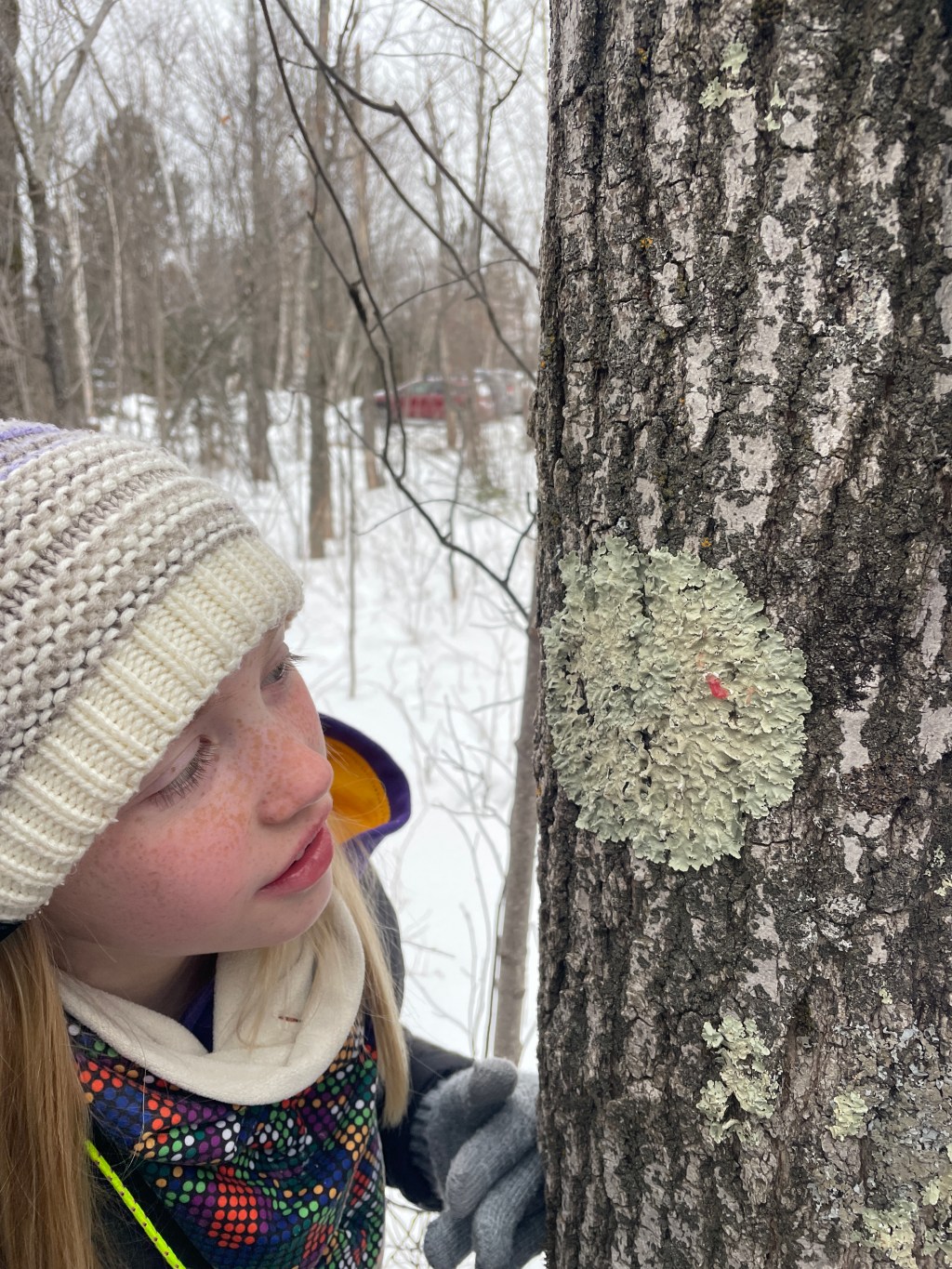
Sorry for the pun…it had to happen eventually during this theme. On Wednesday, the Herons got the opportunity to teach the school some of what we had learned during our tree theme. Culminating events are a lot of fun but they also serve multiple (sometimes hidden) purposes.
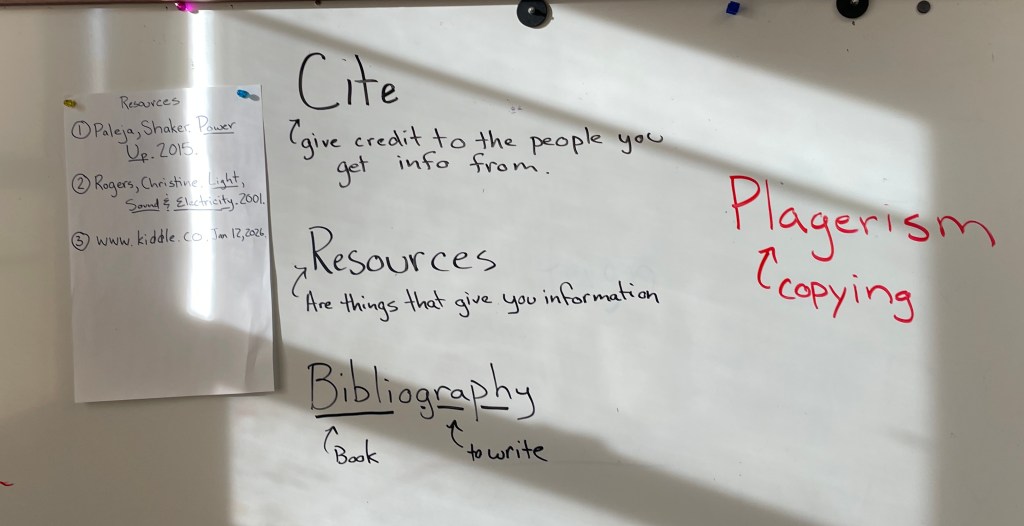
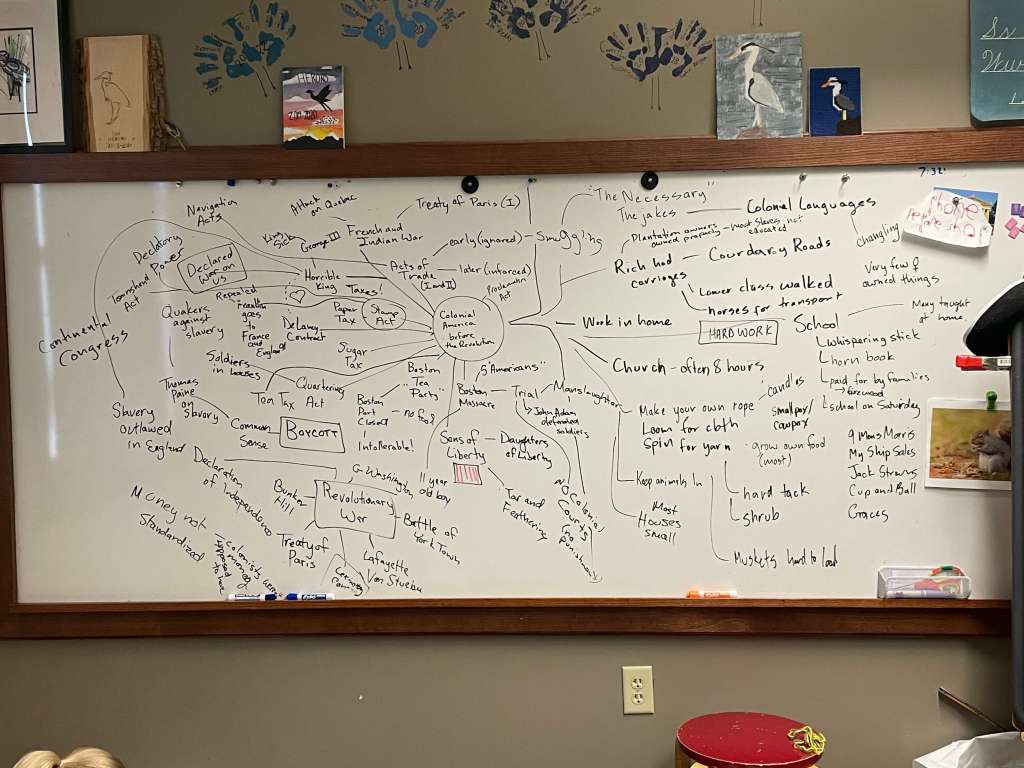
Review of Content – as we start to plan a culminating event, we go over everything we have learned in an effort to identify what we want to teach our audience. This conversation is often filled with "Oh yeah!" an "I forgot about that!" We know from brain science that the more times students retrieve information they have learned, the more likely they are to retain it.
Assessment - I watch carefully as students are constructing their final products. How deep are they able to go? Do they have a broad knowledge that informs their work? What is their role in a group? How well can they explain what they've done and why?
Authentic Reason to Learn – when we share what we have learned through a culminating event, it gives our students something to do with their theme knowledge. What better reason to learn than knowing that you will, eventually, be teaching what you've learned? We don't give grades but we do expect everyone to know their topic well enough that they can apply it in flexible ways.
Public Speaking – Making a game or activity is one thing, confidently leading others through it is quite another. We practice explaining directions and adding more information into the experience of our visitors. Our culminating projects are meant to have conversation at the heart of their teaching.
Sparking Others' Interest - In order for a school to engage in "emergent" curriculum, students must have diverse and rich experiences to spark their interest. Culminating events open windows into concepts that many children have never seen before. Our older children are also modeling the passion and competency that we hope younger children develop.
Time Management - When we first embarked on our planning and execution, students were overwhelemed…there was no way we could do it But, of course, by working a little each day, the Herons were able to pull it off. We prioritize our work and set goals each day. I have students self-assess their focus every day
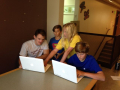
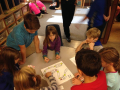
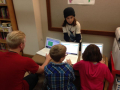
I was proud of the Herons and their work. This is the first time in my teaching life that I've had a set of students whose coding was strong enough that they could create a computer program as a final project. I was also delighted by the concept of using information we knew about trees to map those types onto humans using a "personality test." This kind of work requires an ability to deeply synthesize and analyze what one has learned. The games students created were fun and simple enough to be played in under ten minutes. This is no small feat — 4/5s are naturally pulled to incredibly arcane games that have constantly shifting rules and no discernible objective (sorry…just speaking from somewhat frustrated personal experience.). Creativity within constraints is a key skill to develop. It was so exciting to see a book about famous trees take shape as this was a topic we had never studied! Finally, several Herons have done careful research to create a tree treatment and succession plan that will be shared with our landlord tomorrow. Their work may shape the look and the feel of the school for the next century (it doesn't get much more authentic than that.






 The Rookery
Leave a comment