 Greece
Our joint theme with the Kestrels is in full swing. On Wednesday, we read a paper from 444 BCE, the height of Athenian arts and culture. Some of the Spartans grumbled that all of the news was about Athens. We pushed them to think about it, was Athens getting too much attention? Were they, maybe, a little jealous? It came as no surprise to those Spartans that by Friday (14 years later) Sparta was attacking Athens. The Athenians were horrified, the Spartans cheered and many of the slaves were hoping that the chaos might afford them a chance to get away. We had a good discussion about the expense of war and students saw the connection between the peace Athens experienced for many years around 444 and the arts and sciences they were able to develop.
After students write their response journal, they move into work on a menu of theme options. Some have been doing a lot of weaving in the gynaceum (the women's room in an Athenian house). Many have been reading a version of Aeschylus's Orestreain Trilogy. Others have been creating goods related to their trade or writing articles for the newspapers.
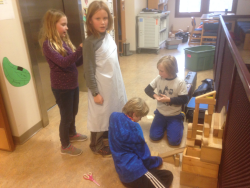
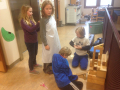
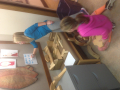
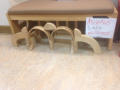
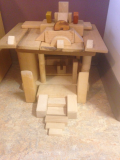
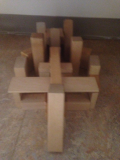
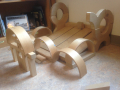
Others have been building temples to their patron gods. Gabe and I were inspired by a workshop from our Imagine Conference which encouraged block work in the older classrooms. We brought blocks up a few days ago and were amazed by the excitement of the students who built temples in nooks and crannies all around the 4/5 hallway. My favorite was a Temple of Asclepius, the Greek god of healing. People who were healed by Asclepius would give thanks by making a clay model of the body part healed. The model would be hung up in the temple. In the Kestrons' (Kestrel+Heron=Kestron) version, Lego mini-figure parts were scattered about the entrance. Fantastic. The temples get knocked down by either the anger of the gods or sometimes clumsy 4/5 feet – we're not sure which – but they are rebuilt quickly during theme time.
We've continued our training in the Spartan agoge during PE. Spartan youth were given 3 meals a week. The rest they were expected to steal (to develop stealth and speed.) Chickens were a preferred theft item. We have been playing our own version of chicken stealing – using rubber chickens as the "ball" in an ultimate frisbee type game. The Herons have dubbed it "Ultimate Chicken." I am a big fan.
On Friday we read the last of the Oresteain trilogy and tried out for parts. We'll be putting on all three plays at our culminating event. Students have also been making and bringing in food they've read about.
Forest School
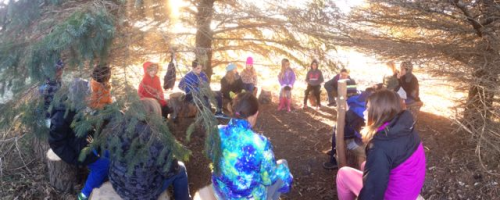
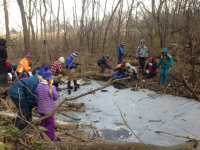
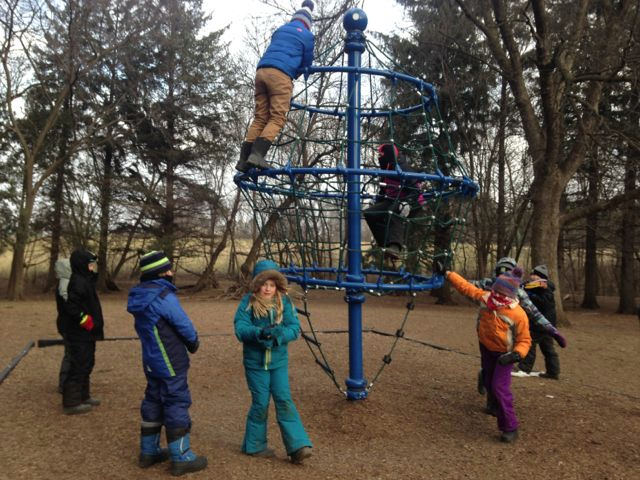
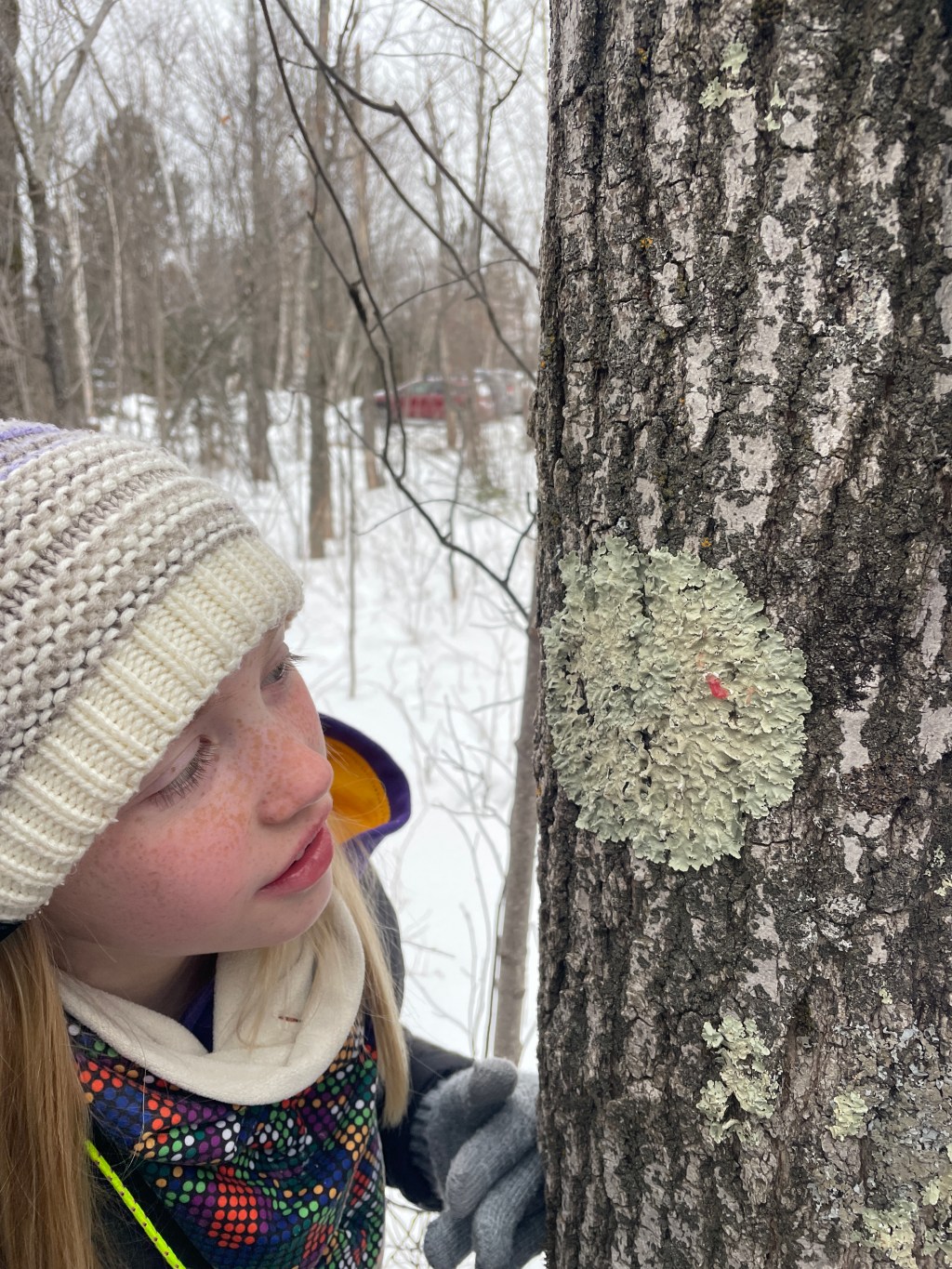
Brrrrr. Wednesday felt really cold. After a half hour of reading independently outside, I told the students a story from icelandic novelist, Halldor Laxness. A sheep farmer loses a sheep and has to go searching for it in late autumn. He is forced to sleep outside and goes to a rock used by hunters to keep warm on winter nights. How do they keep warm? They sleep on the rock and when they wake up shivering, they push the rock around in circles until they are warm enough to sleep again. Then they go back to sleep on the rock and, when they wake up shivering, they push the rock around again. "To the Albero!" the Herons yelled. We went and pushed the albero around but it did little to keep us warm. We weren't able to do any writing outside in the cold and I am thinking through what the next three months might look like for us in Forest School. While I'm still very committed to being outside on Wednesday, I am also cognizant of the need to balance our "outdoor education" (learning about the environment) with "education outdoors" (doing our regular work, just outside). We may shift our woods craft work to the morning and, when necessary do our writing and reflection inside (and mitten free) in the afternoon.
If our plan for our winter encampment goes well, we might not have to make any modification. We've been building up brush around our spruce tree space in the hopes of making snow walls. Stephen Mohring and Josie Rawson donated about twenty tree stumps so we'd have places to sit and work. The Chickadees even visited us while they were out on an exploration adventure.
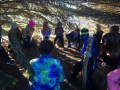
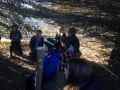
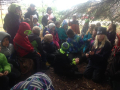
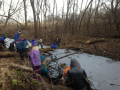
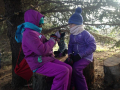
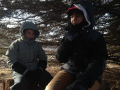
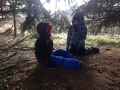
A visit from the Chickadees (above.) Working with our mentors (to the left)
Probability
Our current math theme is probability. We used a formative assessment to make sure students were getting the challenge they were ready for. Some students have been learning about single event probability. They are determining the mathematical probability and then testing it by using experimental probability. It takes a lot of hands on practice to shift conceptions about probability. Even after extensive work, some children will claim that "they always roll sixes!" Other students have been learning about multi-event probability. They are designing simple games of chance that involve at least two events (an "event" is something like rolling a die or spinning a spinner). They are working on determining the odds of several events happening in succession. The odds can get pretty big, pretty quickly.
Probability is an extension of our fraction work. The importance of experience in understanding fractions cannot be over stated. The more you talk about fractions and use fractions (cooking, dice rolling in a game) the better your child will be able to work with fractions in a variety of contexts. For example, instead of just rolling the die during a game, you could ask a child — what numbers are you hoping to get? What are the chances of getting it?
Projects!
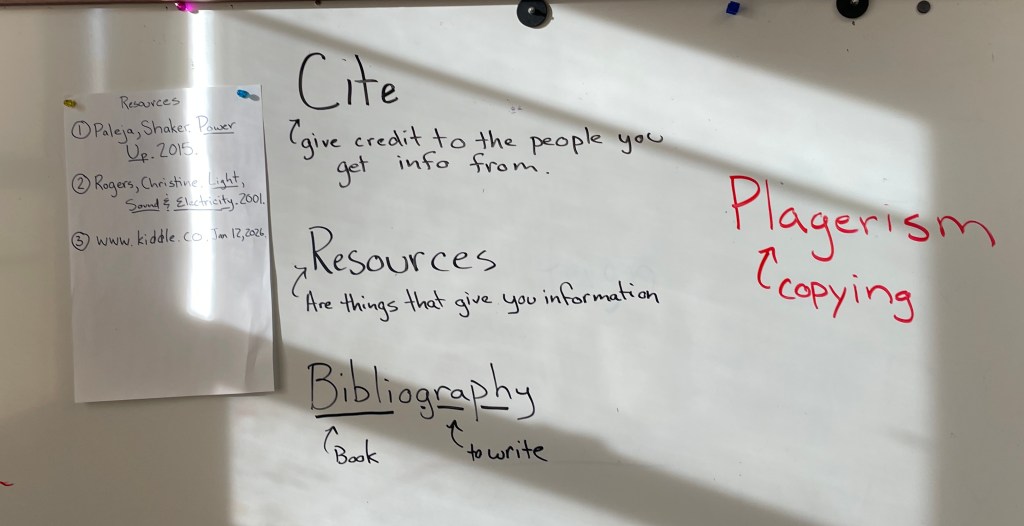
On Wednesday, students received their mentor/mentee assignments for fourth grade project. Fourth grade projects mirror the work of the honors project but everything is a little smaller…including the mentors. The fifth graders get to guide a forth grader through the project process – a task that reinforces the skills they are using in their honors projects. So far, students have shared possible ideas for projects and have begun simple know and wonder charts to determine the best idea for a project. We'll formalize our know and wonder charts in the week ahead and begin research in earnest in January.
Helping your child find books on his or her subject over break would be great – especially if your child has a more unusual topic. We'll help find books, too, but a trip to the library, especially for fifth graders, can be very beneficial.

 The Rookery
Leave a comment