 The first six weeks are busy ones in the 4/5s. We jump right into our academic curriculum (we just finished our first theme!). The teachers work hard to develop an understanding of each learners needs through a series of formative assessments. We work to establish our routines and, most importantly, we come together as a community of learners. That work has several parts:
We the Herons…
We began with a process to determine our class beliefs. Partnerships made of a fourth and fifth grader brainstormed the things they felt were most important for us to remember as we learn together in the coming year. Based on our brainstorm, students propose statements for our "We the Herons" document. These statements are discussed one at a time and students share what the statement means to them. We are looking for umbrella statements that can serve as guidelines and the discussion is key to developing a class understanding of who we want to be. We must come to a consensus on each statement and, if a student has a concern about a statement, we work together to understand and modify the statement if necessary. It's a long process but the Herons are patient and engaged in the work. Here are our statements so far:
We the Herons…persist up the mountain and help each other along the way.
We the Herons…help each other find light in the darkest corners.
We the Herons…say, "YET!" because here, fails are a good thing
We the Herons…say Yess [sic]
We the Herons…have fun, seriously.
Some of the statements take a bit of decoding — that's why we discuss them at length together as we come to consensus. For example, "say Yess" is a reference to a typo I made on the list last year. Students wanted to have a guideline that reminded them to be open to new people and experiences. Taking a page from theater improv in which you go with whatever is happening and work with it ("say yes"), they urged each other to "say yes" to the opportunities they had in fourth and fifth grade. My typo appealed to them because they though it meant not just to say "yes" once but to do so all the time. The fifth graders requested we bring back the typo as a connection to the "Herons of the past."

Whenever a student says something like "I can't take notes well" their classmates will often respond in chorus "You can't take notes well…YET!" We work to really believe that we can do anything as learners if we work hard enough and long enough. For years (long before the "growth mindset" became a popular concept) we have been teaching that failure is how humans learn. One student had a concern about this statement, however. He felt that he had tried to do something for four years and was never going to be able to do it. Several students then shared stories of things that had taken them a long time, "I just learned how to ride a bike this summer…I thought I'd never be able to." "I didn't think I would ever get multiplication but now I do." "I couldn't do a cartwheel forever!" I had students turn and share a story of failure and eventual triumph with a neighbor – we all had one. We then returned to the first student who had raised concerns about the statement. He was reassured and endorsed the statement
"Have fun" is an ever-present statement. This year, one student objected. Her concern? She agreed with the sentiment, it just seemed too plain compared to the other ones. With the addition of the ironic "seriously" everyone was satisfied!
Beyond the classroom…
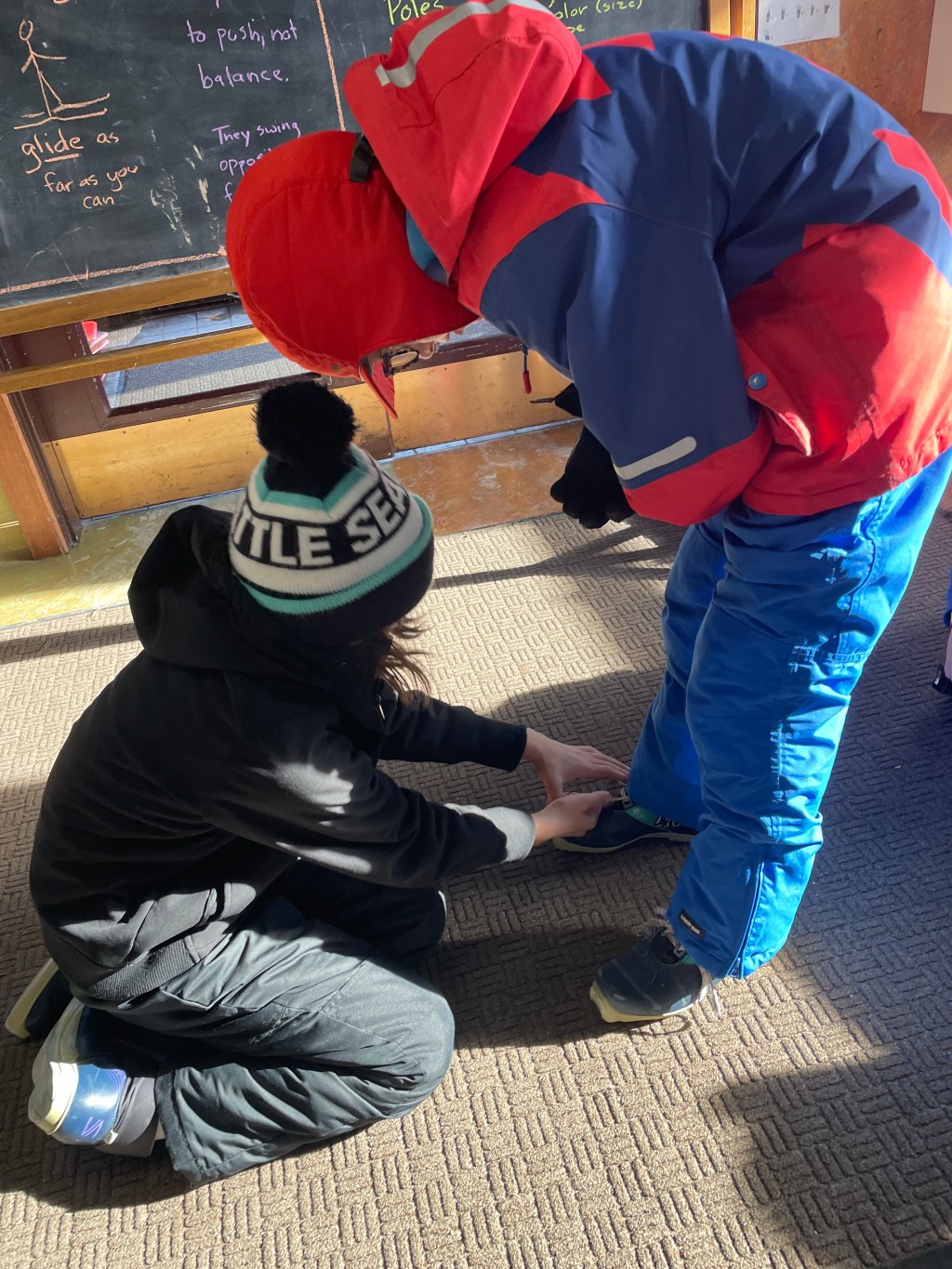
This is a great leadership opportunity, of course, but it also helps us set up our year-long expectations for our fourth and fifth graders. No matter if it's October or April, we expect the older students to care for the "youngers" and watch out for them. To that end, the game leaders learn how to establish clear rules in a game and problem solve when disagreements arise. Woods stewards learn how to help younger students include everyone in the play and, once again, problem solve when disagreements arise. Bird watchers learn that it is their responsibility to watch for kids who are withdrawn from play and help them connect with their peers. All of the 4/5s work to learn the names of all of the students in the school.This past week, the fourth and fifth graders trained for their guided recess leadership roles. Students worked withCathy to become "woods stewards," Gabe to become "game leaders," or me to become "bird watchers." Then, for the next week and a half, they teach the younger students at recess.
All of the "Big Birds" know that they have a special role to play in the school. They are the stewards of who we are as a community. The care they take with the youngers will ensure that, when it's their turn to be 4/5s, today's little ones will be kind and compassionate — the kind of kids who look for ways to make a difference. The kind of kids our world needs.
It's a big responsibility, but with support, the Robins, Kestrels and Herons are ready.

 The Rookery
Leave a comment