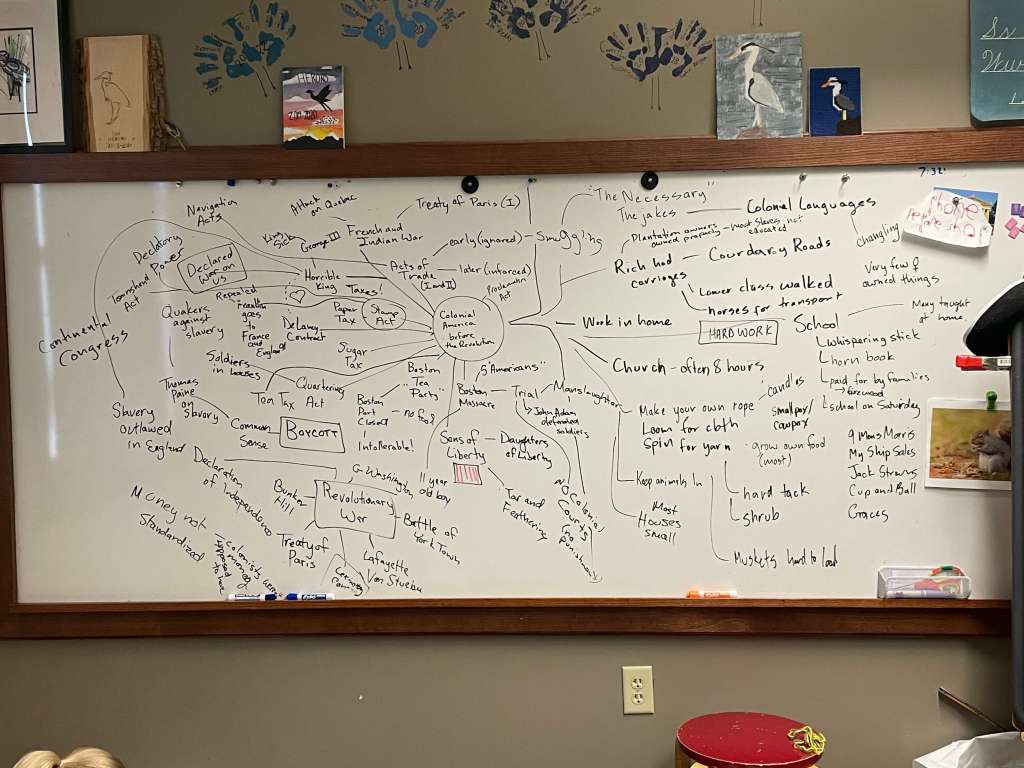
 In March of 1770, five colonists were killed by a group of nine British soldiers outside the custom house. Some of the papers at the time reported it as the "Boston Massacre"…others called it the "Incident on King Street." About six months after it happened, the soldiers were put on trial (Governor Hutchenson decided it would be a good idea to let tempers cool down before the trial and sent the British regiment involved out of town for a while.)
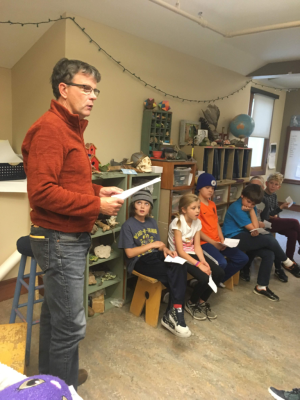
On Friday, the Herons re-inacted a transcript of the trial. Simon played the part of Captain Thomas Preston, the commander of the troops involved. I was John Adams (yes, the one who eventually became a rebel and the second president) who, although no fan of the British presence in Boston, volunteered to represent the British soldiers because he believed they had the right to a fair trial and good representation. Some Herons read aloud the depositions of various members of the Boston citizenry and Private Hugh Montgomery and Matthew Kilroy – the first two soldiers to shoot. The rest formed the jury.
It was a fascinating trial (both at the time and during our re-enactment). Several of the Herons asked if they should decide about the soldiers guilt as a Heron or as the character they were portraying in our theme. When I asked if their character's perspective would make a difference in how they voted, almost all agreed that it would. "You would believe the people who were like you" one Heron shared. "I hate the British…it would be hard for me to find them innocent.) This was a great opportunity to talk about bias and, indeed, how it is human nature to be more receptive to people who are like you.
The Herons noticed echoes in the case with the recent trials of police in the deaths of Philando Castile and Laquan McDonald. Indeed,Adams's summation could almost have been a quote from one of those trials (except the jury he was speaking to was much more aligned with the prosecution than the defense.):
I will enlarge no more on the evidence, but submit it to you.-Facts are stubborn things; and whatever may be our wishes, our inclinations, or the dictates of our passions, they cannot alter the state of facts and evidence: nor is the law less stable than the fact; if an assault was made to endanger their lives, the law is clear, they had a right to kill in their own defence; if it was not so severe as to endanger their lives, yet if they were assaulted at all, struck and abused by blows of any sort, by snow-balls, oyster-shells, cinders, clubs, or sticks of any kind; this was a provocation, for which the law reduces the offence of killing, down to manslaughter, in consideration of those passions in our nature, which cannot be eradicated. To your candour and justice I submit the prisoners and their cause.
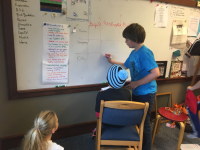
In the end, the Herons' decision aligned exactly with that of the jury in 1770. Preston was acquitted while Kilroy and Montgomery were found guilty of manslaughter. While both were condemned to death, they were given the chance to mitigate the charge if they were able to read a psalm from the Christian bible. Both men did so (well, Killroy was illiterate so he got to squeak through on a technicality) so they only received brands on their thumbs.
The one thing that was clear was that the trial has done little to calm things. While some colonists sympathize with the Bostonians and their struggles with larger numbers of British troops, others are hoping that cooler heads prevail and they can continue as they have been. We shall see.


 The Rookery
Leave a comment