Looking back over this year's communication, I realized that I've written often about math and theme but haven't yet shared much about our work in reading. Reading is woven into our daily routine in a way that is not as flashy as some of the other work in the Herons but it is foundational and interesting and worth talking about. So here we go:
Independent Reading
We start the year talking about reading stamina and picking "Just Right" books. This isn't a new concept to students (or you.) A just right book is one that has some new words and ideas but that is comfortable enough for us to visualize and understand without laboring. Every day, the students read for thirty five or forty un-interupted minutes. They immerse themselves in "book world." But in the fourth and fifth grade, students aren't just reading for the plot. They learn to slow down and appreciate the craft that brings the story (or the non-fiction) to life. Characterization, metaphor, simile, personification, colloquial language, and other author's tools are treasures to discover in the text. New words are discovered and celebrated. We record some of these discoveries on our Think Marks which we share weekly with peers.
I conduct reading interviews regularly during our reading block. Students share a summary of their book, read a short piece of the book aloud and then we talk about craft and inference. Using our conversation as a guide, I teach each student about something new to watch for or think about and then we set a goal together.
Forest School Reading
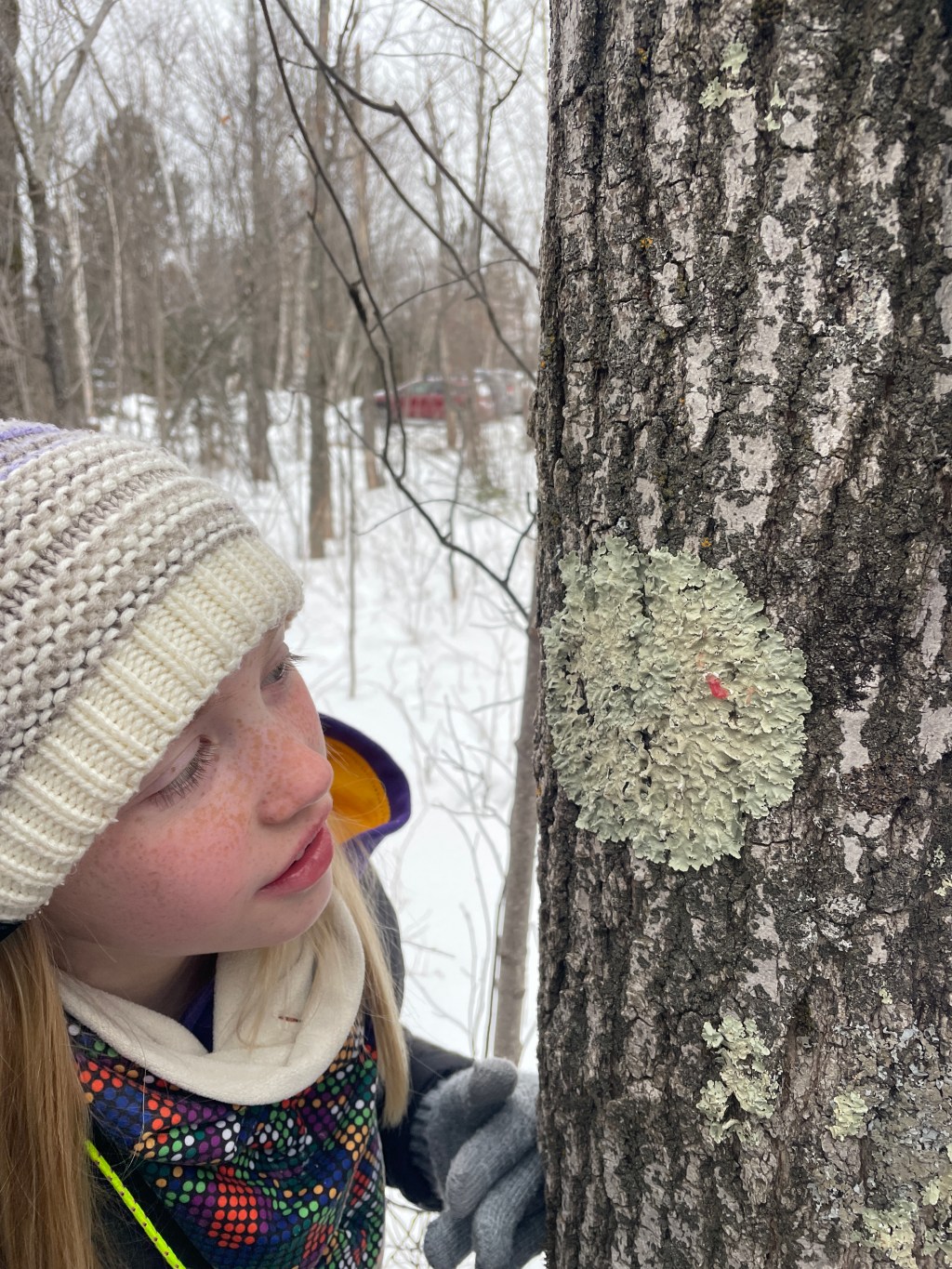
The first year that the Herons did Forest School was rough on our books. Snow and paperbacks don't mix. Last year, I tried a different tact. I had always wanted to read more non-fiction with students but struggled to hook them into books on an on-going basis. A grant from Minnesota Conservation Volunteer sent a class set of their magazine to the Herons every other month and we used that during our Forest School work. The "Young Naturalist" articles are compelling. The teach the Herons a lot about the natural world and quality non-fiction writing. We read them in a variety of ways – together, in partners and alone – always with an eye to how the author is writing as well as what the author is saying. An excellent on-line archive gives me a chance to match content with our current science work. This time for direct reading instruction is a boon — I am able to share new learning and skills with the class and give them many days of focussed, uninterrupted independent reading, a key factor in reading growth.
During one of our recent Forest School reads, we talked about topic sentences, lead techniques, how to decipher pronunciation keys, different ways authors share definitions, metaphor and simile in non-fiction, the story of "the one" as a way to teach about a larger group in addition to the science content of the piece. The conversation is often wide ranging. We once read about a named forest and one of the students asked, "Who named it that?" and that opened up a much wider conversation about place naming and how the same place can be called many different things. The students were especially interested in Bde Maka Ska, the "new" official name for the lake formerly called Lake Calhoun. Good non-fiction is like that — it takes one on a journey that often leads to in a lot of different directions.
Theme Reading
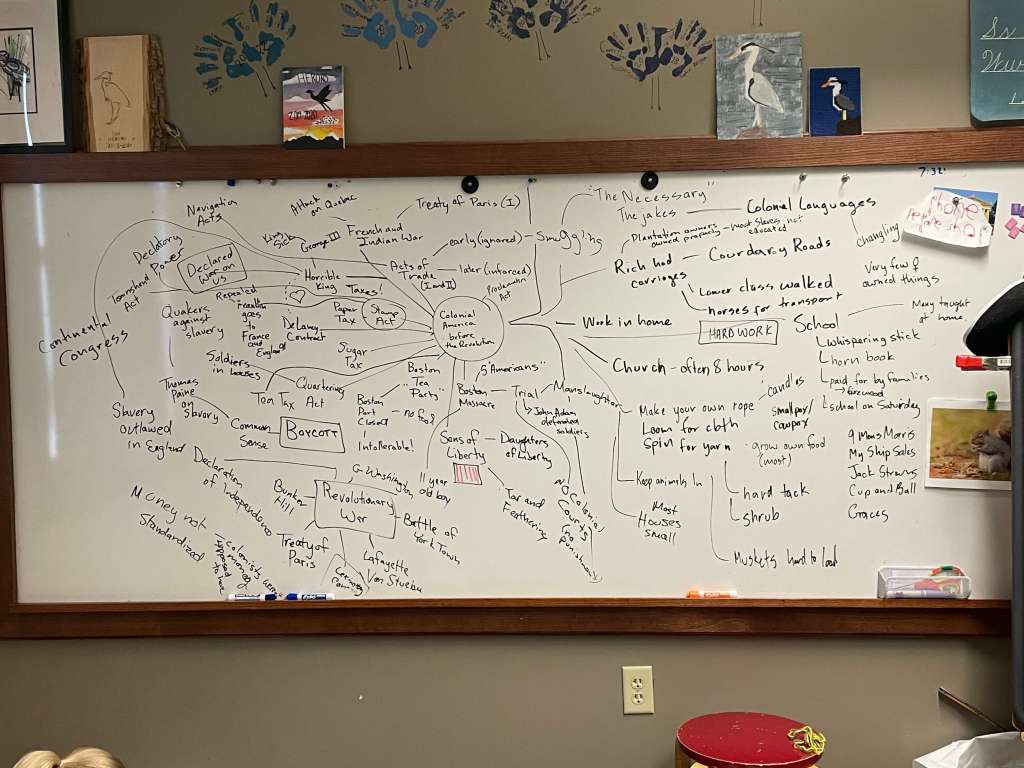
Today the class worked with primary source documents from the trial of British soldiers for shooting citizens in Boston. They puzzled through new words and antiquated sentence structures. I think we all felt like detectives trying to figure out the perspectives of the various stake holders. Here was reading and analysis put to practical, authentic use.
We read a lot in theme, not always primary sources but always for authentic reasons. We read to discover and flesh out the details. We read because we are curious and want to know more. For some students, reading has always opened new worlds and they happily sit for hours devouring fiction. For others, the fruits of their reading labors have been more elusive — but theme gives them a new reason to see why this reading work is worth while. In a well constructed theme, students want to know and reading becomes a tool for that work.
Read Aloud
The books I choose for read aloud are carefully chosen. I stop often to share new craft or new language. I think aloud to show students how I make inferences and use evidence from the text. This is where I model reading behavior for them to emulate in their own work. The books are often ones that would be difficult for many in the class to tackle independently either because of their complexity or their historical context. I often choose them because I know that the story will give us opportunities to discuss important issues such as gender and racial inequities, disability, bias or class issues. We've become increasingly aware of the importance of books as "mirrors and windows." Students should read some books in which they can see themselves reflected and they should read other books in which they gain a window into an experience different from their own. Both experiences are important.
The variety of reading experiences in the Herons (and in every classroom at Prairie Creek) ensures that students don't just learn how to read (and decode, and make inferences, and identify craft, and comprehend, and follow arguments…) but also why to read. Both are important if one wants students to be life long, passionate readers.


 The Rookery
Leave a comment