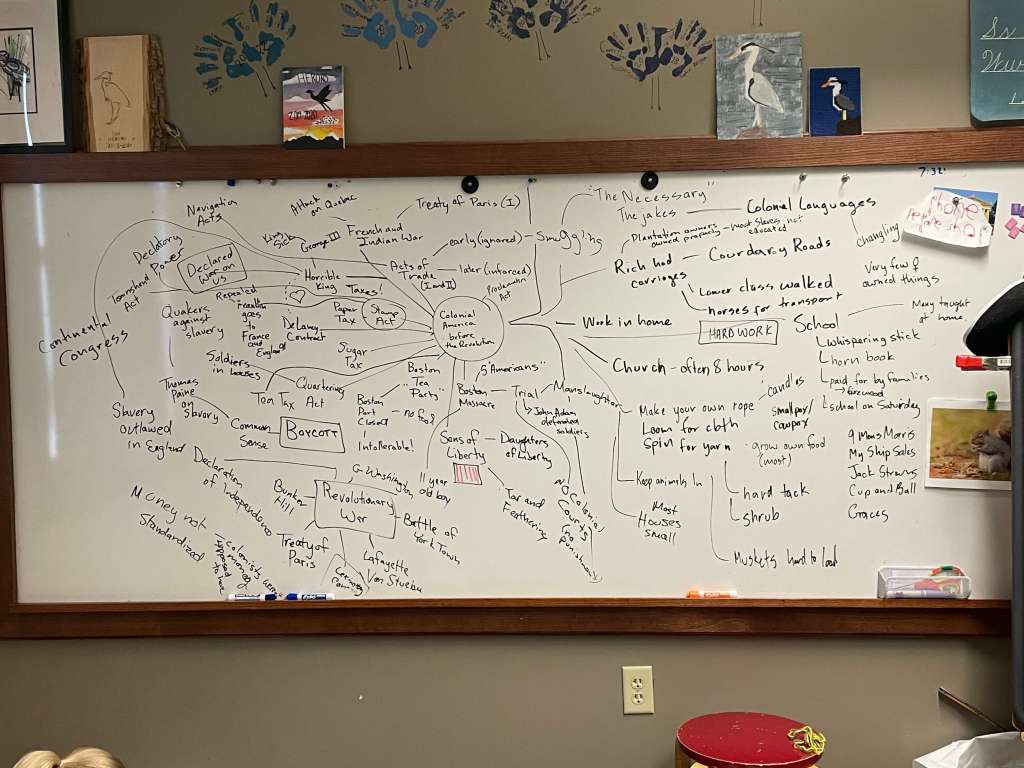
We had such an amazing week in the Herons. On Tuesday, we were able to teach the rest of the school what we had learned during our pre-Revolutionary America theme. And then, on Wednesday and Thursday, we were able to learn from new teachers.
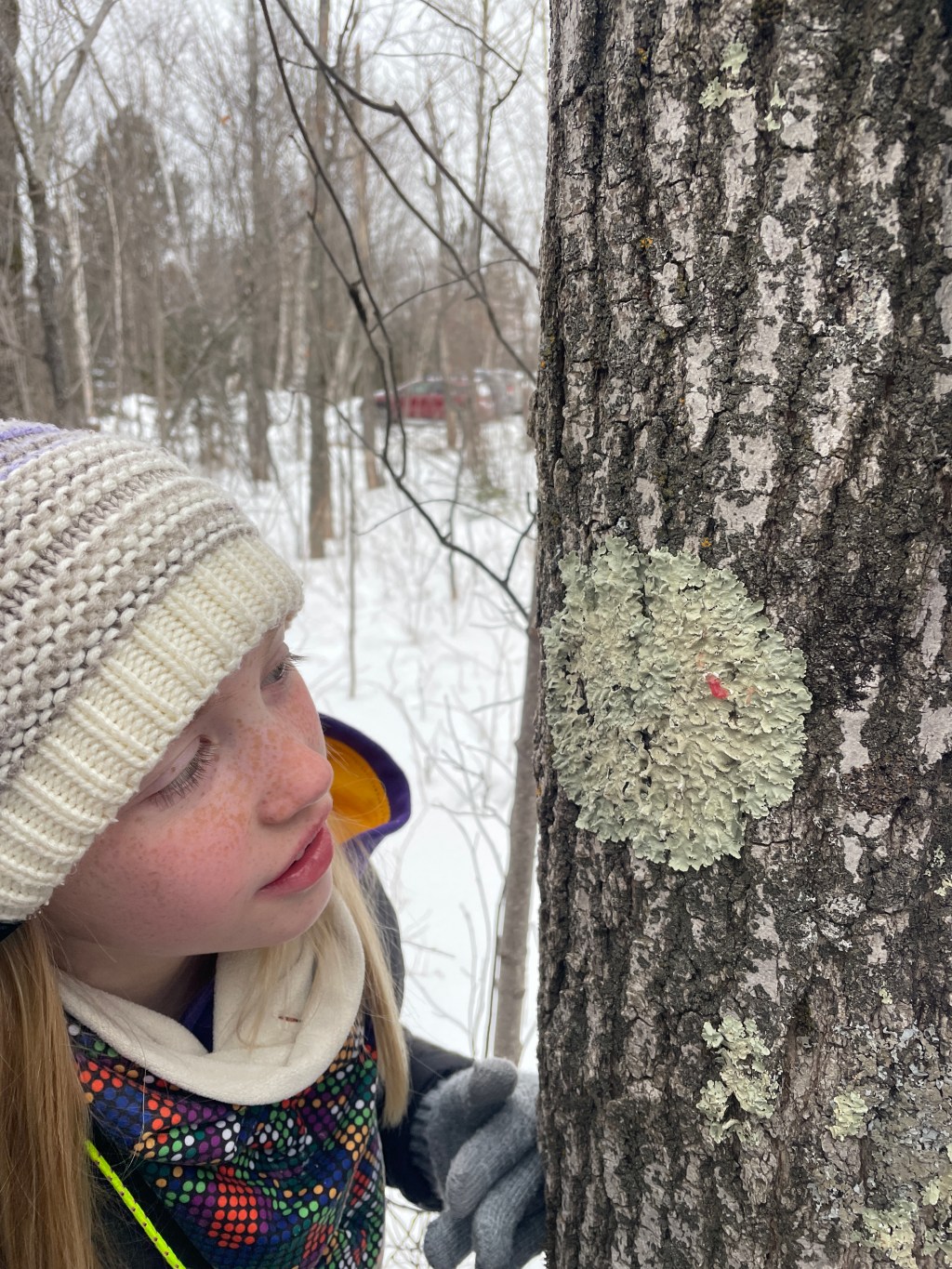
Susan Percy joined us for Forest School on Wednesday. She is a naturalist from Arizona and joined us on our ramble. We practiced our "dear ears" and our "owl eyes" and then we went for a walk where we practiced our forensic skills – puzzling out the tracks we were finding everywhere in the snow. We found vole holes and mice tracks and many, many rabbit tracks. We also found dear tracks that had filled in over time. We are still watching out for the mink tracks that we found last year. Nothing so far. Have they left the area? Will they come back?
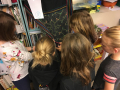
Susan also brought us a treasure trove of flora and fauna from Arizona. (I can't even imagine the conversation she had with TSA.) The Herons were amazed by the desert oak she brought — so different from our oak trees. We also loved comparing the different kinds of prickly pear — the rabbit ear being our favorite by a long way. The Herons had great insights about the adaptations that enabled these plants to survive in the desert. Thank you, Susan, for starting this conversation that is sure to continue. It was a perfect morning.
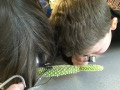


annatto dyed section.
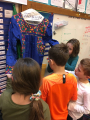
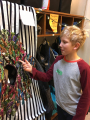
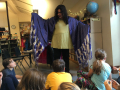
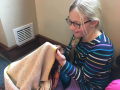
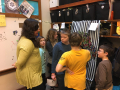
On Thursday, the Herons were able to learn from another guest teacher, Constanza Ocampo-Raeder, an environmental anthropologist from Carleton. Constanza brought 13 different textile samples and invite the Herons to inspect. They were asked to assign a value to each one. The Herons took their work very seriously and I was pleased to see how much this year's handwork informed their work. They carefully examined the backs of the textiles to see if they were machine made. They were fascinated by the different techniques used by the craftspeople.
Constanza shared the story of each textile with us. One was created by hand with tiny stitches and dye made out of insects. Another was created almost a hundred years ago by a woman who was one of the last five people to speak her language. One of the students' favorites turned out to be a machine made blanket that had all artificial pigments (but was beautiful, all the same). And, by the way, what is "beautiful" and how do different cultures conceive of beauty?
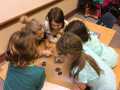
Whew! We followed that heady discussion with some good old fashioned pounding. Constanza brought annatto seeds and cochineal bugs for us to pound into powder and then use as dye. The Herons happily pounded and dyed away for the remainder of the day. It was a perfect afternoon.
Both Susan and Constanza commented on the way the Herons asked questions and were so engaged with what they were learning. How could we not when given such amazing opportunities.




 The Rookery
Leave a comment