When we first began teaching puberty education to our fourth and fifth graders – we were nervous. We were designing the curriculum based on best practices and after consulting with the community at the time but it felt like a big leap. We needn't have worried. Every year, the "conversations" we have are rich and remind us, once again, of how curious and interested students are — in everything, but, perhaps especially this topic that affects them so personally.
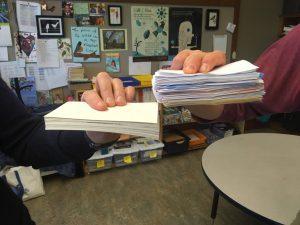
I wrote "conversations" in quotation marks because we ask that students share their comments and questions with us on index cards instead of raising their hands. This allows students anonymity and also enables us to curate the discussion – putting aside questions that we will answer later in the presentation or those that are, as we tell the kids, "in another chapter." We let the students know that if we don't answer their question it's because it is about something that isn't a part of the curriculum we've agreed to teach. It's not that something is inappropriate – just that it's a question that deals with concepts that not all kids are thinking about yet. We encourage them to ask those questions of their trusted adults…of course, that's easiest to do if a trusted adult has started the conversation.
Every year, we are amazed by the richness of the questions. They are so genuine and interesting. The students feel a deep need to know.
Some ask for information that we've already gone over – a reminder that kids need to hear things repeatedly as they are trying to build an understanding. Having book about bodies and puberty available around the house is a great way to help kids take in information a little bit at a time (see resource list below):
- How long does puberty last?
- What happens if you get your period at school?
- Does it hurt to have your period?
- What are hormones?
- Do you get annoyed at siblings more easily?
- Why do your friends sometimes change?
- Can you have your period while you're sleeping?
- What should you do if you're in a situation you're not comfortable in?
- What's the best thing to do when you get bullied?
- Can you still do a water sport if you are having your period?
- Should a doctor ask permission before examining your private parts?
- Why does your voice change?
- What's a cervix?
- Do other things happen when you get your period?
- Why do people make fun of people for having a crush on someone?
- Why do you have a crush on someone and then the next year you don't?
- Is acne the same as getting pimples?
- Does going through puberty cause depression sometimes?
Some ask intriguing questions that, while within the purview of our curriculum, we haven't gone over:
- Where does the word "puberty" come from?
- Why do people grow hair? What's its purpose?
- Are steroids and hormones the same thing?
- What's a prostate gland?
- How do you tell a very close friend that they're making you feel bad if they don't know they're making you feel bad?
- Do cats have puberty?
- Why are penises so sensitive?
- I've been noticing my leg has been falling asleep a lot…is that a part of puberty?
- Does doing active sports slow down puberty?
- Is it sexual abuse to kiss someone without their permission?
- Why do people laugh about private parts?
- Why do males have breasts?
- How did we find out what was on the inside of bodies?
And some questions we don't address as a group – but instead encourage students to ask their trusted adult. We don't read these questions out loud; we just let kids know if we don't read their question they can ask their adult:
- How do babies start to be made?
- How does sperm get transferred to the egg?
- Are hormones different for gay people?
- How do you tell if someone is gay?
- Why do people freeze their eggs?
- Do teens have sex?
- What are condoms?
- What's rape?
- What happens during sex?
Whew! The next step is yours. Don't save everything for "THE TALK." Instead, learning about growing up should be a series of frequent conversations. Share a few of your own stories about growing up and then see what your child wants to talk about. Have your own way to collect questions (a note book or index cards). Pick a book below as a bedtime read aloud. Trust us – it gets easier every conversation you have and it can help your child see you as a resource and support.


 The Rookery
Leave a comment