
When the Herons started heading outside for Forest School on Wednesday, I had no idea we would still be doing it ten years later. The very first day was not auspicious – cold and rainy, we settled in for our independent reading period which ended thirty minutes later with a few tears and twenty pretty soggy books. I've learned a lot since then and continue to learn every time we head out.
The key lesson has been to lean in to serendipity. Teaching outside is unpredictable – the most perfectly planned lesson can be rendered impossible by a twenty mile per hour wind. Conversely, the most memorable lessons can emerge from an encounter one could never plan. Last year we were on the plaza learning about food chains when a hawk swooped down and nabbed a robin about forty feet away from where we were. I always have an idea of multiple directions we can head with the day's lessons — it's more of a fold out map than one of those old AAA Triptiks that take you straight from Point A to Point B.
Our Forest School days do follow a routine – there's just a lot of flexibility within that routine. I'll take you through a typical day.
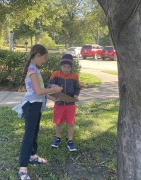
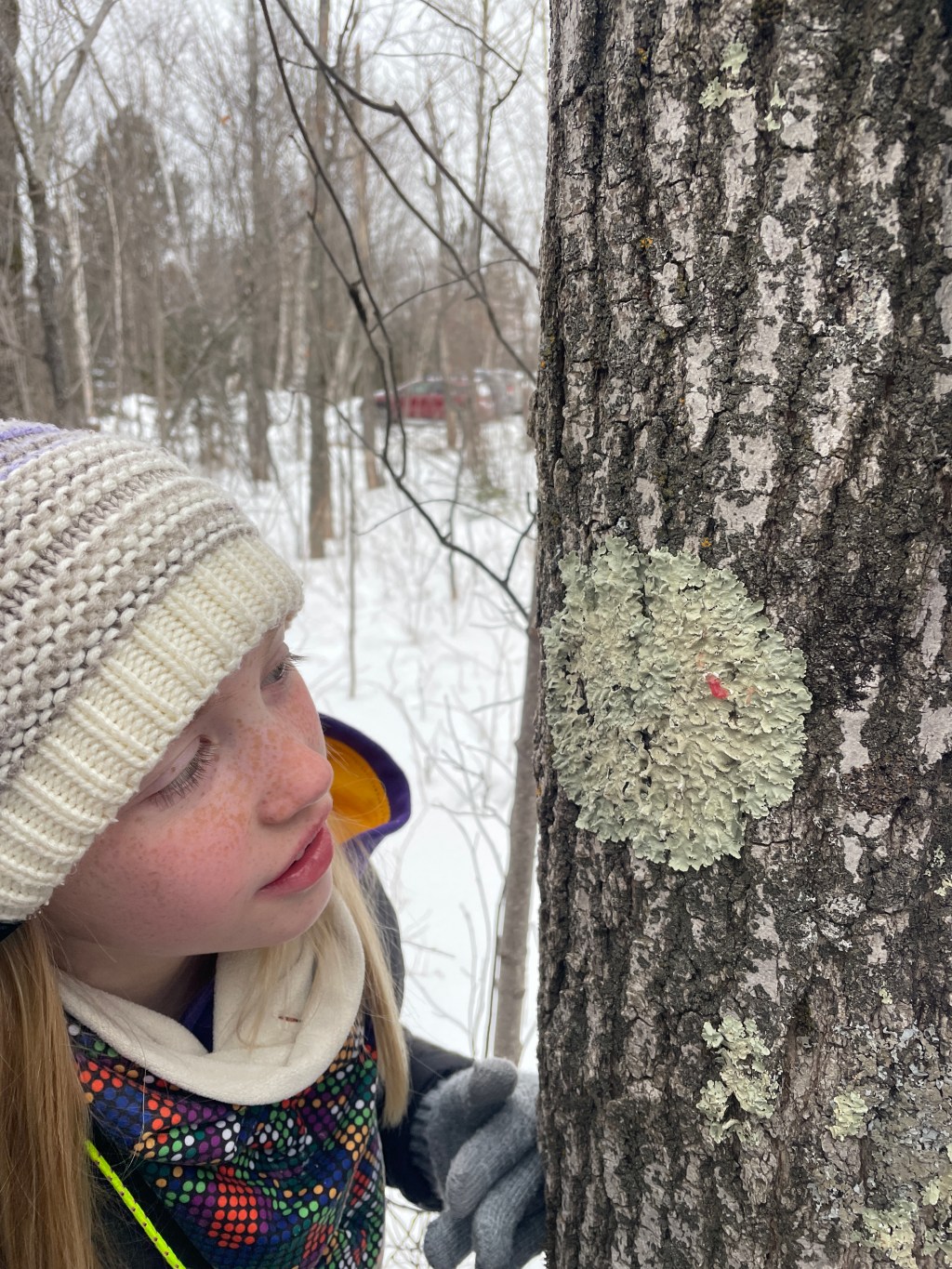
Collect Nature's Notebook Tree Data – Since the start of forest school, the Herons have been collecting data for Nature's Notebook, a community science project that collects phenology information from across the country. Each pair of students is responsible for a tree on the property and they record things like bud break, leaf color and leaf drop. Because the pairs are a fourth grader and a fifth grader, the trees are "handed down" through generations of Herons.
Literacy – We often read an article about a topic in the natural world that has come up in our discussions. This reading can take many forms – sometimes we read in groups, sometimes as individuals. We often work on skills like summarizing, vocabulary development, or identifying author's craft and non-fiction text features. This week, for example, we read an article about Minnesota's hawks from the Minnesota Conservation Volunteer. We identified the craft the author used to draw us in to the article and then partnerships read about one of Minnesota's hawks and reported interesting information back to the whole group. We recorded the information using a Venn Diagram to look at similarities and differences among the three types of hawks. (The inspiration for our reading came from watching a broadwing hawk catch and eat a garter snake last week during forest school!)
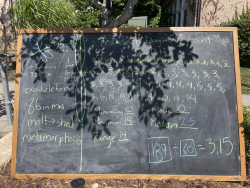
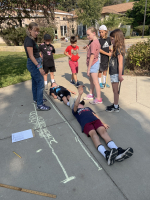
Numeracy – Working outside affords a lot of opportunities to work with real world numbers. We do a lot of estimation, measurement and data handling. Last week we did a transect count of dragonflies then found the maximum, minimum, range, mode, median and mean of our data set (all key fourth and fifth grade data landmarks.) This week we used a table to find the wingspan of many different birds. We drew some of those wingspans on the plaza using measuring tools and got some practice centimeters to meters.
 Rambles/Art Explorations/PE – Our next activity varies from week to week. This week we created 3 line horizon paintings in our nature journals. We were inspired by Eleanor Jensen, our artist in residence two years ago, who is creating a horizon painting every day for a year. We often head off on a ramble or nature walk where we inevitably discover many, many interesting things that we can put into the hopper to learn more about during future forest school days. When the weather cooperates, we sometimes get to cross country ski!
Woodscraft – We end forest school with woodscraft. Often we learn a new skill then can choose from a menu of skills to practice. This week, students learned how to handle a knife safely and how to do a very basic whittling stroke. Last week, we made cordage from day lily leaves. Other woodscraft skills will include fire building (and fire safety), cookery, knot tying, shelter building and more.
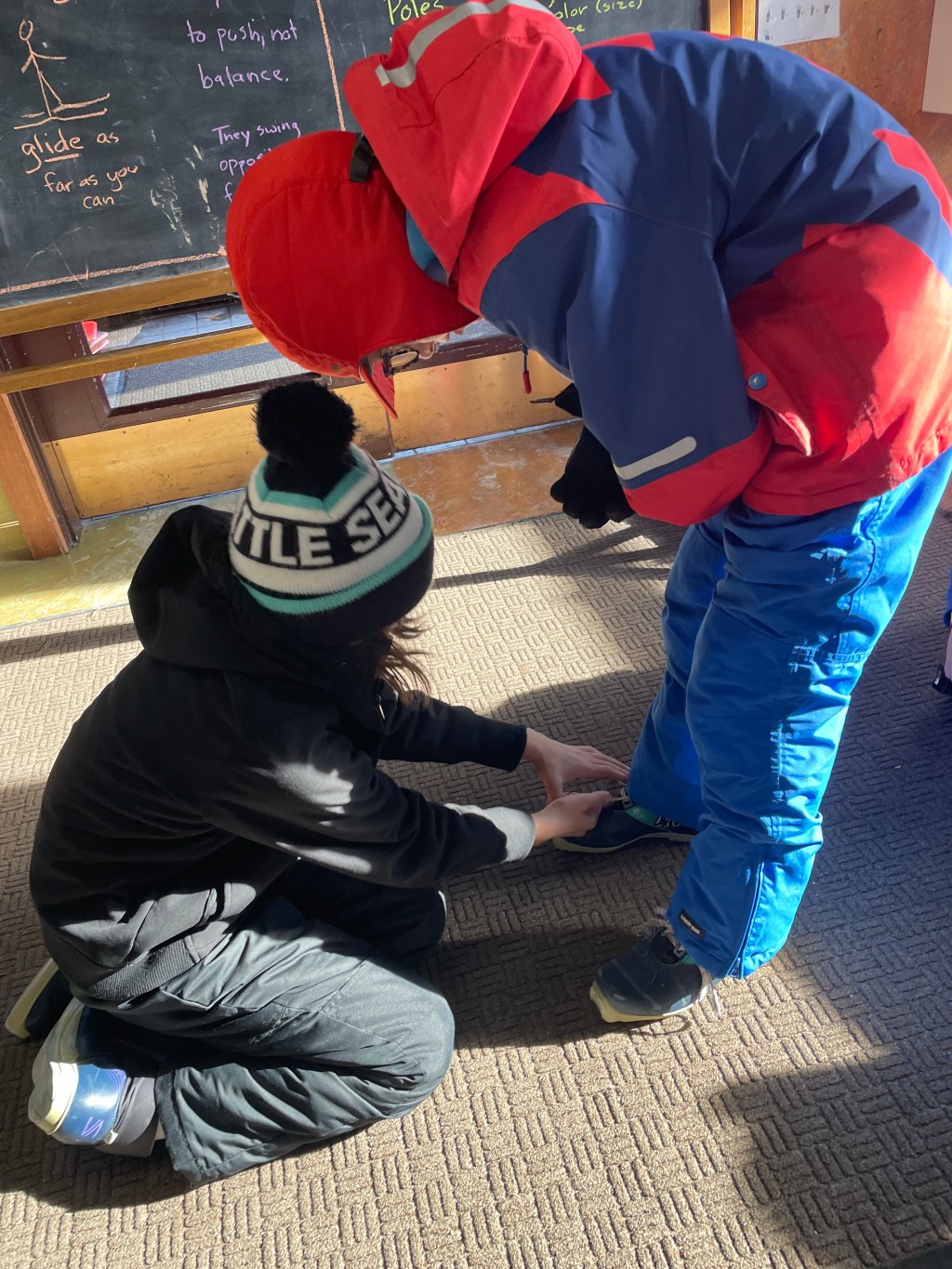
While all of this learning is important, I think the most valuable part of Forest School may be the "soft skills" (a term I'm not thrilled with but which is out there.) Students learn to be responsible for their gear decisions — there is no bad weather, just bad clothing choices. They learn how to persevere and even enjoy being outside when weather isn't 70 degrees and sunny. They learn to monitor what they need — getting cold? time to swing my arms and stomp my feet. They learn how to practice new skills until they become comfortable. They become more attuned to the natural world and its changes. They are curious about what they see and they notice more.


 The Rookery
Leave a comment