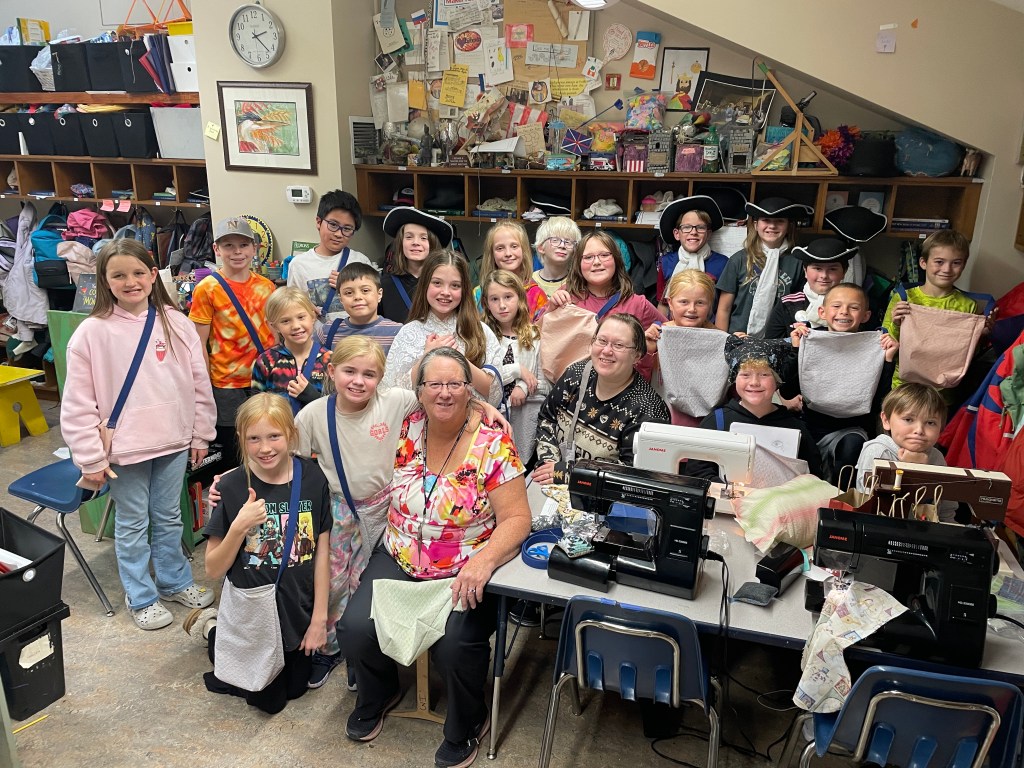
I was skeptical. A new to Prairie Creek grandmother had reached out to me because she wanted to do a machine sewing project with a class. Sewing? With the whole class? At the same time?! I had done some hand sewing in the past with students but she wanted them to learn how to sew on sewing machines. Shelley was confident and she had a lot of experience with kids. She had also secured ten machines for us to use for a week. I took a deep breath, “Sure! Let’s do it.”
So very early on a Monday, Shelley arrived with the machines. We set them up and she threaded them all. They were much fancier than any machine I had ever used and they were threaded differently. I realized I might be no help at all when students had questions. We would be learning together — and that was okay. In fact, it was more than okay. So often children this age see adults as competent, finished products who can do everything and they have a sense that we’ve always been that way. They rarely see adults learning new things much less struggling and failing. But when they do get to see how we handle new learning — the confusion and messiness of it — it can be invaluable. They see how we got from point A to point B and they realize they can make the same journey.
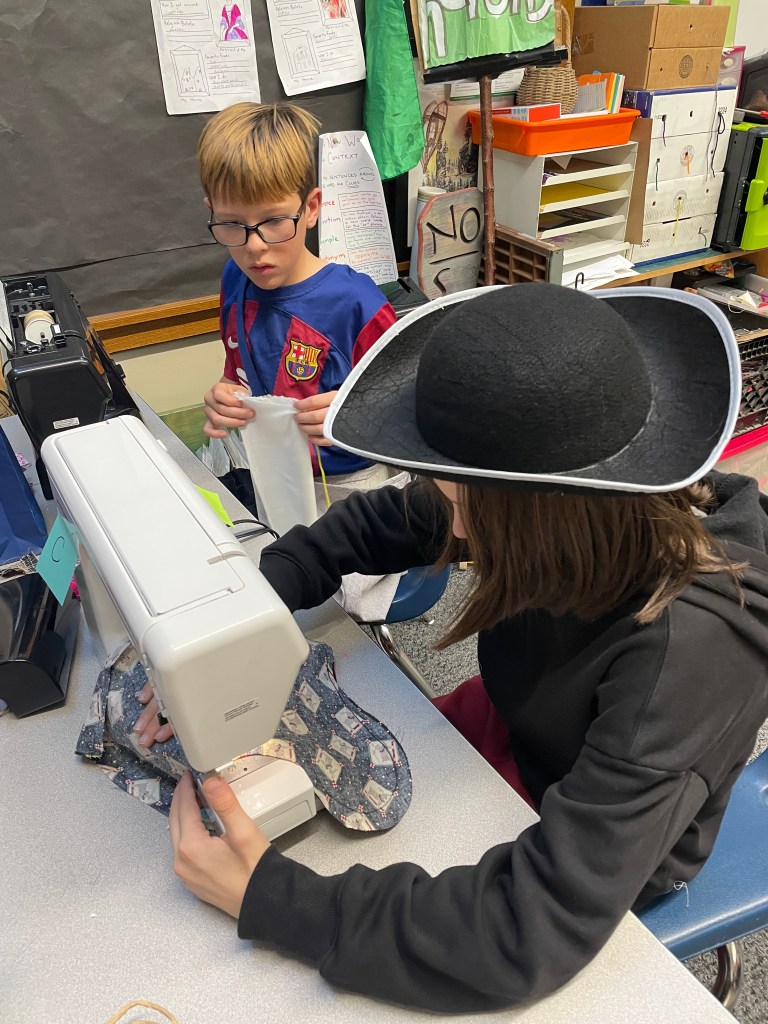
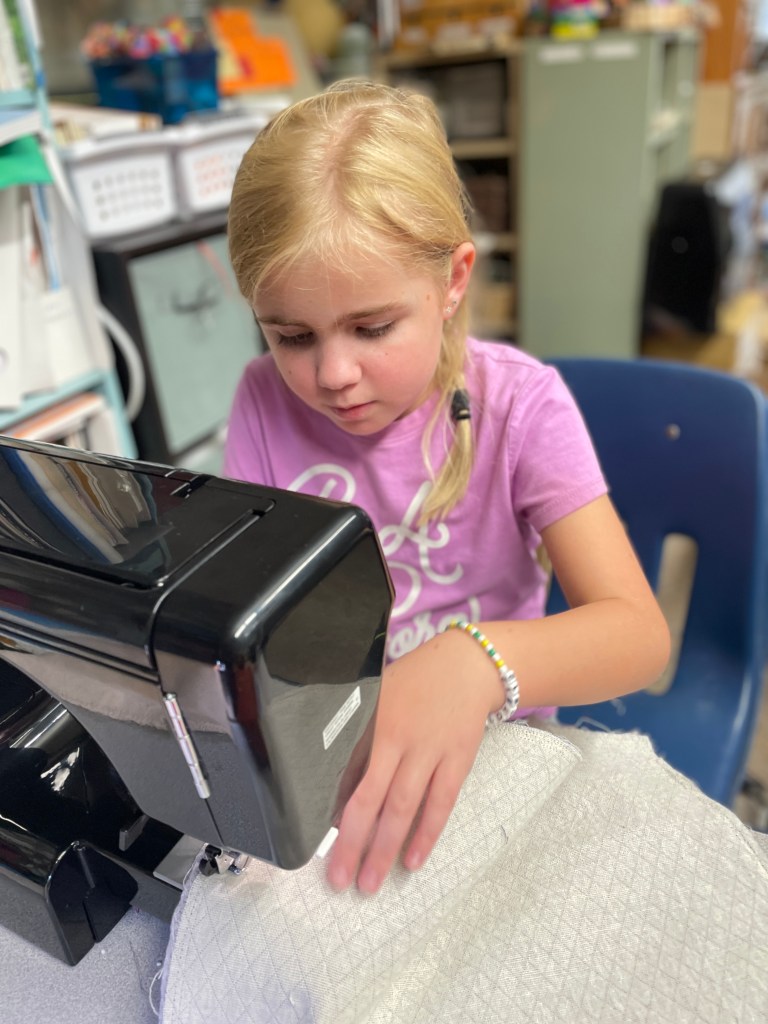
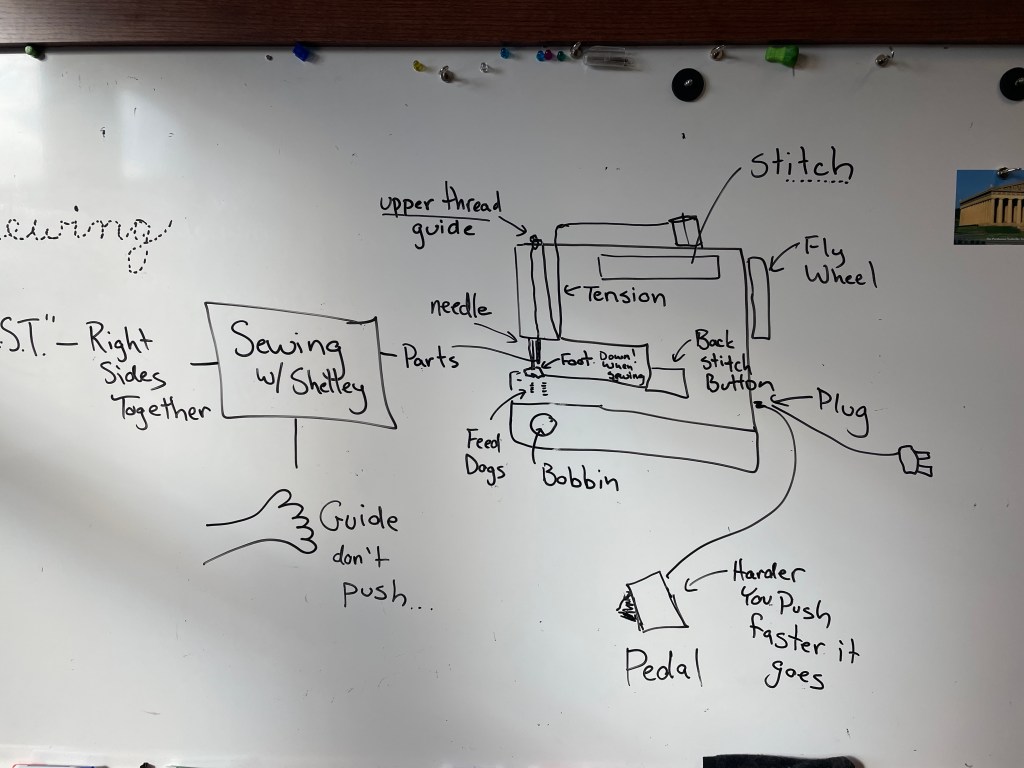
The second the Herons came in they wanted to get started. “Wait, wait! Shelley is going to show us what to do,” I implored. Much to my surprise, Shelley gave them a very brief intro: foot pedal makes it go, this puts the pressure foot down, guide with your hands, don’t push. “Give it a try!” she said gleefully. Wait! I thought. What about the bobbin? What about threading? What about…what about…what about…But it was too late, they were off.
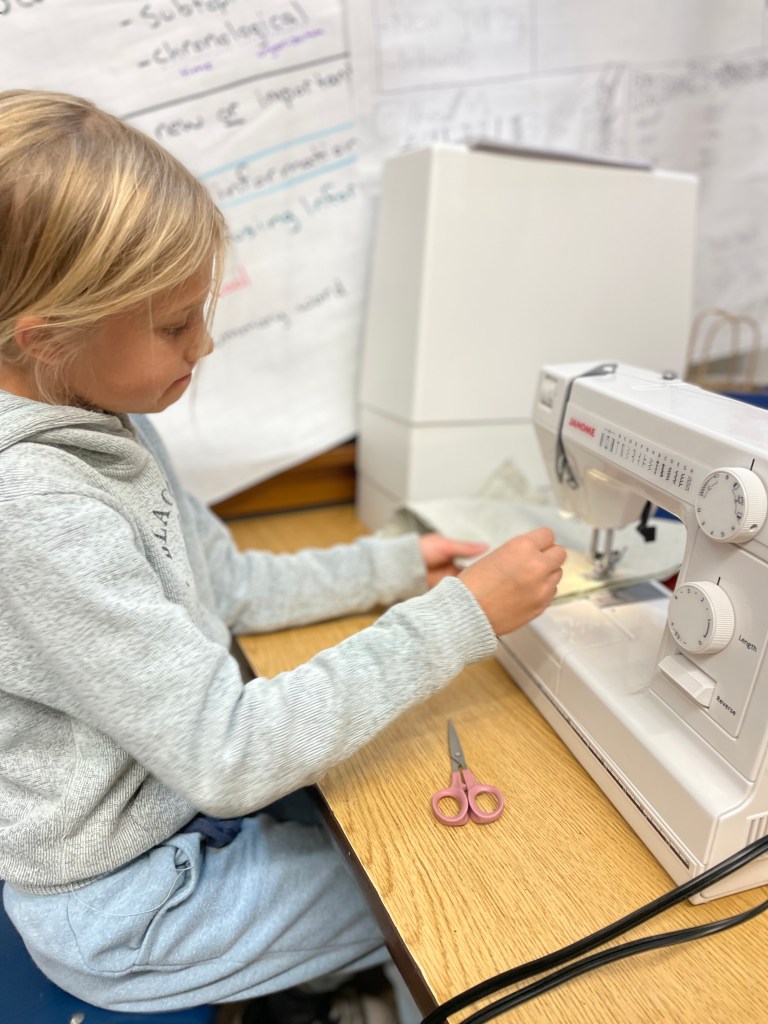
And sure, there were snarls in thread when they forgot to put the pressure foot down. There were a lot of needles that came unthreaded. There were crooked seams on scrap fabric. But very quickly the Herons began to get the hang of it. When one child figured something out they would share it with their table mates and soon, as though through osmosis, the whole class would know. Shelley let them experiment for a full hour and a half and soon many were able to thread the needle again. Seems were straighter. Someone asked if they could do zigzag and Shelley said, “Sure!” before I could say, “No! We’re not ready for that.”
Shelley was doing what I try to do every day. She was creating an environment in which students were hungry for more knowledge and had an authentic need for what they were learning. That need is the driver in a progressive classroom. I realized I had been about to shut it down because I didn’t have the depth of knowledge I needed to trust the students would get where they needed to go. Teaching progressively can be terrifying if you have a narrow understanding of something – what if students ask you something you don’t know? What if they get off on a tangent? Instead of having a broad sense of the possibilities, you see only one pathway. But it’s rarely memorable learning when one is always told to stay on the path.
So I just smiled and asked the student if I could learn zig zag with them and when things got terribly tangled, we snipped the threads and read the manual (Shelley was busy) and realized what we had done wrong. Then we fixed it.
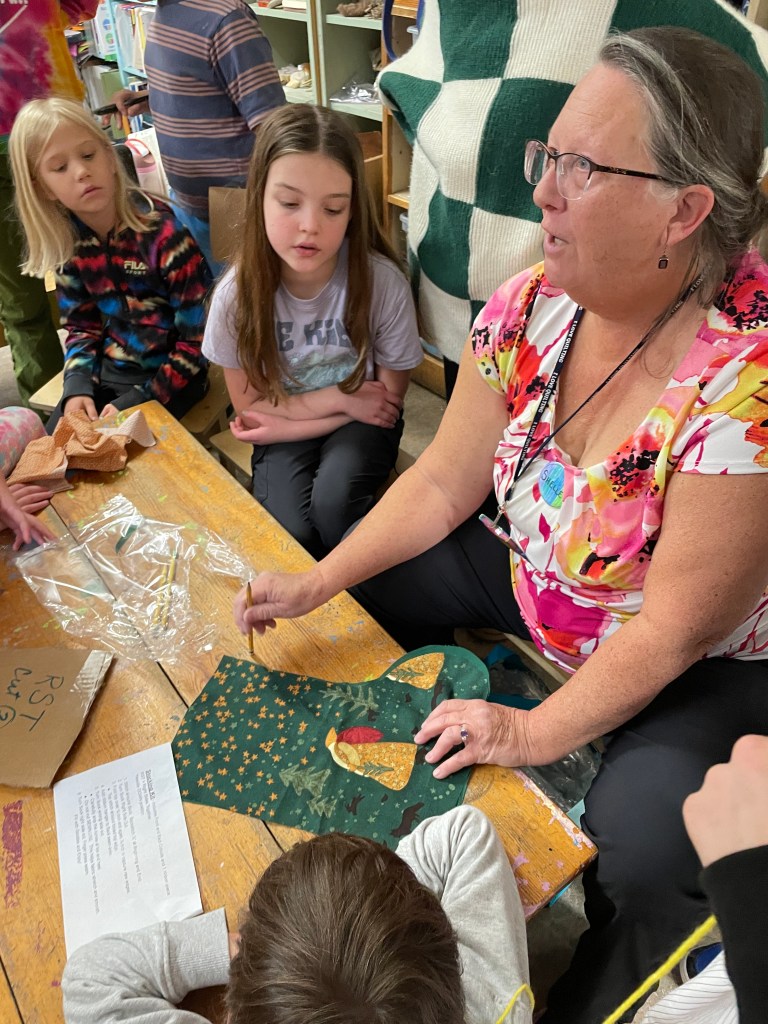
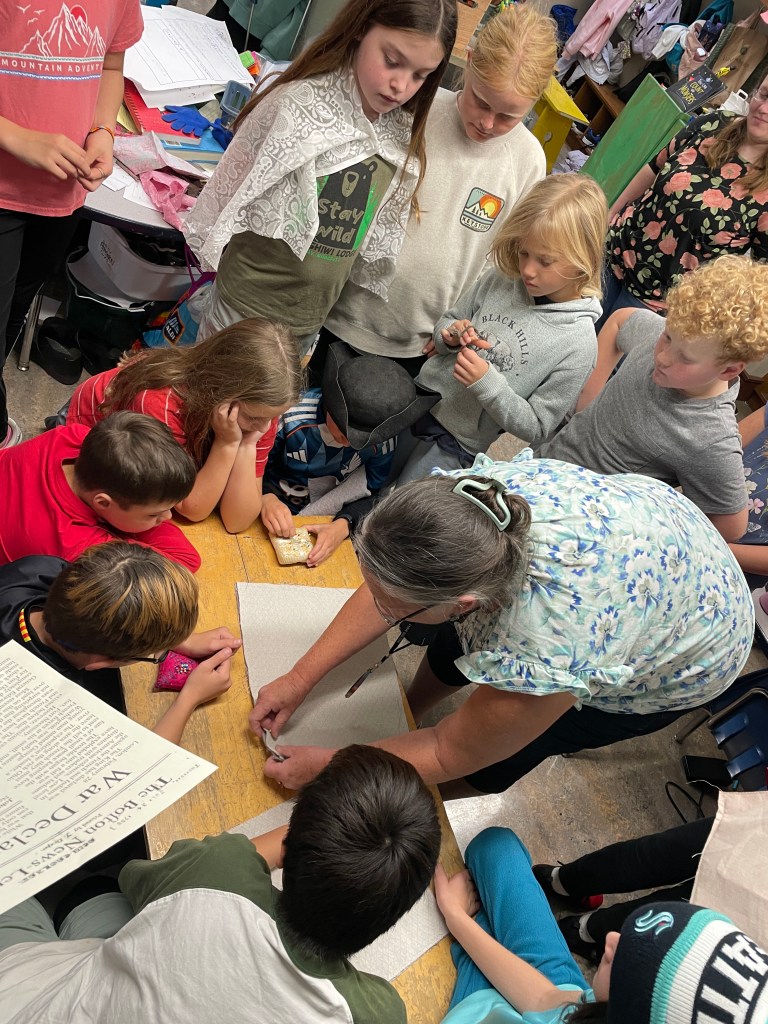
Shelley began the afternoon with a lesson sharing tips she thought would be helpful after watching the students sew in the morning. They were a rapt audience. They learned how to use a spider to keep the thread from going back through the needle. They learned how to load a bobbin. They learned what the various dials did. They shared advice on threading a needle. Students who felt they were getting it volunteered as “consultants.”
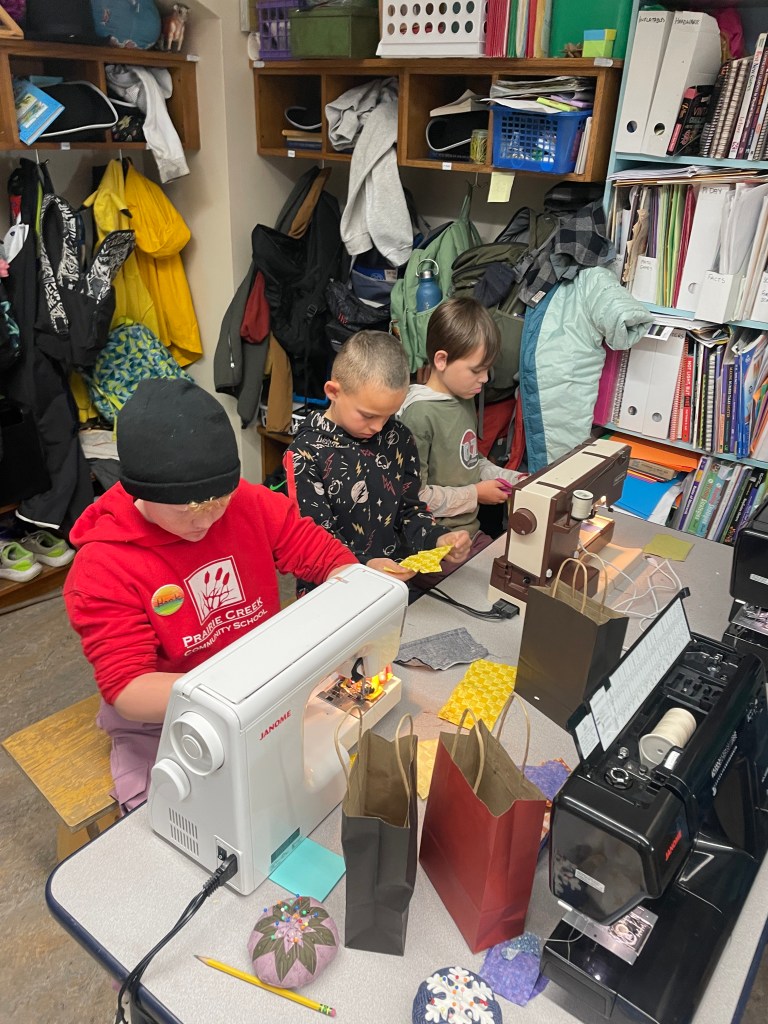
And that was how our week progressed. Shelley gave them just enough information to get them going and off they went. When something went wrong, she taught them how to use a seam ripper to try again. Students learned that their mistakes were all fixable; it wasn’t a big deal. Instead of being upset, one student was laughing hysterically when he sewed his bag around all four sides announcing to the class he’d made a “very flat pillow” instead of a pocket. No one’s work was perfect — but everyone was creating a bag that was their very own.
When Shelley had shown me the prototype I had had my doubts. A pleated bottom, zigzag stitch, canvas webbing…surely these were too complex for a first project. But Shelley had felt sure we could do it. And she was right. In fact, everyone had their bag done early and we got to work on a bonus project (or two or three.)
It was a great week and, while I am glad we don’t have ten sewing machines in our class every day, I am very excited that we’ll have one set up and ready for us to continue creating. Will things go wrong? Sure. But everyone (including me) has learned that you just undo the mistake and have another go.




d


 The Rookery
Leave a comment