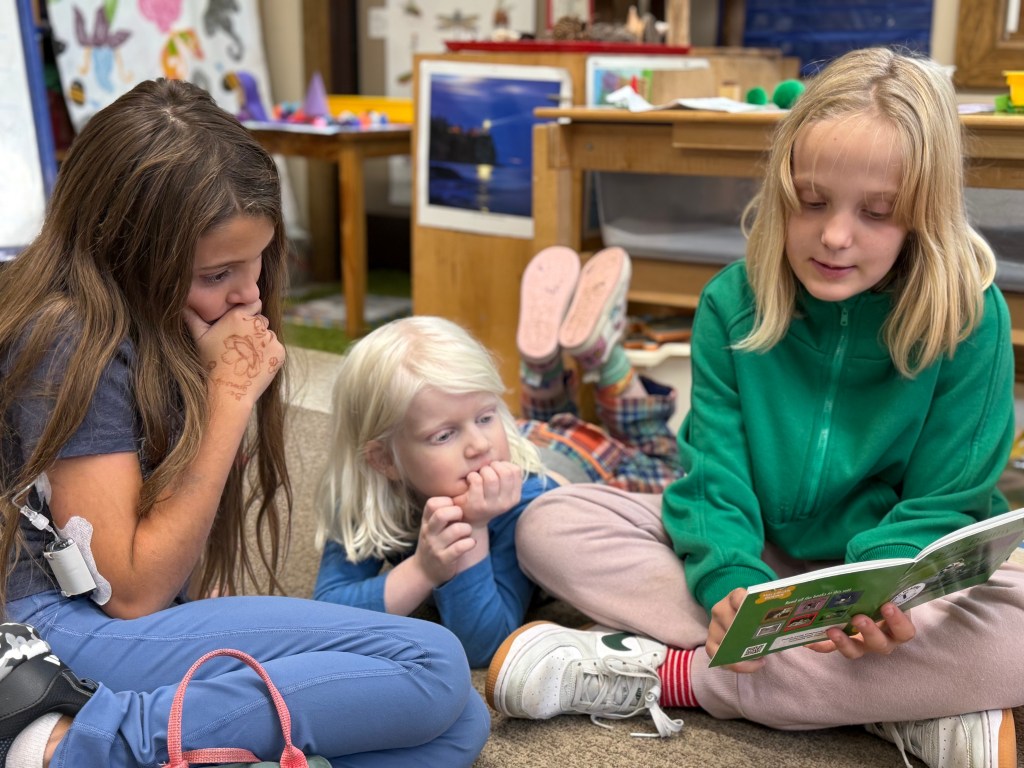
Today (Monday) was the seventh of eight sessions for our READ Act professional development. Over the past year, we’ve spent sixty hours learning about the science of reading. The law mandates both professional development and curriculum adoption. We were, of course, concerned about the way the mandates might change our program. Often, these solutions are one-size-fits all and progressive schools are anything but that. Further, our MCA reading scores were consistently above the state average and our peer institutions. Was this solution tailored to us or would it force us to change something that was already working?
This summer, we took a long look at the curriculum that we were going to adopt at the 4/5 level. Its focus is “morphology” or, according to etymonline (one of the resources we’ve learned about), the “study of the form of language.” Now, this is not something new to us. However, as we reflected on our approach, we realized that we were casual in the way we explored new words. We talked about word origins all the time but there was no “product” for the students, nor were we explicit about how the word parts worked together. We designed a new series of mini-lessons based on the most valuable prefixes, suffixes and base words. (Value as measured by those word parts which can best help students puzzle out new words.) We learn one a week and, as part of the lesson, we brainstorm all of the words we can think of that use that morpheme.
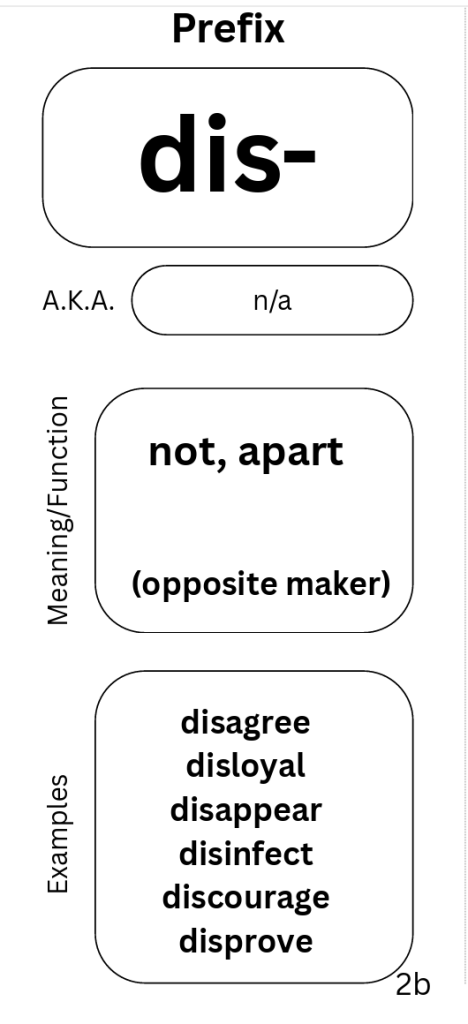

My favorite example so far was the prefix “dis-“. When we brainstormed words that used that prefix, one student called out, “disembowel!” Why, yes…yes, that is an example. We had a good conversation about what it might mean to “embowel” someone because we had had the prefix im/in and we thought it might be related. (Nerd out break: it turns out that “disbowel” was the original word in the 1400s but then the extra syllable was added in for reasons unknown in 1520.) That might have been the end of it but at forest school the next day, Kelsey brought over the remains of a bunny and the students announced it had “definitely been ‘disemboweled.’” Playing with language is such a key part of becoming a good reader – words are fun and fascinating and playing with morphology has helped students see the many connections among the words they already know.
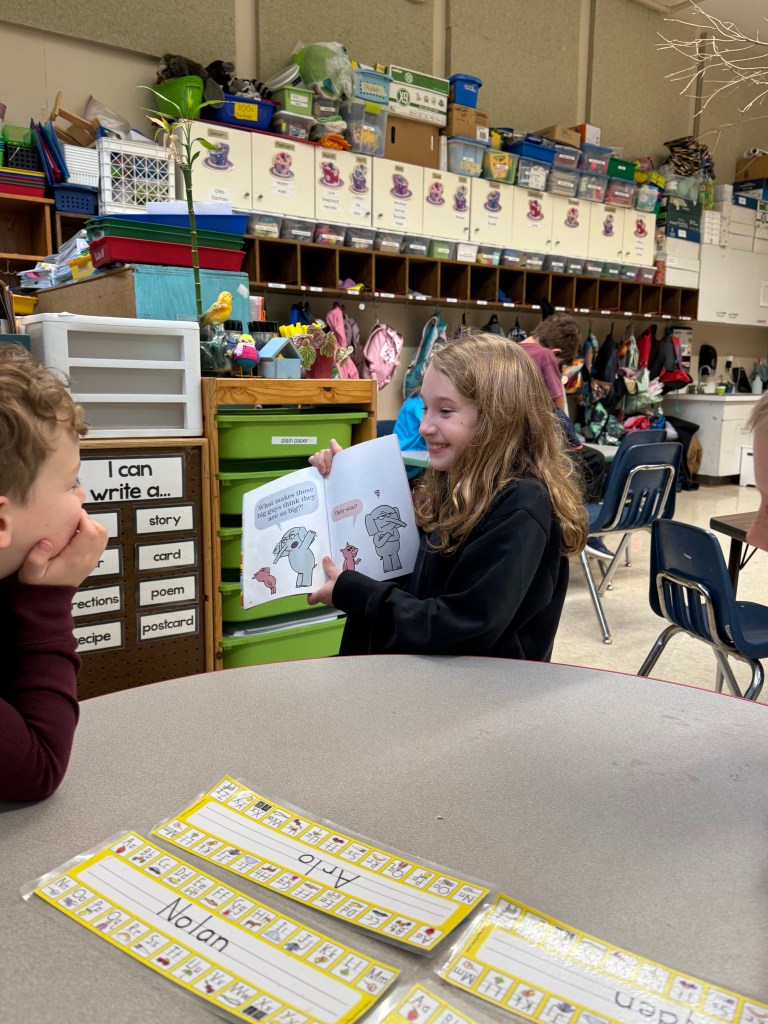
I’ve also added more opportunities for students to read aloud. Fluency is a key part of being a strong reader but it is more than being able to decode words quickly. To be truly fluent, one must “hear” the sentences in one’s head, almost like a book on tape. In the past, I often encouraged students to visualize like a “movie in your head” but I had given short shrift to the sound track of that movie. Students should attend to phrasing, punctuation, and dialogue if they are going to deeply understand something. To do that, they need practice reading a text a few times. We’ve especially enjoyed practicing a picture book with a lot of dialogue to share with our bird buddies.
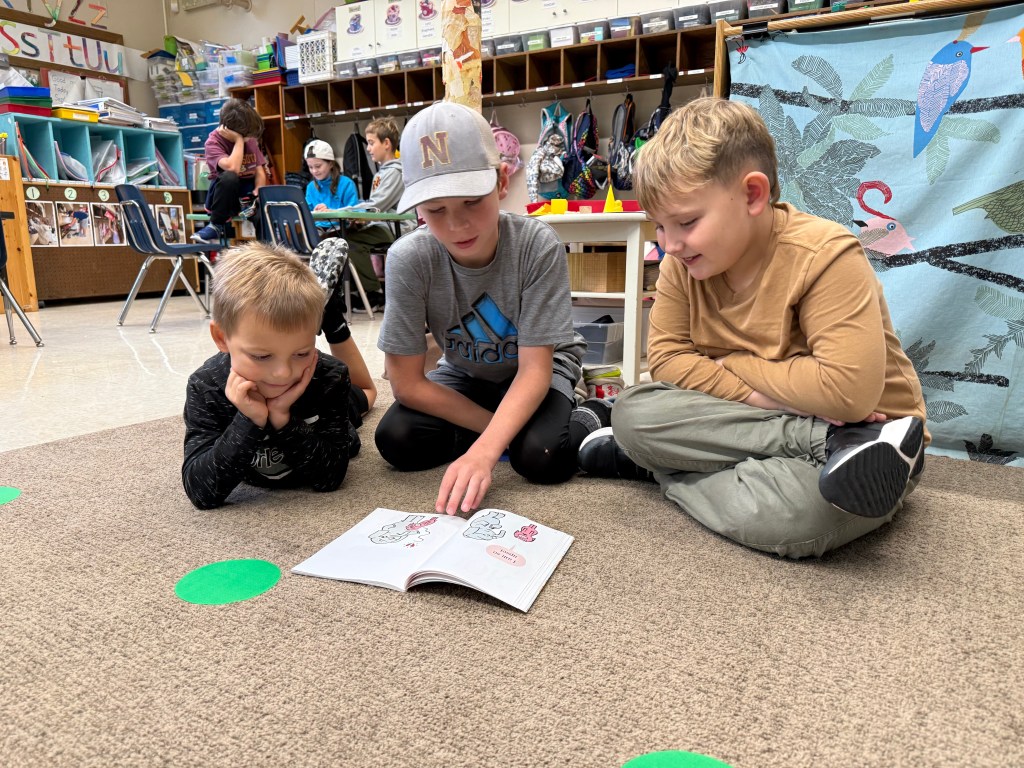
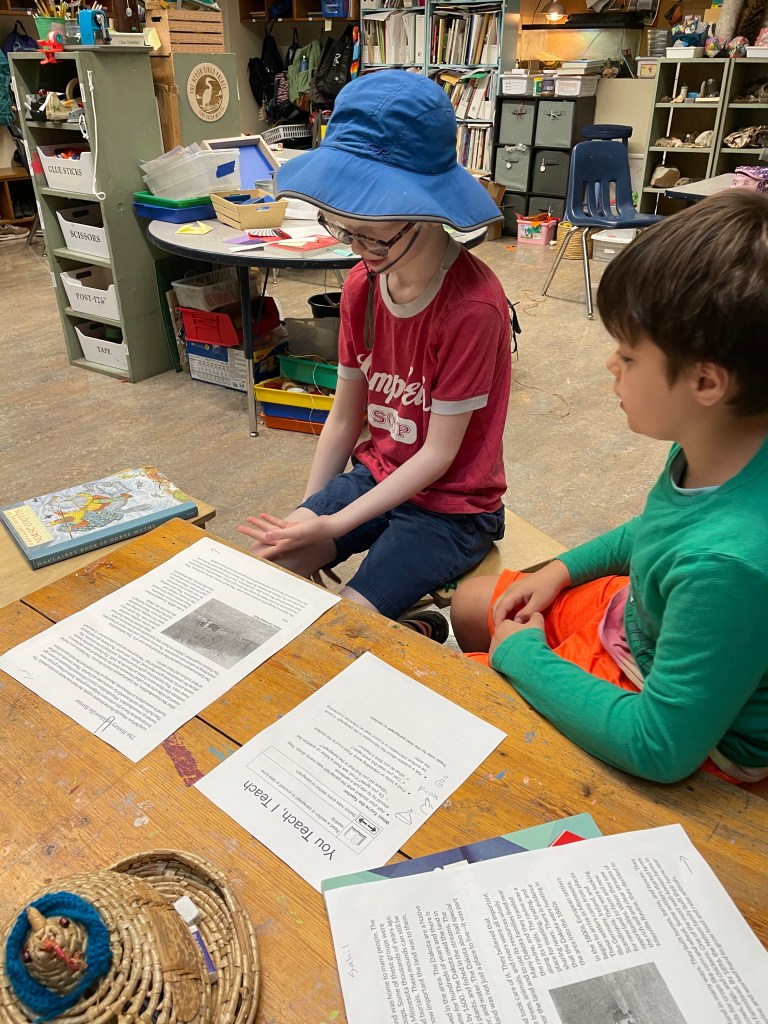
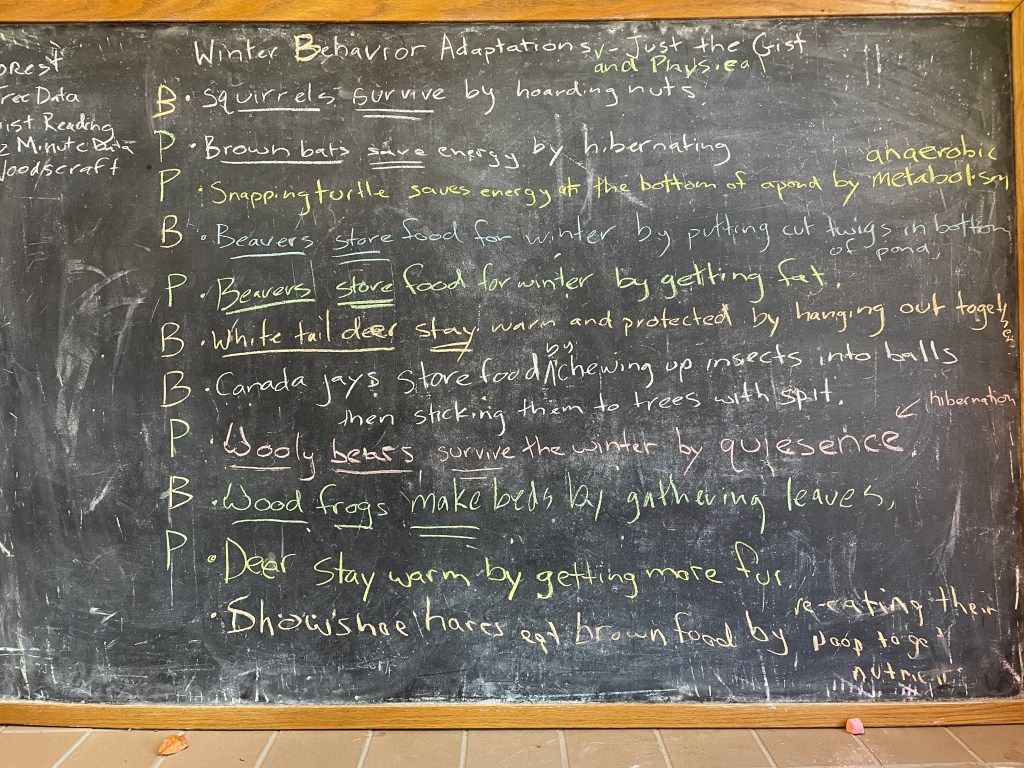
Finally, we’ve added more opportunities for writing during reading. Students regularly respond to what they are reading on a post it focussed on a reading strand such as character, word choice or figurative language. We have also been working a lot on summary which is a very challenging skill for 4/5s. I love for kids to be able to choose a book and immerse themselves in it. I also want to ensure that they are growing as readers and employing the tools that we are learning.
Reading is an exceptionally complex skill, one that our brains have not had a chance to evolve to be able to do naturally (speaking, yes, but not reading.) If we want students to be able to critically compare texts, identify bias, and navigate layered narratives, we need to be very intentional about how we teach. Of course, the biggest reward is being able to lose oneself in a new world that you’re able to construct from marks on a page.


 The Rookery
Leave a comment