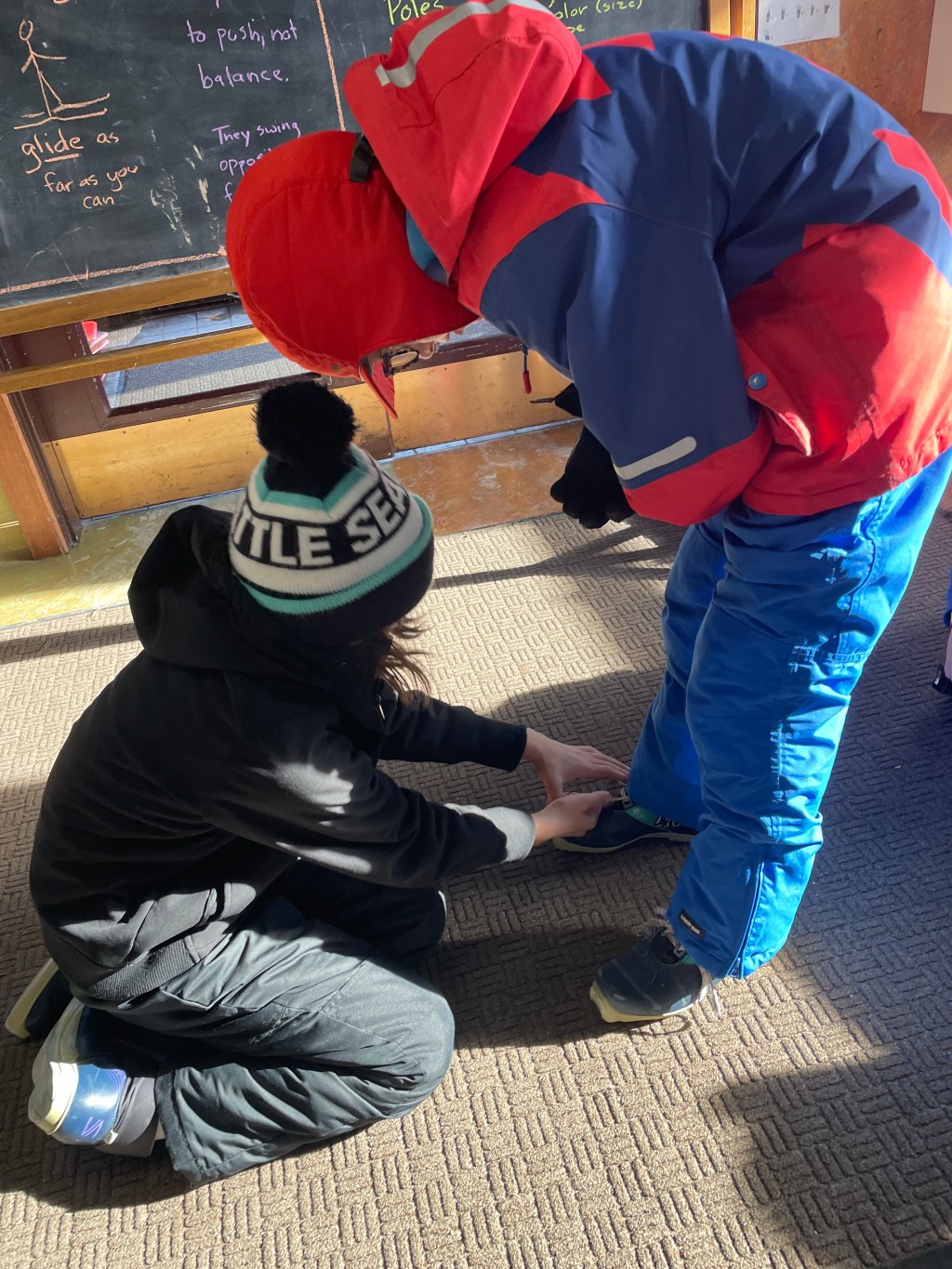
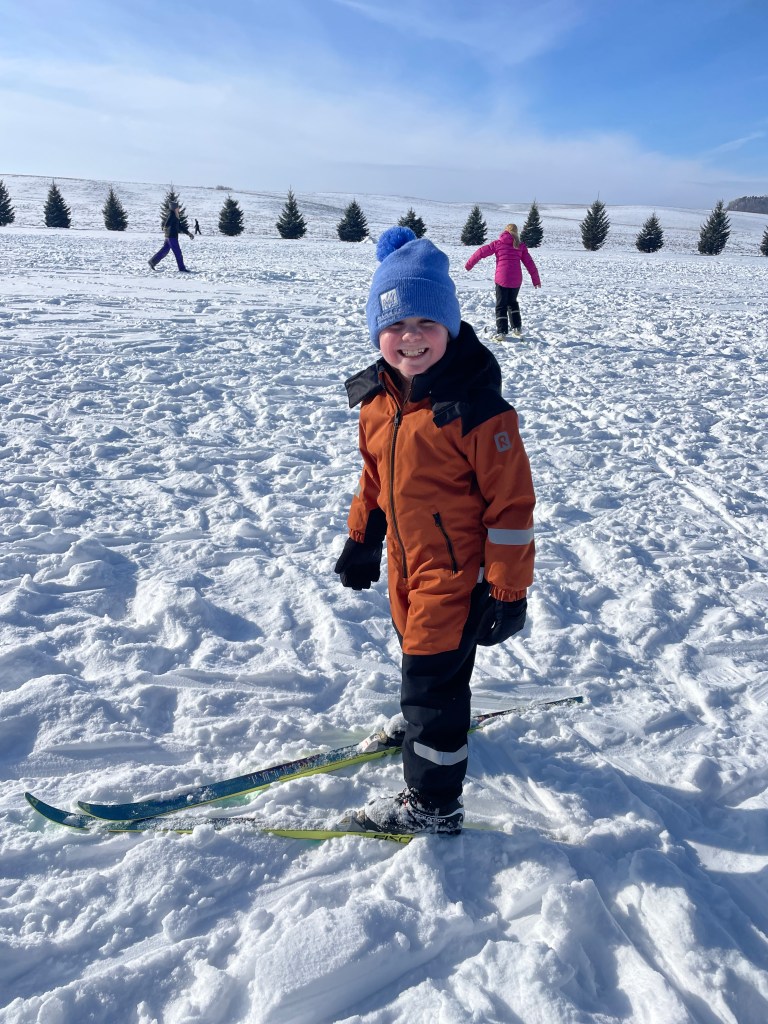
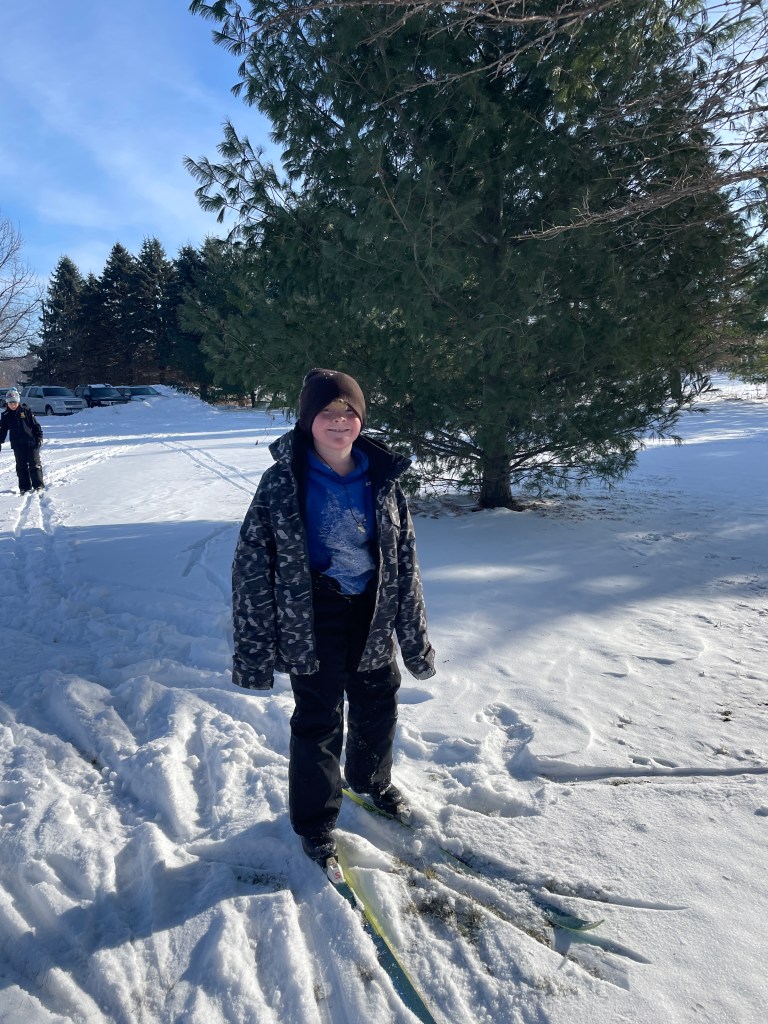
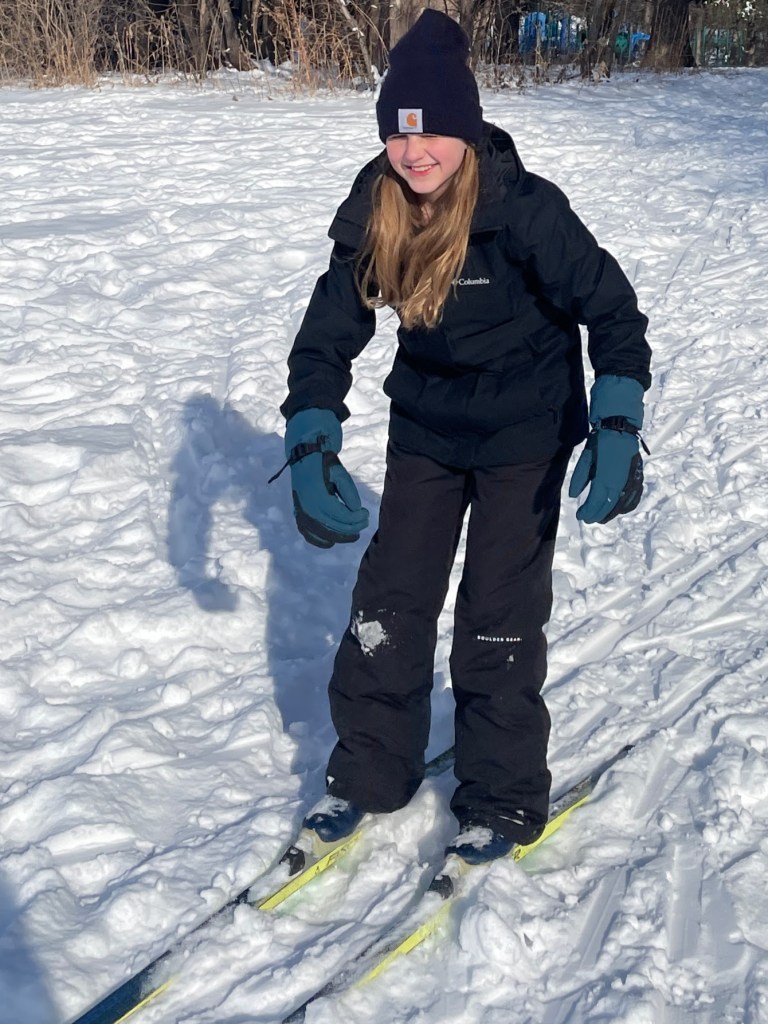
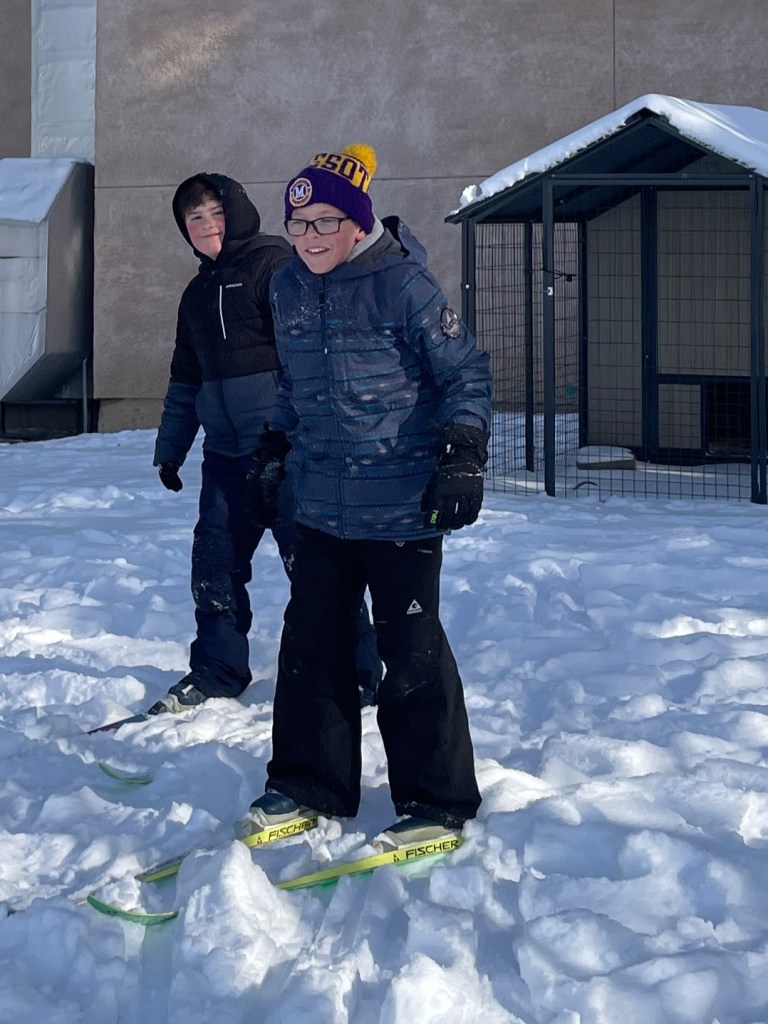
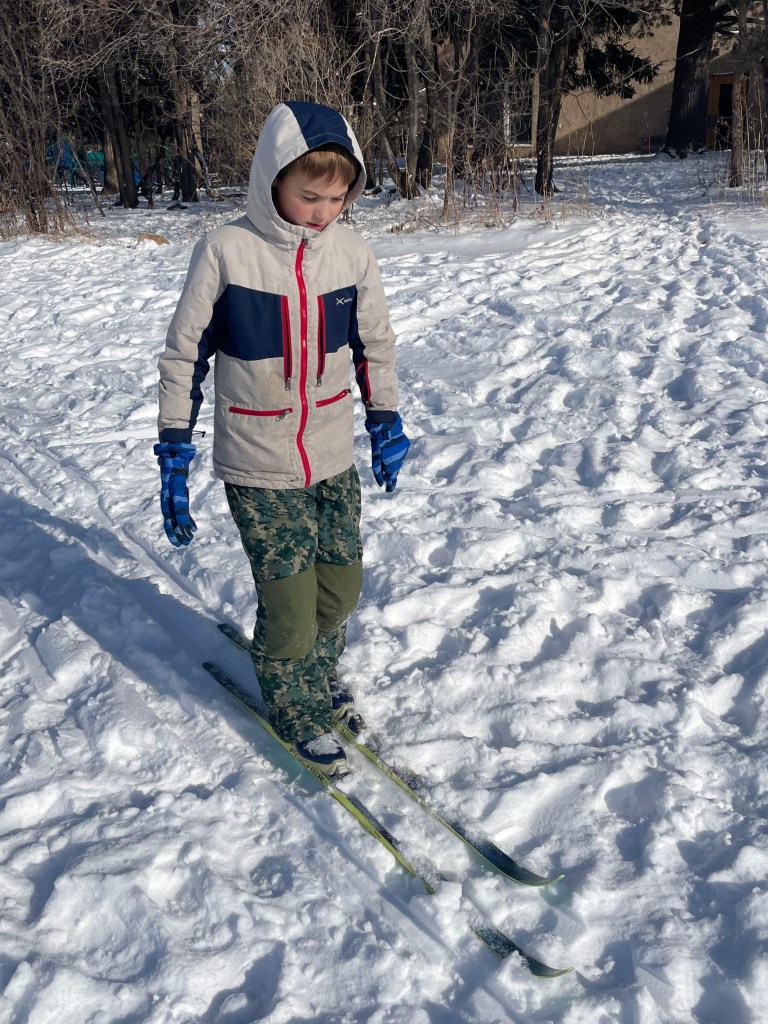
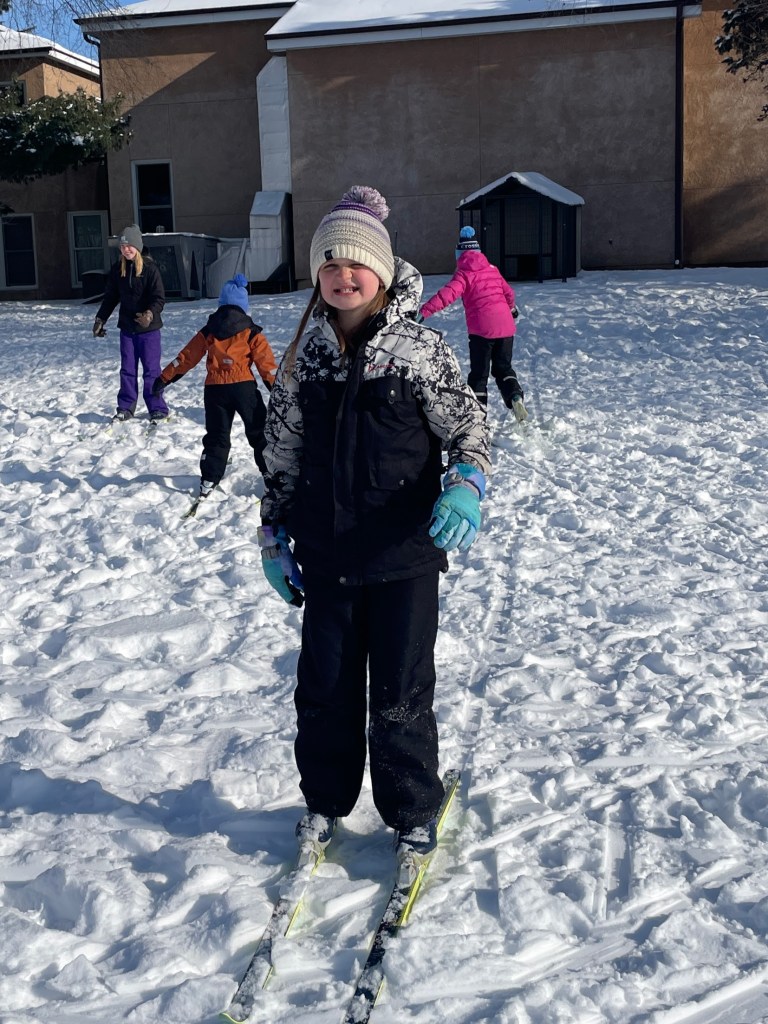
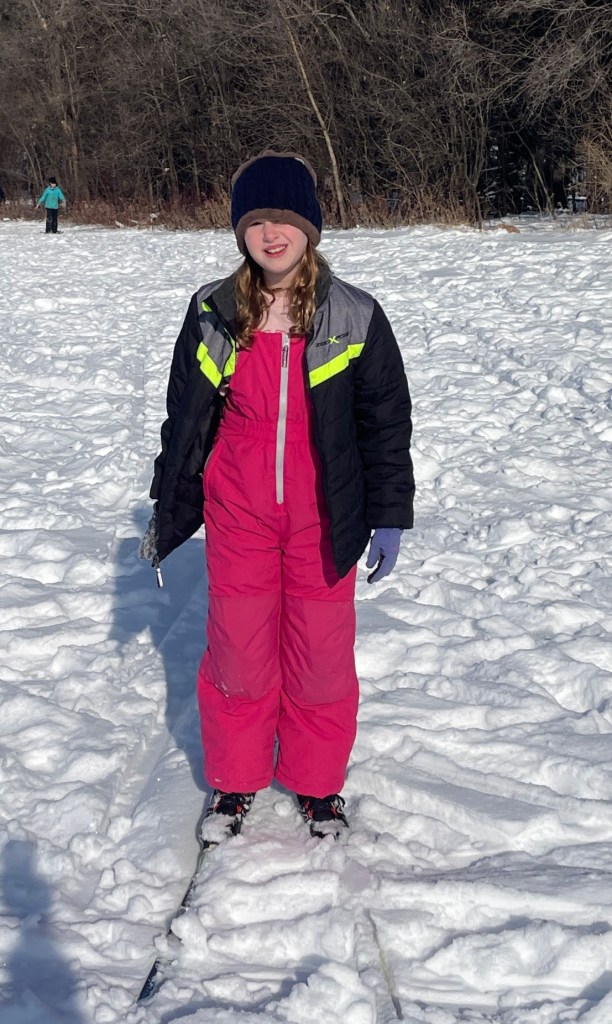
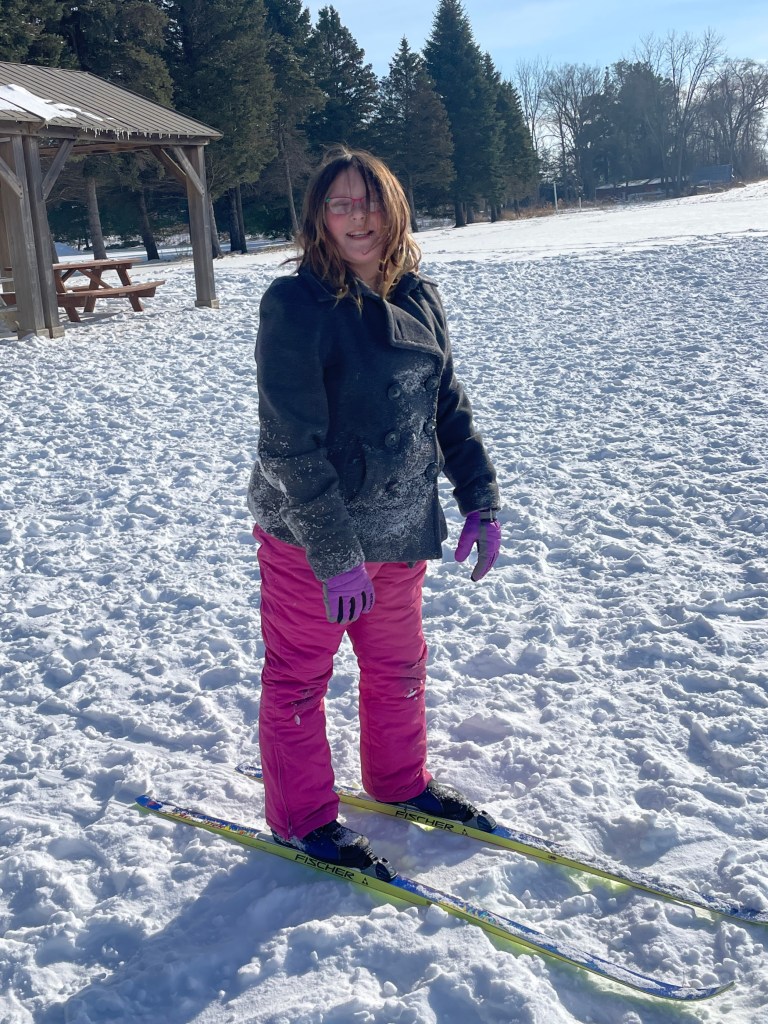
The Herons went for their first ski of the season today. On Monday, we got everything ready – venturing down to the basement for all of the boots, building the shelves to hold the boots, cleaning out the ski shed and organizing all of the poles. Today we learned about physics of cross country skis, how to clip into them, and how to use the “dead bug” to stand back up when you fall. It’s never easy when you’re trying something new.
I explained to the Herons that I hated cross country the first six times I tried it – why would anyone ruin a nice walk in the woods by strapping long, cumbersome sticks to their feet? Then a friend taught me some basic techniques and I was able to find a rhythm to my movement. Suddenly I was moving with less effort, not more. It’s rare that the students take six tries to like skiing — young bodies are less stubborn than older ones, I suspect — but it still takes some time to feel comfortable and enjoy it.
I was truly impressed by the Herons’ willingness to tackle this new skill. They supported each other and helped each other. By the time I got out of the school building (I was helping the last couple students find the right size boots) all but two of the Herons had gotten their skis clipped on — several of the fifth graders had waited to put their own skis on so that they could help the kids who hadn’t done it before. I hadn’t asked them to do this; they just did it because they saw that it would be helpful. Wow.
When we got back in, I asked the Herons to think about what habits of mind they had used on our first outing:
- Persisting – every hand went up. This wasn’t easy for anyone.
- Finding Humor – there were a lot of dead bug jokes – we fell a lot!
- Working interdependently – students shared they had encouraged each other and had helped each other. I was especially touched when several students worked to teach their peers how to tie a shoe.
- Applying past knowledge – students talked about remembering how to use the bindings and how moving the opposite hand/foot was like throwing a ball.
- Innovating – I asked who had tried to do something on their skis that they hadn’t done before. Children are natural challenge finders – almost everyone had played around.
- Remaining Open – Many of the students shared they had learned how do do something new from a peer. The Herons were doing a great job of teaching each other.
- Striving for Accuracy – students don’t use poles until they have achieved the step, push, glide rhythm necessary for skiing efficiently. If they get poles too early, they use them for balance and don’t move beyond shuffling. Students were working hard to master this new way of moving.
- Taking Responsible Risks – I was about to wrap up our conversation when one of the Herons called this one out. Everyone agreed that they had been uncomfortable at some point but had kept pushing themselves.
It is rare that an activity that takes just under an hour can yield so many opportunities to learn and grow. Cross country is remarkable in that way. It’s the perfect balance between accessible and challenging. You can have fun without being great at it — and even when you’re great at it, there are more things to learn.
Here’s hoping the snow sticks around for a while – we’ve got some skiing to do!







 The Rookery
Leave a comment