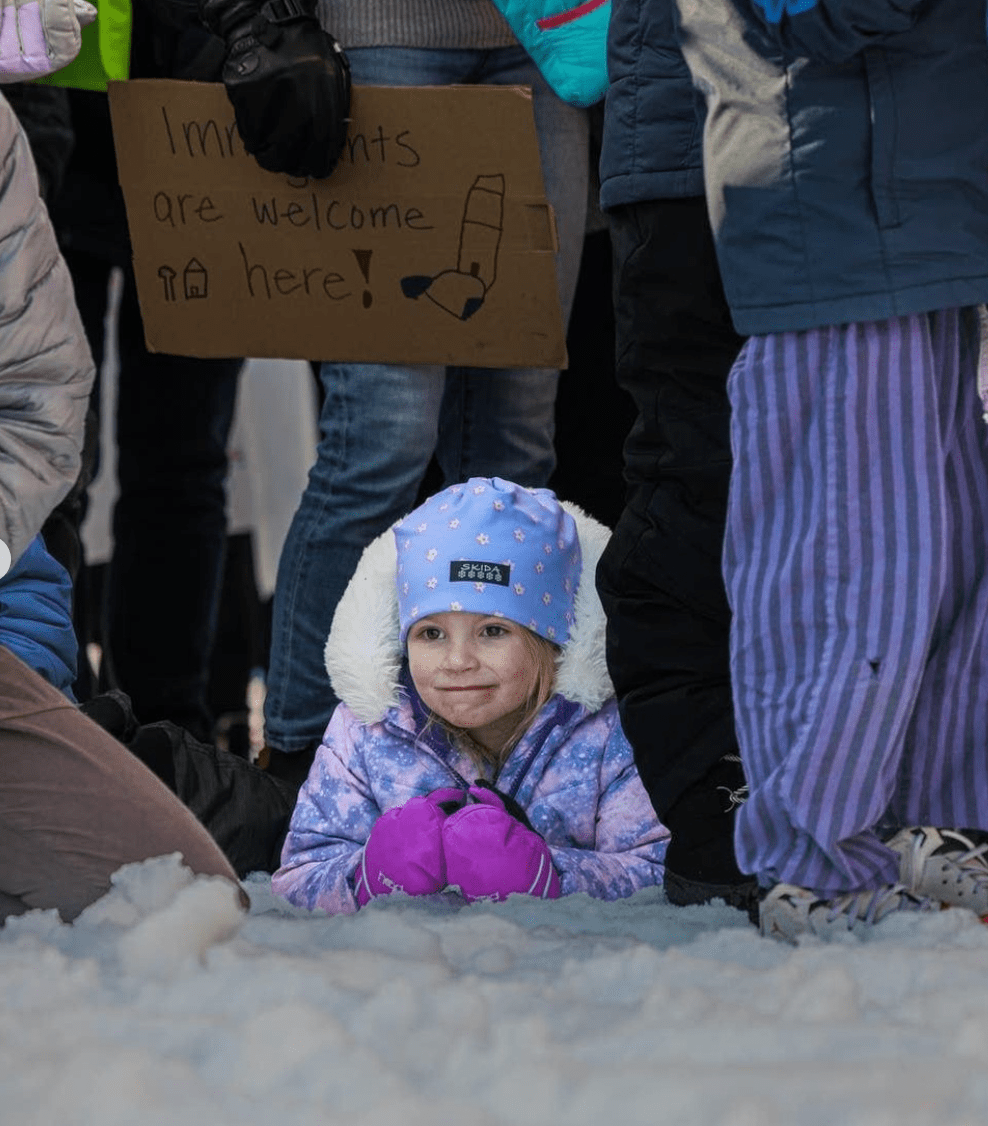
It was time. Several children had mentioned things about protests and ICE over the past few days. One had expressed worry about immigration enforcement in Northfield. Governor Walz had declared today a day of unity and had asked Minnesotans to do service and reflect on the ways in which we are connected. My sense was that there might be a lot on the Herons’ minds right now. Fourth and fifth graders are keen observers of their world; then know when the adults around them are preoccupied and they are good at gleaning bits and pieces. Without help, they often have difficulty coherently or accurately piecing together the bigger picture. The bits and pieces can also be misconstrued and cause unneeded worry and concern. I learned this my first year of teaching when a student shared that he hadn’t been sleeping because he was worried about “Saddam Hussein’s Nuclear Acid capabilities.”
So this morning I gathered the Herons in the meeting area and shared that they might have noticed that there were some big things that had been going on in the news lately. There were many nods. I explained that Governor Walz had declared today a day of unity because a woman who was protesting in Minneapolis had been killed. I also explained that she had been protesting the way that immigration enforcement was happening in Minneapolis. I asked the Herons what questions they might have about what they had heard. Hands went up quickly.
Many of the questions were basic. We clarified what immigration was and why people might come to a new country. Sometimes they are “pulled” by the hope of a better job or life. Sometimes they are “pushed” by war, repression or hunger. The students wanted to know about the process of being an immigrant and we talked about ways that people can get permission from a country to immigrate and that sometimes people don’t have permission or they stay longer than they had permission to stay.
They had heard about ICE but didn’t know what that stood for. We’d already talked about immigration. The 5th graders knew about customs from Village and explained what they were to the 4th graders. I explained that “enforcement” meant making sure people followed the laws. I explained that Immigration and Customs Enforcement was part of the national or federal government and that they had existed for a long time.
The next question was why, if ICE had existed for a long time, they were in the news now in Minnesota. I explained that the current president had promised when he was running for president that he would remove people from the country who didn’t have permission to be in the U.S. “Are they doing this in every state then?” one student asked. I shared that they were focussing more on some states than others and explained that in many places in Minnesota, the police and other first responders did not ever ask if a person had permission to be in the United States. That was seen as the job of the national government, not the local one. The local police wanted anyone to feel safe asking for help so they won’t ask about immigration status (I explained that, too.) So there was more national enforcement here right now.
Soon we had explained what political parties were, the basic platforms of the Democrats and Republicans, what had been going on in Venezuela, what international laws were and how they get decided upon, what the UN was, why people were protesting ICE actions, and how, until the Supreme Court decides otherwise, ICE is able to use someone’s language, race or profession to assume that they might not have permission to be in the U.S. We also talked about what was happening with Greenland, NATO, and the Bill of Rights.
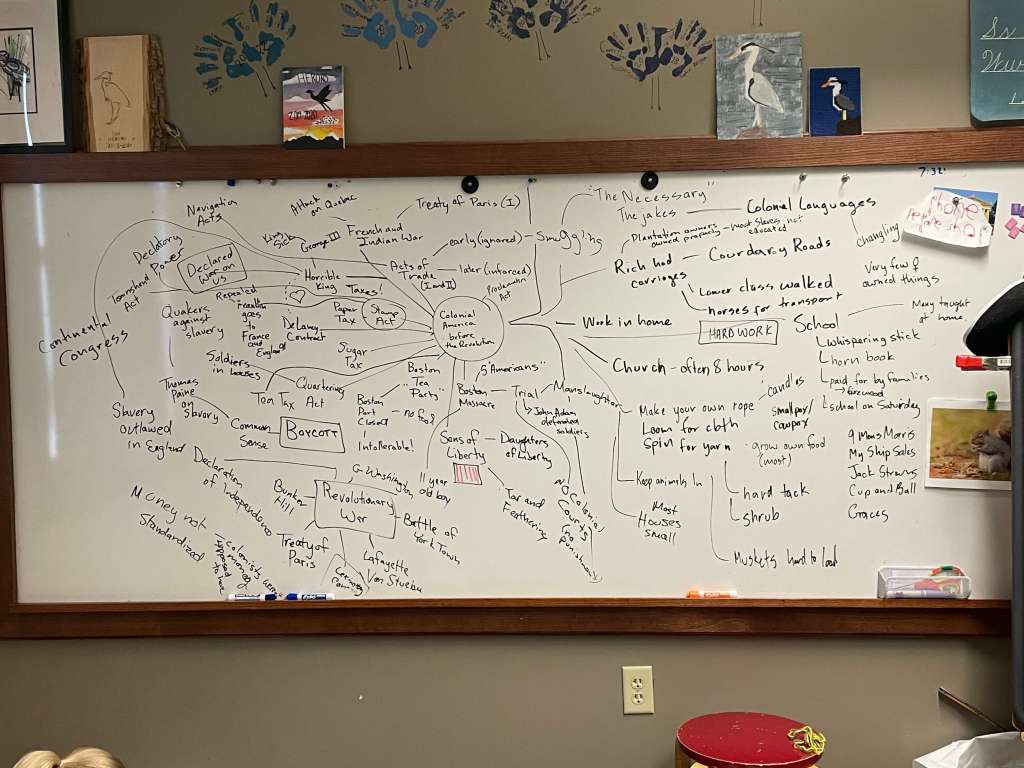
One student asked if we were going to war (this was related to Venezuela). This seemed to concern a lot of students — possibly because of our talk of the Revolutionary War and things like the Quartering Act. I explained that because of the way the government works, the legislature is the only group that has the power to decide that and it was very unlikely. But I also explained that they would be safe even if there was a war – in fact, the country had been at war for most of their lives and chances were good they hadn’t even known about it.
During the whole conversation, I answered students’ questions truthfully, carefully and with no more information than they were asking for. We talked about the fact that often, the news is difficult to understand as it is happening (they remembered that from our Colonial theme) but that with time, things often come into better focus. I urged them to talk to their parents about the news…but maybe not watch it with them. Visuals, especially violent ones, can stick with children in unexpected ways.
I make sure that before I have a conversation like this one, I’ve had a chance to process what has happened and I’m ready to provide information in an emotionally neutral way. It can be scary for kids to see us overwhelmed. As the flight attendants remind us, “Put your oxygen mask on first before you assist others.”
It was a great, surprisingly uplifting conversation. The Herons were curious about their world and eager to know more. They were confused by the things that seemed unjust and asked questions to understand better. As hard as it was, I realized that it was a relief for them to have a framework into which to put the things they had heard. Untethered, the images and fragments were scarier.
The conversation is not over. My guess is that they may still have some unanswered questions (or ones that have percolated from our conversation today.) I also recommend a child focussed resource like The Week Junior. Their articles have taught me a lot about how to explain current events in an age appropriate way. I hope that you continue to talk about the world with your Heron — it can be a complex conversation but it is vital if we want our children to grow into engaged, thoughtful citizens.

 The Rookery
Leave a comment