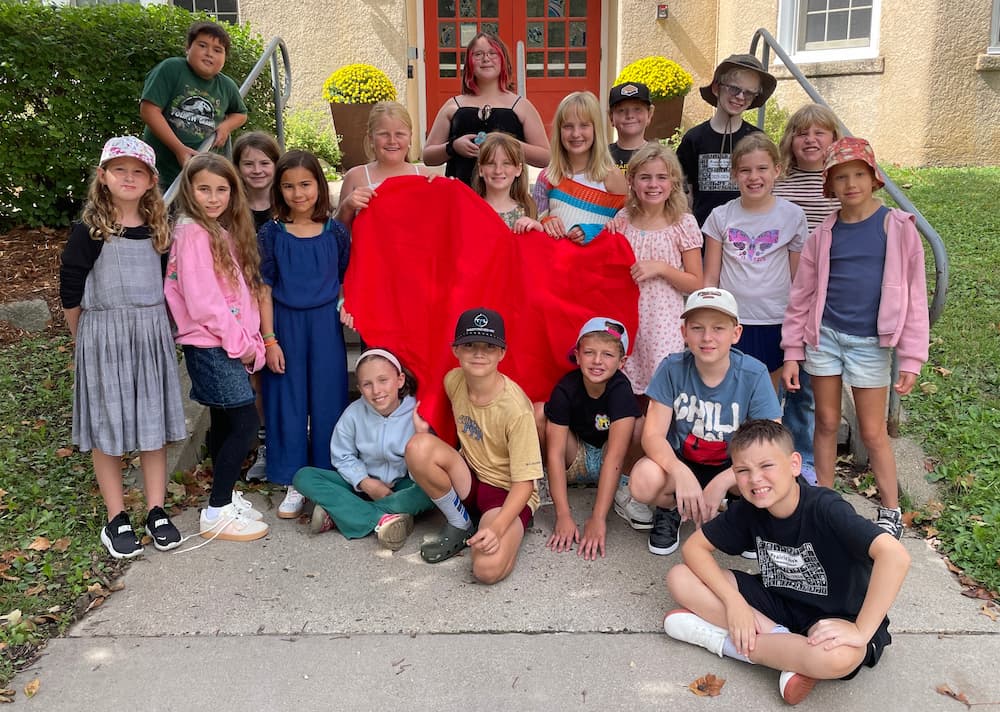
Today in my math class (which was a combination of Kestrels, Herons and Robins) we explored a new way of looking at multiplication. Many of the students in the class had done multi-digit multiplication before but I wondered if they knew why their algorithm of choice (some know several) "worked".
It's important that children not simply learn a procedure and perform it. I have seen many children able to multiply large numbers together but when faced with a problem solving situation that calls for just such computation, they do multiple addition problems instead of "seeing" the multiplication opportunity. While they can "do" multiplication, they don't know it. That's what our work today was about.
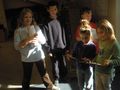
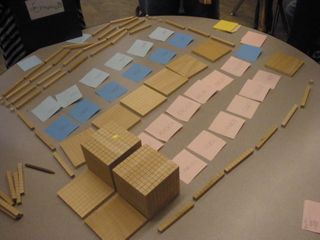 Here you can see a problem that has been laid out visually with our Base 10 blocks. (234×61). The multiples are laid out across the bottom and down the side, the product is in the middle. As you can see, we ran out of 1,000 cubes pretty quickly and had to use pink post it notes instead.
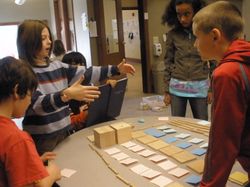
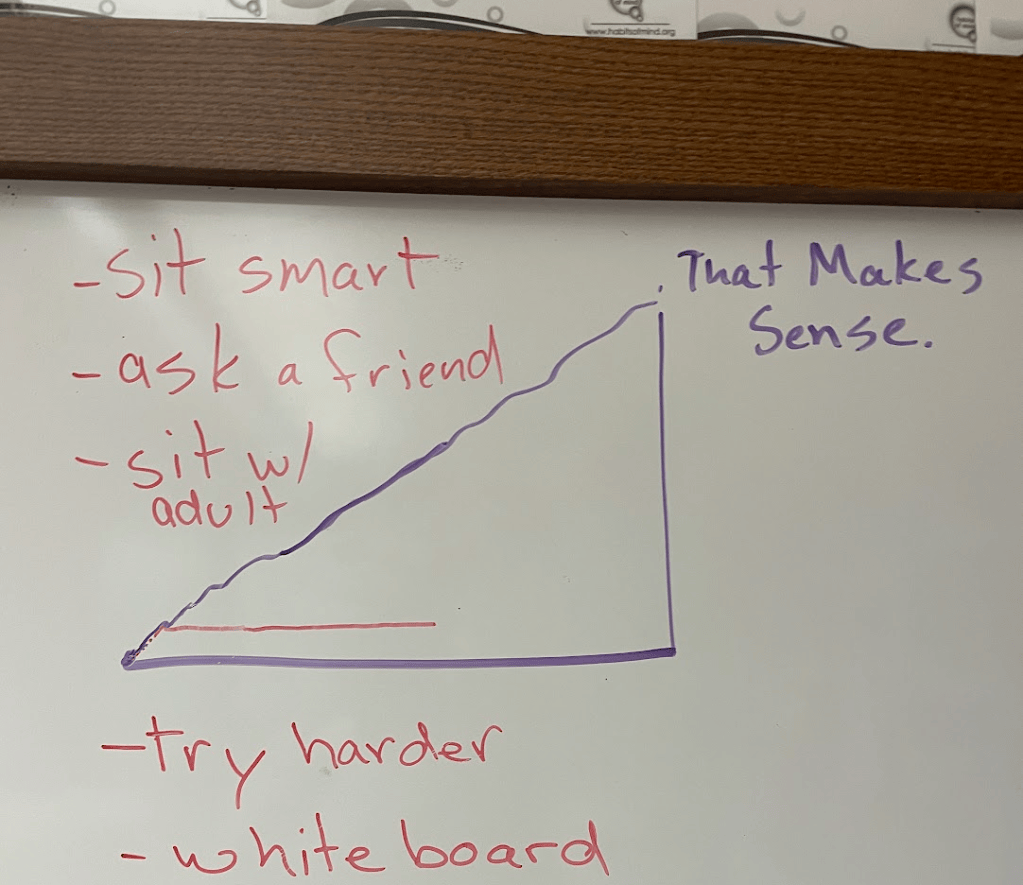
Don't worry, this isn't where we started. In fact, this is the challenge that just a few children chose when we went to work independently. Using our scale of 1-5 (1 being "you don't know you don't know and 5 being "you can't remember not knowing") children chose a problem to tackle with a group (and, in the case of the kids who were feeling least secure, with a teacher).
The problem solving and happy struggling was wonderful to watch. One child called me over because he could do the traditional algorithm and he could draw out this visual representation, but he couldn't see how they were connected. Together, we used colors to highlight the different parts of the problem and how they were connected to each other. "Oh! I see!" he said, gleefully. Then he went to work doing a new problem and color coding it himself.
Several groups had disagreements about what the final product of their problem was. "We didn't all agree so we went back and argued about it and showed each other what we were thinking and then we all agreed," reported one student.
Sometimes parents ask how we can teach kids who are at all different levels in the same math class. By working hard to help the children learn self assessment and by celebrating the confusion inherent in learning, kids can create fluid and very successful grouping independently. Today, students moved from one group to another, "I finished my work so I helped out the big problem over there," said one. "I wasn't getting it so I went over to work with Elizabeth," said another.
Later in the day, we had a visit from a few Doves who were doing a survey for their math class — and so goes math at Prairie Creek. –MM



Leave a Reply