The planetary axes have been tilted. The days and years decided upon. The latitudes are chosen. It is time to start discovering our countries. To get us going, I read Weslandia, one of my favorite picture books. In it, a seed sprouts in a boy's garden. He cultivates the unusual plant and it becomes the basis of a new civilization he founds in his backyard. Everything from the number system (we explored Base 8 as a part of the read aloud) to the constellations to clothing to writing is connected to the plant which the boy calls "swist."
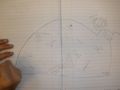
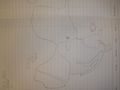
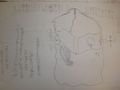
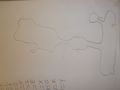
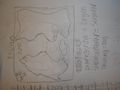
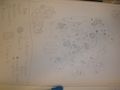
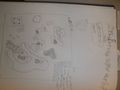
I encouraged the students to consider having a theme for their country so that they could build a civilization more comprehensively. Each child is responisible for creating two maps at different scales (one of their whole country, the other of a region or city). The large scale map must feature at least seven land forms, have a key and display both political and physical features of the country. We'll also be writing about the country's climate (based on its latitude), its geographical features, its flora and fauna (with a focus on adaptations life would have to make to survive in the country's climate) and its culture. Many students are also at work on flags, histories, economies, technology, money systems, writing systems, languages and more.
As I watched the rough drafts of the countries emerge, there were many rivers that cut straight across island countries. A few questions revealed that the students weren't to sure about how river systems work. This will be the focus of some of our work this week so that students can have a more accurate idea of how rivers might "really" flow in their country. Similarly, we'll be looking at maps to determine where cities develop and if we can find any patterns to where capital cities are placed.
Using the students' desire to create a realistic country provides an authentic way to wrestle with these key ideas of geography and earth science. As a teacher, its part of my job to watch for the learning students need and to create situations which help students feel the need for that learning. To me, that lies at the center of teaching progressively.



Leave a Reply