"Everything happens 'after lunch'" lamented one fifth grader when I told her that's when she would find out about the persona she'd have for our Industrial Revolution theme. By the time I handed out the roles, the Herons were at a fever pitch. As they read, they called out questions, "What's the Mexican Cession?" "What's a foreman?" "What does a greaser do?" "What's phrenology?" "Why would you have to study to be a river boat captain?" We were off.
This is my first time teaching a unit on the Industrial Revolution and I'll be learning a lot along side the Herons. Elizabeth Treat, who did some of her dissertation work in this area, has been a huge help already and co-wrote the role playing sheets with me. It's exciting but a little nerve racking to respond to some of the Heron's questions with "I'm not sure…but I think we can find out." When I do this, I'm modeling the process of digging into a new topic. I think it's one of the most important skills we can teach these 21st century kids. The information in our society is growing exponentially, they can't hope to know it all but they can learn to discover what they need.
But back to the Industrial Age — each child has a role, a perspective from which he or she will view the events of the Industrial Revolution as they unfold. I'll be writing newspapers from different times between 1800 and 1860 that will highlight the political, economic, and social events at a particular time. The personal investment students take for their learning when they are playing a role is incredible. They feel a real need to know the information. After all, it could be a matter of life or death.
I've purposefully made many of the characters young. This will give students the opportunity to think about taking risks to gain wealth or opportunities. Even when the "real" person a child's role is based on grew up to become famous, the Herons will be allowed to make different decisions from the historical person. It's a game, after all. At one point, I was even thinking about adding a dice element to it but didn't have one with enough sides to simulate one's chances of striking it rich in the Gold Rush.
I really welcome your ideas and resources for this theme. It's an amazing period of history but a complex one and one with precious few kid-friendly resources. The Victorian period has more and we'll use some of that but the American experience was vastly different from the English one.
What to do over break? You can see the character dossiers here. And there are links to a few resources on the right of this page. In addition, your child's dossier indicates if his or her character is based on a real person or is a composite of many. If they are real, you should be able to find information about him or her on the internet. I'd search with an "1800s" added to the name or you'll probably have a few Facebook entries, too. If your child is a composite character but wishes to have a "real" person feel free to lead them in a hunt and change the name if you can find someone who really existed. Often, these composites are based on groups that were poorer and whose individual lives were less well documented (which is a lesson in itself.)
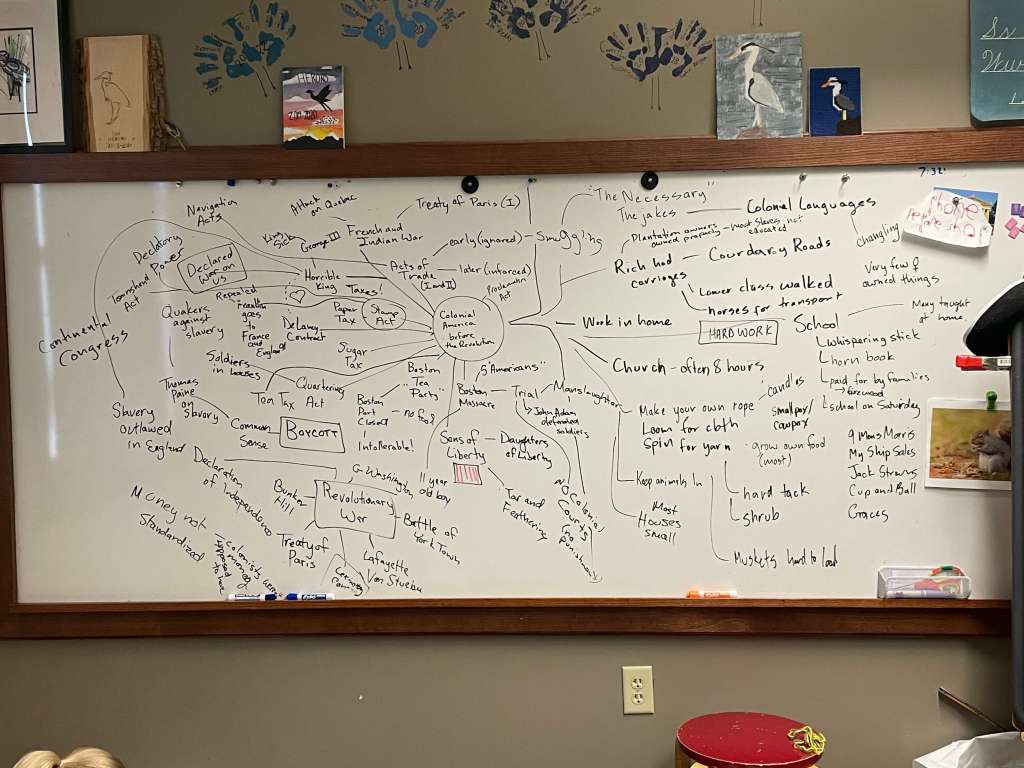
It's completely fine if your child doesn't do anything over break, there was just a lot of momentum as they left the room on Tuesday. We'll continue to build a contextual understanding of the time period in the days after break.



 The Rookery
Leave a reply to Joshua Cancel reply