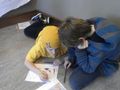
 A few days ago, a letter arrived at school for Charlemagne's Caravan. It was encoded in Chinese characters and a crew of students set to work deciphering it. Today they read it to the class:
Ni Hao Visitors,
I am writing to you in great secret. From rumors in the marketplace, I understand that you are seeking the secret of silk. I know it and I am willing to give it to you — for a price.
I wish to please my emperor with secrets fro far lands. You have traveled far and have learned much. If you teach me, I will teach you.
You must create a book of your secrets and give that book to me. In exchange, I will give you silk cocoons, a vial of silk worm eggs, and a special plant to feed the worms.
What secrets do I seek? I need a map of where you have come from. I need to know the story of your travel and the dangers that you faced. I would like to know about the letters and numbers of the different people you met. I wish to know the secrets of keeping cool in the desert and bringing water to our cities. I wish to know of new weapons. I wish to know of the crafts fo other places — the rugs, carvings and tiles that we pay so much for. My emperor loves stories and music. I wish to have new instruments and tales with which to entertain him. Finally, I wish to know of food from other places to tempt his palate.
For each secret I need an image to help me understand and words that provide details. If your work is satisfactory, I will give you the secrets that could cost me my life. Of course, with your knowledge I will become very valuable to my emperor.
Reply to me by tomorrow with your plans. My messenger will pick up the letter from your tent door. Leave it there.
 One of the things I work on as a teacher is how to create meaningful and authentic opportunities to communicate by writing. By sheer coincidence, the Silk Spy wants to know information that aligns completely with the information that the caravan members have been gathering (funny how that happens.) I wondered if the imaginative force of the roleplay would be enough to propel the students into this part of the learning.
 I did not need to wonder long. Moments after M.K. read the letter, plans began to percolate. I gave students the option to work on the response to the Silk Spy or continue their project work. About seven students decided to answer the Silk Spy but as their plans became more solid, almost all of the other students joined in. Soon a list of needed information was written and students were surveying classmates to find out who could write what.
Some students were choosing to learn about completely new topics than what they had been responsible for on the journey. Others were sharing their knowledge excitedly, "I can tell you about Greek Fire!" "Oh! I studied that…I can write it." I was surprised by the amount of new research this project was inspiring.
By the end of our work period, a plan was devised, assignments were handed out, even a cover was
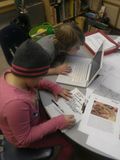 painted. More importantly, students were beginning to create a document that would be a real assessment of their work — were they able to communicate effectively what they'd learned on our Silk Road voyage?
A side note — I am still amazed at the students' ability to lose themselves in the creative role play. Most of the students are convinced that the letter came from China. While they suspect that I know who wrote the letter, nobody has suggested that I wrote it. Current letter writing front runners are Connor, a former student who now is living in Taiwan, and Noah, my brother-in-law. Go figure.
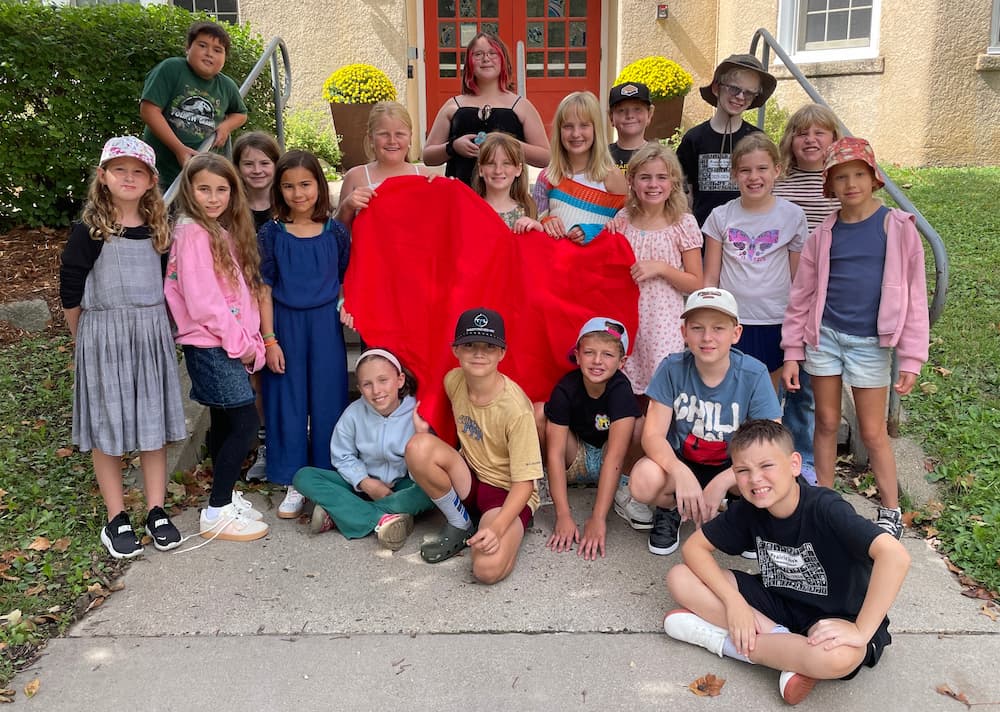
Thanks to Amy N. for the pictures!




Leave a Reply