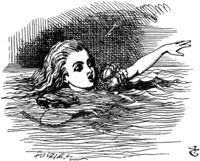
 The few days before spring break, I asked the Herons to practice the dances they had learned with the Flying Foot Forum. I will be honest — my expectations were not high. I had video taped our last practice with Joe so we would be able to review things later and during that rehearsal, the kids seemed hesitant and confused. Many didn't take their eyes off of Joe the whole time and were a beat or two behind him in the dance. I braced myself for a rough review session — especially since I had only been present at one rehearsal and did not know the dances myself.
Then the Herons amazed me. They sat down in the "audience" where they begin their pieces and ran them all the way through — reciting not only their lines but everyone else's. (In fact, at one point I urged the children to be louder and they said, "We're not supposed to say this part…it's Joe's part!") Occasionally they would hesitate and work together to remember a part. By the end, they had all of the moves, they knew everything. This was after a week of not practicing. What was going on?
As we've been talking about a lot in our electricity unit, surprises are a good thing. When the unexpected happens, it gives us a chance to ask questions and learn things. An experiment that works exactly as you expected it to is a little boring. An experiment that does the unexpected — now that's worth exploring. Scientists love surprises. Can they reproduce the results? If they can what is causing the unexpected result, what can they learn. (In the spirit of "Choose Your Own Adventure" Books you can skip to paragraph 5 to find out more about one of our failed electricity experiments. Or you can go to paragraph 4 to find out what this has to do with our Alice in Wonderland dance)
I found myself reflecting a lot on the surprising competency of the Herons. How had they moved from stumbling dependence to competent independence? Time was one variable. They had had some time to digest everything they had learned in the compressed lessons Joe had taught them. But that alone didn't explain it, especially since we had not practiced in the interim. The only other variable I could think of was Joe. When he was in front of them, they used him. Part of their brains were trying to remember the dance but part of it was watching Joe. When they went back and danced without him, they had to figure it out themselves. They had a single focus. They pushed themselves. They dug into their memories and make sense of things themselves. Without an expert in front of them, they had to take a leap from the comfort of the nest. It was exciting to see them fly and it was a very important reminder to me that sometimes the best thing I can do as a teacher is to step away and allow children to put the pieces together by themselves. When a child says, "I don't get this." I can ask, "What do you get? What's you hunch?" and let her find her own way.
 Sometimes as a class, we're left to explore surprises together. When I tried to demonstrate a leyden jar, nothing happened. I had hyped it up, of course, telling the class they were going to be able to get a huge shock and then…nothing. Believe it or not, I like it when this happens because I get a chance to demonstrate how I handle failure. In this case I laughed and then asked them what they thought we should do. We read the instructions together…we seemed to be doing everything right. We tried the experiment again, just in case our failure was a fluke…nothing. Next we tried a second source – in this case, a YouTube video made by a science museum. There were subtle differences in the sequence and the position of the leyden jar. They also used different materials. I quickly went to our basement to get what we needed. (One student asked, "Is there anything that isn't in our basement?") We tried it again. ZAP! Success. Could we recreate our success? ZAP! Yes.
Yes.


 The Rookery
Leave a comment