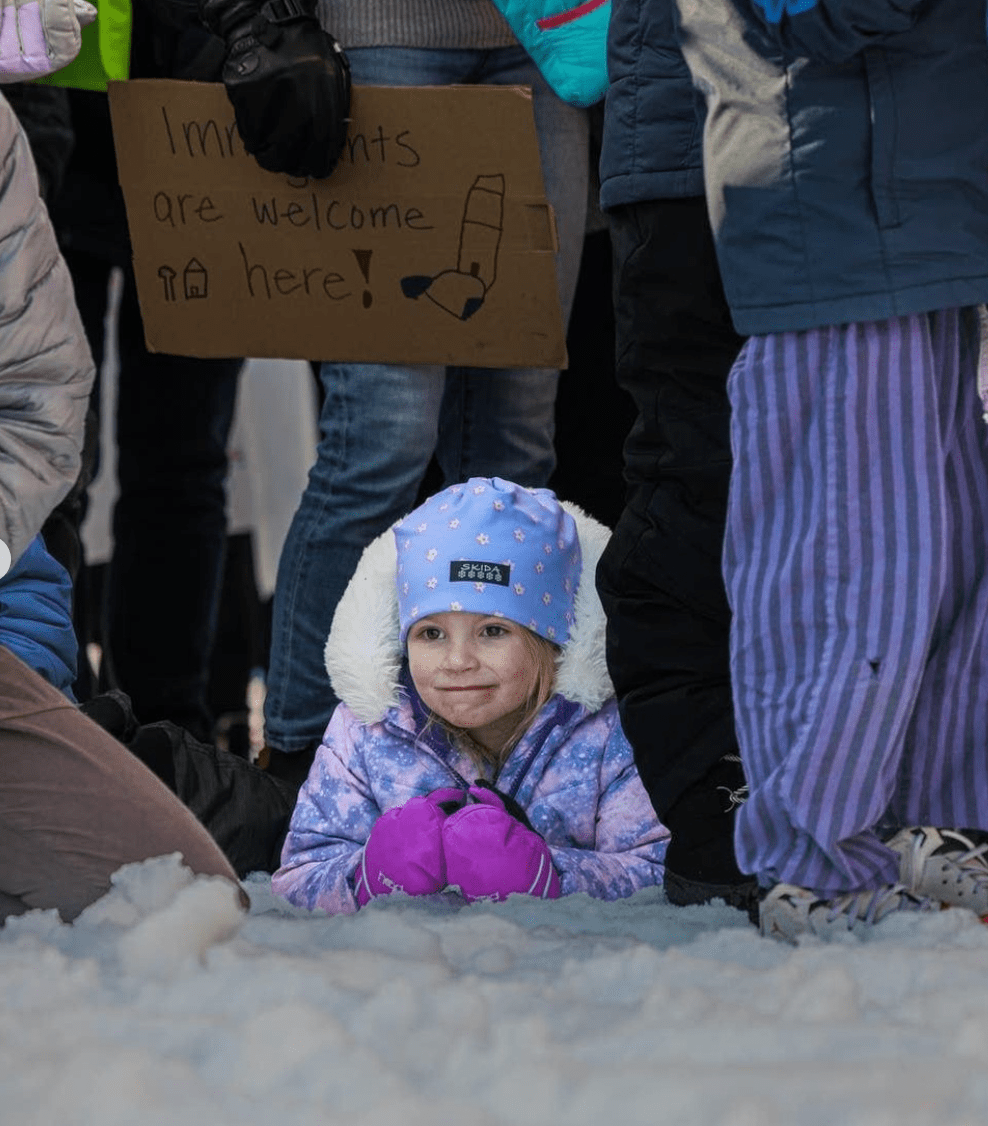
The Herons thoroughly enjoyed Minnecanos by Mixed Blood Theater. It was an artful exploration of what it means to have an ethnic identity. "Jimmy" a Minnesotan boy whose great grandfather immigrated for Mexico, does not know much at all about the traditions of his elders – in large part because his mother struggled with racism and feeling out of place as a Mexican American in her predominately white school. She did not share her Mexican heritage with him, in part, perhaps, to shield him from the racism she endured. The play dealt with the complex issue of immigration and ethnicity beautifully; it did not shy away from nor simplify the difficult feelings attached to ethnicity, "fitting in," racism in history and immigration.
These are hard topics – but topics of great interest to fourth and fifth graders who are trying to figure things out. Our read aloud right now is based in 17th century London and some characters are anti-Semitic. One of my jobs as a teacher is to begin to open up that conversation. Who are the Jews? What are the major world religions? What is the history of anti-Semitism? And the heartbreaking question of whether it still exists.
During a conversation about the book, one child said that when he was little he was racist. He judged people and was afraid of people because of what they looked like. Other students stated with the beautiful straight forwardness of children that they didn't get how people could judge others based on their race. These are difficult conversations and I fret constantly during them that something someone says will be misconstrued or misunderstood or mishandled by me – and yet it is too important a subject to avoid.
The director of Minnecanos urged students to go home and ask their parents about their cultural heritage. Who was the "Diego" in their family history? (Diego was the great-grandfather in the play who immigrated from Mexico) What struggles and triumphs did their ancestors face when they came to America? Or perhaps they arrived in North America long before the Europeans in the 1600s.
His suggestions that we talk to our families about our "Diego," our immigration story reminded me of a survey the fifth graders recently took as part of a Healthy Communities Initiative project about Northfield Youth. One of the final questions asked what race students considered themselves. The usual length list of options followed – including "other." Three students called me over and shared a version of this: Well, I'm German, Scandinavian and English…what should I check? I looked at the question and it stated clearly that they wanted to know what race children considered themselves to be. I asked all three what they "considered" to be the best answer for them. They looked down the list and all three chose "other."
At first I thought it was just a funny anecdote about growing up in Minnesota – but now I'm really not so sure. Perhaps it is by knowing the specifics of our own stories that we can gain empathy for the stories of others and come to understand difference by its very sameness to our own experience. I hope that you will have the chance to open the conversation with your Heron.

 The Rookery
Leave a comment