 "Collaboration" "Col" – shared. "labor" – to work. Shared work. What does it mean to share work? Not just to work along side each other but to work in a way where we are building on one another's work? How do we work in a way that, as our This We Believe states, we "look for ways to bring others up?"
I have been reflecting a lot on collaboration this year. We are piloting the use of Google docs and one of the greatest surprises has been the speed at which students have developed ways to work together and support each other's work. The very first day, stories were being co-written. Then students were sharing their work to receive comments and edits. Then idea pages were popping up where students could share favorite games or suggest names for a project. These shared projects created a lot of excitement and, very importantly, they took on a life of their own beyond what I was orchestrating in the classroom with my pen on the whiteboard. Suddenly, students were taking a confident lead.
The Twelfth Bite script was a huge surprise for me as a teacher. Usually when a play is written in the Herons, we have a group brainstorming session or two where we share a lot of ideas and jokes. I take these ideas and jokes and rough out a script which we then tweak together. In essence, I do a lot of the writing (and justify this because I think it's exceedingly hard to write as a committee). This time, we had the same brainstorming session but then I posted the script (we were using an adapted version by Elizabeth Weinstein) and made the changes the students had suggested. Then I stepped back a bit. I would find new comments and ideas added by students overnight. Great additions were being made daily (some I'm only finding now at our play practices.) This wasn't writing by committee (where everyone has a say on every tedious word) but rather work being shared by many individual writers. It was open source play writing.
The students are now deep into rehearsals for the play. The majority of the scene run-throughs are led by our student director, M.K. He organizes the players and helps them through the scenes. They have to do a lot of problem solving together – figuring out what lines mean, where people should stand and what props have to be made to make a scene work. All this without me (I'm just up the stairs from their rehearsal space in the concourse.) There have been no behavior issues, no one goofing off – all of the actors know that this is their play and that it is only their hard work they'll be successful. The shared sense of responsibility is palpable.
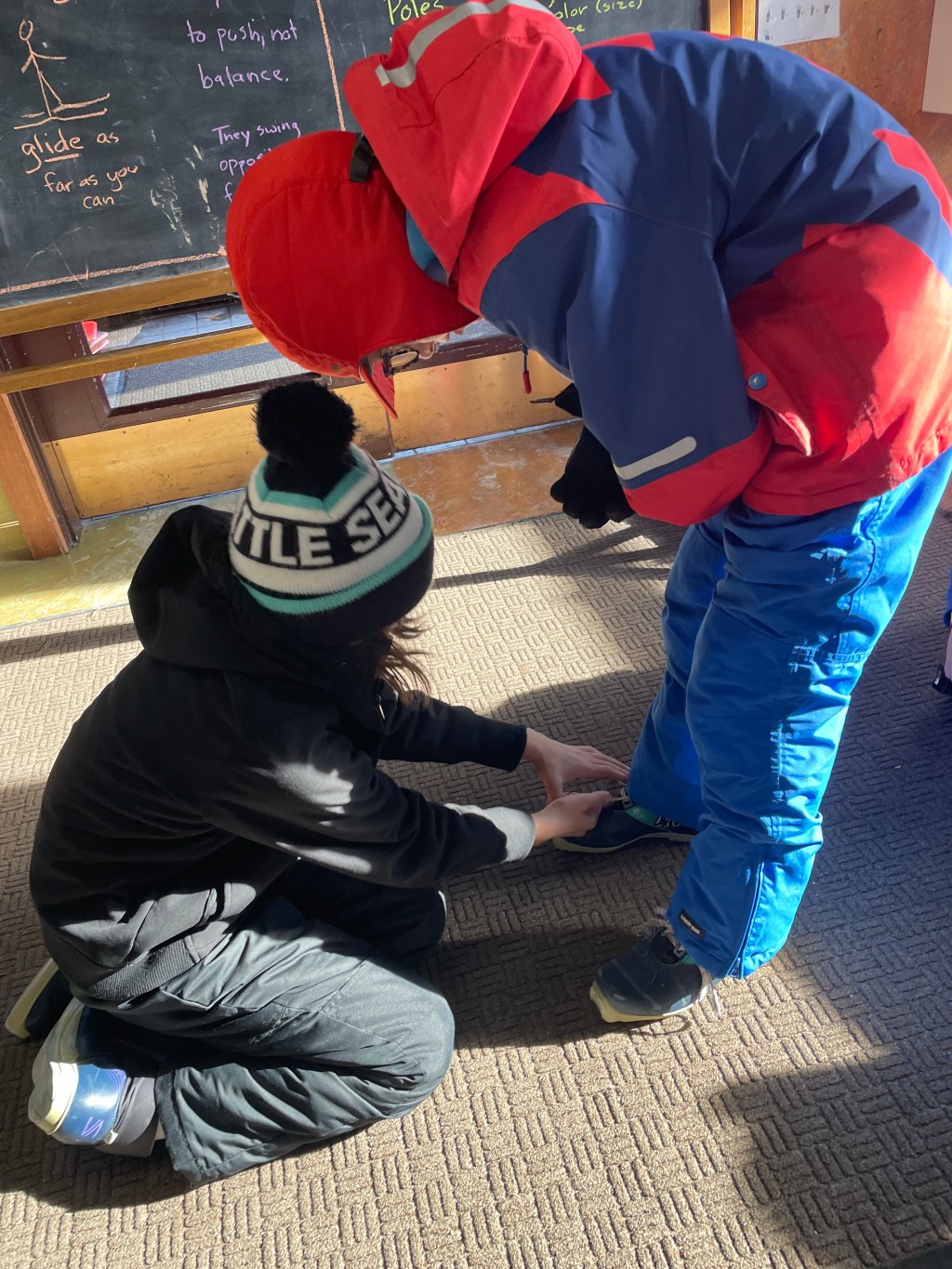
We are now working toward our first large culminating event of the year and I am struck by the shared nature of the work the students are doing. A few children volunteered to make signs for anyone who wanted one (in the past, this would be an individual student's job.) Another was designing a prop for a friend. Another was looking up information to help someone else. I shared a spread sheet that was a collection of all of the questions our families had about Elizabethan England and some students started to look at it to see what we could add. A "desperately needed supplies" list (which is a feature of any culminating event planning) appeared on a side board but instead of it being "Things Michele Needs to Get" it was simply the supply, who needed it and then a third column that said "who is bringing it in." The same hour it appeared, I saw a child looking over the list and signing her name to bring in various things for her peers. I have been moved to the periphery – which is my favorite place to be as a teacher.
Collaboration has always been a part of learning at Prairie Creek — indeed, one of the toughest thing for kids to get used to at the MCAs is that they can't just ask a peer about something they don't understand. This year, though, it seems more pervasive and more exciting. This is voluntary group work, not mandatory. The collaboration is genuine and goes beyond small groups of friends. There are posters up all over school advertising book clubs, trivia contests, and recess activities. (One of my favorites so far is a plan for a Woods University where fort skills can be learned and degrees granted.) Students are initiating work together such starting a student council and developing a service focused group they've named "Raising Hands." It's thrilling to watch all of this unfold. And I wonder is it the mix of kids? Is it the influence of Google Drive? Is it something we've changed in our social curriculum? Is it the result of our This We Believe discussions? I'll keep pondering – and keep celebrating these exciting developments.



 The Rookery
Leave a reply to Sue VanHattum Cancel reply