Today I took a moment to reflect with the Herons on all the work they have been doing on their projects. In the flurry of deadlines and revising and editing, it can be easy to loose sight of the tremendous job they have all been doing. The seriousness and focus with which both the 4th graders and their 5th grade mentors approach their work is paying off and projects have really been taking shape.
The 4th grade project is done entirely at school. We make sure that there are lots of mini-lessons and supports in place, but we also want the 4th graders to have to struggle a bit and figure things out by themselves. Research (indeed, learning) is never completely predictable. Unexpected things always happen – a single paragraph may pull your research in a new direction, a central question may turn out to be less interesting, resources may disagree, or resources may not exist yet to answer one of your questions. When we as adults treat research as a direct path from point A to point B and swoop in with solutions whenever things get tricky – we negate the learning the students could be doing. The content and product become central instead of the process.
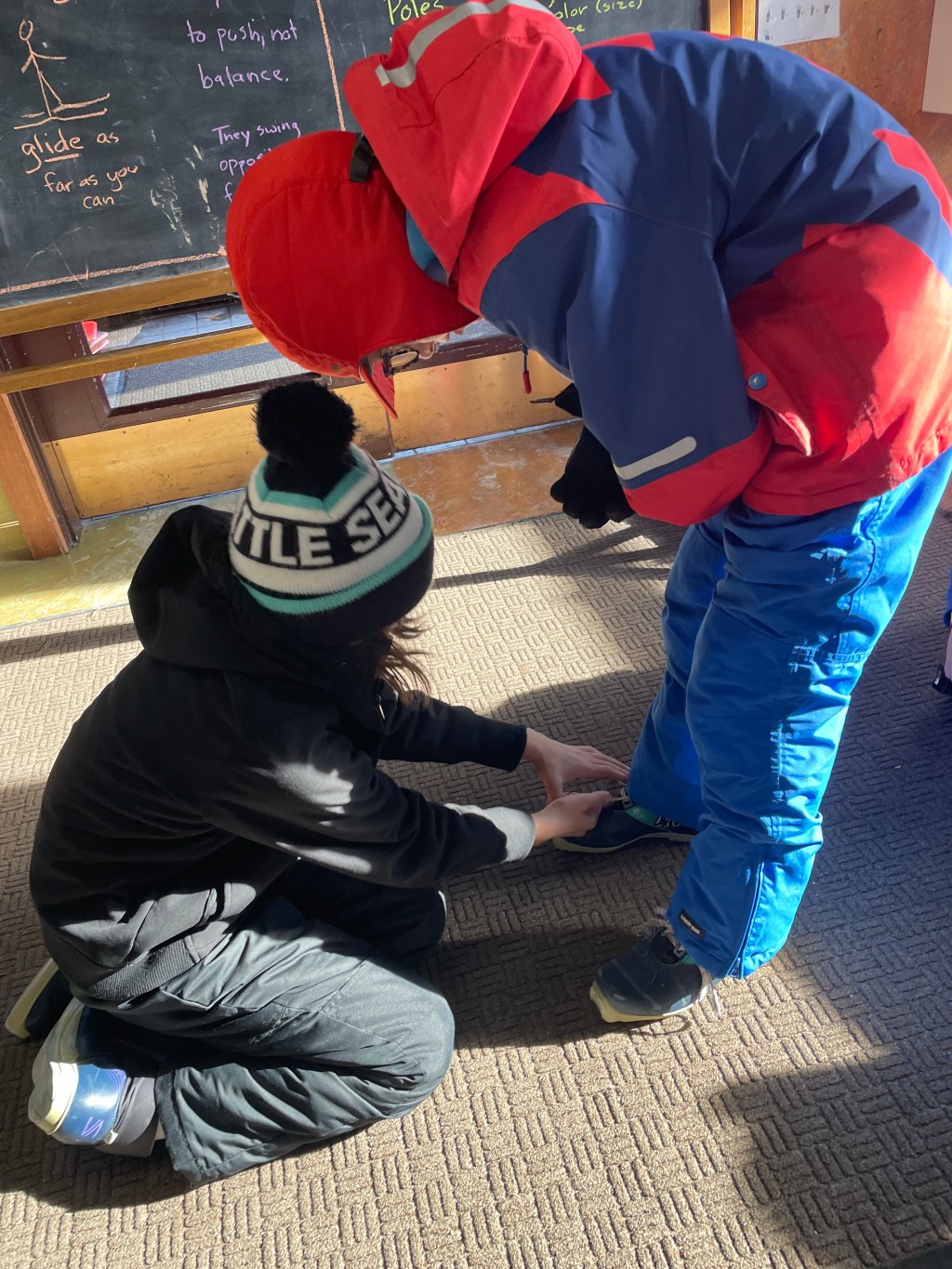
When the 4th graders have more limited access to an adult, they begin to problem solve themselves. They take more risks. They begin to trust their ability to figure things out. The 5th grade mentors are there to help them along — but they don't have the assurance of an adult helper so there is less of a tendency for them to just fix things and more of a tendency for them to offer an idea or two to get things going.
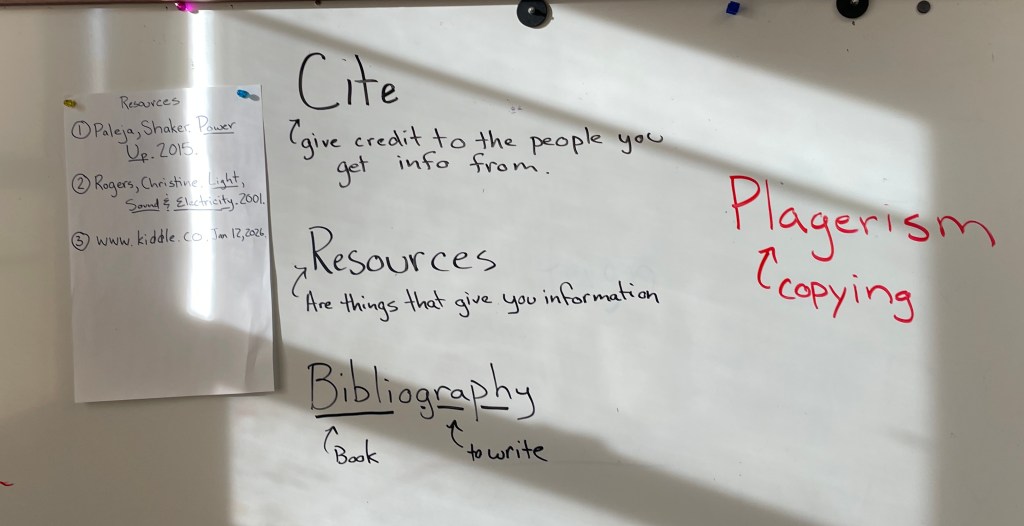
So far, all of the 4th graders have chosen a topic, developed key questions and categorized those questions. They've located good resources, kept track of those resources in a bibliography and taken careful notes that allow them to return to a source and a page if they need more information. We organize the notecards into categories and stack them in the order that makes sense to share them in. We decide on a writing format to share our information – a traditional report, a series of letters, a diary… We then write paragraphs, trying to keep each one focused on a topic. We write introductions and conclusions.
The 5th grade mentors conference with their mentees and identify places where the focus of a paragraph isn't clear, where information needs to be re-ordered, where more details are needed, where sense breaks down and where better verbs would bring the writing to life. The 4th graders revise their work based on the suggestions then edit their work.
Whew. That's where we are right now. Tomorrow, we'll begin working on sharing key information visually in a poster – learning how to lay out posters neatly and clearly, use charts, graphs and diagrams to clarify our topic, write captions for images we use and create titles. We'll also learn how to construct a bibliography from the resources we've been using.
Then, towards the end of next week and in the week after spring break, we'll be working on our oral presentation. We create "talking cards" that provide reminders for what we want to say (but not every word we'll say). We practice many times (we'll be asking for help at home for that) and we prepare a hands on activity for our audience to learn from. Each 4th grader presents his or her project 3-4 times in an hour long session during honoring week. Kindergarten through third graders rotate through the projects being presented in a given hour. 4th graders speak for 2-3 minutes from notes, have an interactive activity and then field questions. Presenting three or four times gives them a chance to relax and also helps them understand the importance of practice – the first time rarely goes as smoothly as the third.
The fifth graders are mirroring this same project but more independently and in more depth. They will be presenting a single time for a half hour. The experience they gained last year when they were working through challenges as 4th graders helps them tackle the larger project. They have the support of parents and mentors, of course, but they are often the ones with the most experience with the process.
These next two weeks are some of the busiest in our school year. They are also when some of our deepest, most lasting learning happens. The students learn that they can know more than their teacher does, they become the expert and, during honoring week, they become the teachers.


 The Rookery
Leave a reply to m.r. Cancel reply