Today the Herons had a very serious conversation about being a citizen. We needed to talk because this year's presidential election had become a topic of discussion – but not in a productive way. Students were declaring sides and they were belittling others' views. It wasn't happening during class time but during down time like lunch and extended, when conversations wander and teachers aren't always right there to guide. So I needed to find a way to help the Herons rise to civil discourse all of the time, and not just when I was there.
But how? This election has been, by many accounts, one of the most divisive in history. How can our students rise above a tide that even adults have found difficult to resist? I thought about it all weekend.
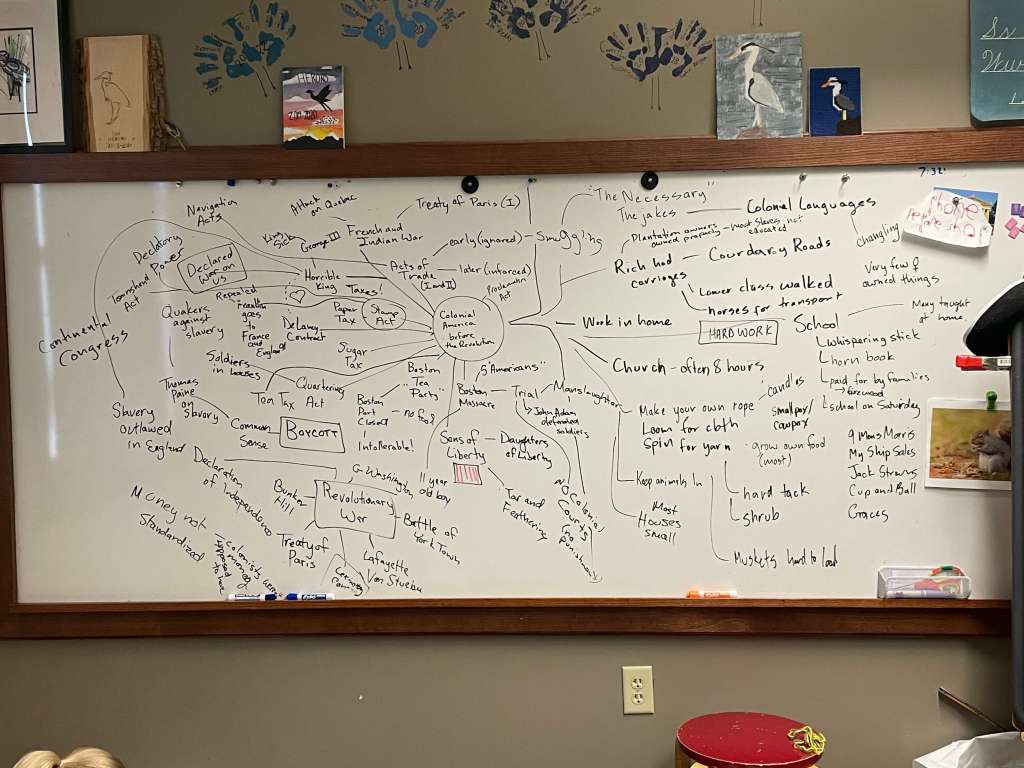
I began with a history lesson – what democracy is, how it came to be the form of government we have, and some of the elements that a democracy needs such as informed voters and freedom of speech. We talked about the amazing achievement of over two hundred years of peaceful transfer of power (and the remarkable example George Washington set for future presidents in his farewell address.) And I shared the current tradition of the outgoing president to leave a letter on the desk of the oval office for the incoming president. (Which many Herons thought was very nice.)
So far so good. We then shifted to talk a little more about freedom of speech and the right of people to have their own opinions. How can we ensure that people feel safe to share their ideas? We talked about the work of the majority to protect the voice of the minority. We talked about how important it was to value deep and careful speech – to ask questions of those whose ideas we don't agree with and strive to understand their thoughts. We don't have to agree. Indeed, sometimes, the best way to counter an argument is to truly understand it. But we need to have those conversations and debates respectfully and with a mind that is seeking to understand.
I used a metaphor that seemed to resonate for the class: when we weave, we need weft strings and warp strings – but they need to connect and come in contact with each other. They must interact in order for us to create a strong fabric. If you have some strings going one way and other strings going the other but they never touch, you don't have fabric. That's why we need to talk to people we don't think we agree with. That's why we need to ask them to explain and seek to understand.
We made a brief foray from the historical and into current events and it became clear that the Herons had been doing a lot of thinking and worrying. Many expressed concerns about what they had heard would happen if one candidate or the other became the president. Many said that they had heard "rumors" and didn't know exactly what each candidate stood for. Many seemed really scared.
I was reminded of a story my husband had told me about an election when he was about eight. The candidate his parents supported hadn't won and the day after the election he stood at the bus stop convinced that nuclear war would begin while he was at school. The Herons nodded – these feelings weren't too far from some of their own.
I decided to return to the civics lesson and the peaceful transfer of power idea. The day after the election would be a Wednesday – and the Herons would have school just like we always do with reading and math and theme (and yes, lunch, we won't forget lunch.) I talked about the three branches of government and how the president is just one part and the other two parts share equal power. It was reassuring to the Herons to know that there was a balance – and that our government was designed to keep any one person from having too much power.
The Herons shared some ways they wanted to support civil debates at school (or, as they called it, friendly arguments.) They seemed really committed to being aware of how they presented their ideas and how they found out about others' ideas. I asked them to watch out and intervene if they saw kids who hadn't learned about this yet.
It was the first conversation of what, I know, will be many, but I left it really hopeful. In the coming weeks, we'll be getting gourds and running our own election with two political parties, the Poligourds and the Free Gourds. Each party has its own gourd-centric political platform. It's a way to explore the dynamics of the election in a non-partisan way.
Today's conversation with the Herons reminded me how hard our children are trying to understand the world around them. But their understanding is imperfect and they are not yet equipped to sort through rhetoric and hyperbole. They need our help and they need us to model for them what it means to be respectful, informed citizens.


 The Rookery
Leave a reply to Sandy Turbes Cancel reply