 Tomorrow will be our last phenology pod-cast of the year. Sharing our observations with folks in the Northland has become part of our routine. Seeing and noticing the world around us has also become part of our routine – in ways I had not fully anticipated when I agreed to be a part of the project this past summer.
Phenology is derived from the latin phainein (to show) and ology (to study). Phenologists study when different things occur (or show) in nature. Humans have been collecting phenological data for hundreds of years (longer if you count things like recording floods in Egypt). We have records of the date of cherry blossom's flowering in Kyoto that go back for 1200 years! This year, encouraged by a great summer workshop I attended, I decided it was the Heron's turn to contribute to the data.
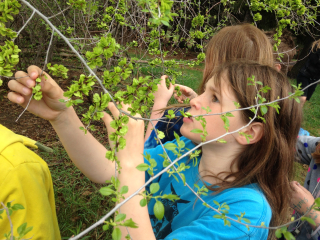
I liked the idea of adding more formal science to our Forest School routine – it would add a new dimension to our work and give us a chance to work with authentic data. So, on the very first Wednesday of September, the Herons chose the trees they would watch for the rest of the year. We recorded when their leaves colored and fell…when the buds began to swell and break…and (finally) when they leafed out, flowered, and made fruits or seeds. It took a lot of patience. But, when those buds finally did break, the Herons were so excited. They really appreciated the change they were observing because they had been watching for it for so long.
In September we also began the weekly routine of writing down and sharing our nature observations for KAXE. Each week we all shared what we had seen and then a committee would write the script for our podcast. Someone would then record for us and the results were broadcast on Tuesday morning.
At first, we weren't sure what to watch for. Often, our list of observations was short and very general – noting "I saw geese" for example. Then, as time went on, our observations got more specific. They were Canadian Geese…flying south west in the evening…in a V of about fifty birds…and they were noisy!"
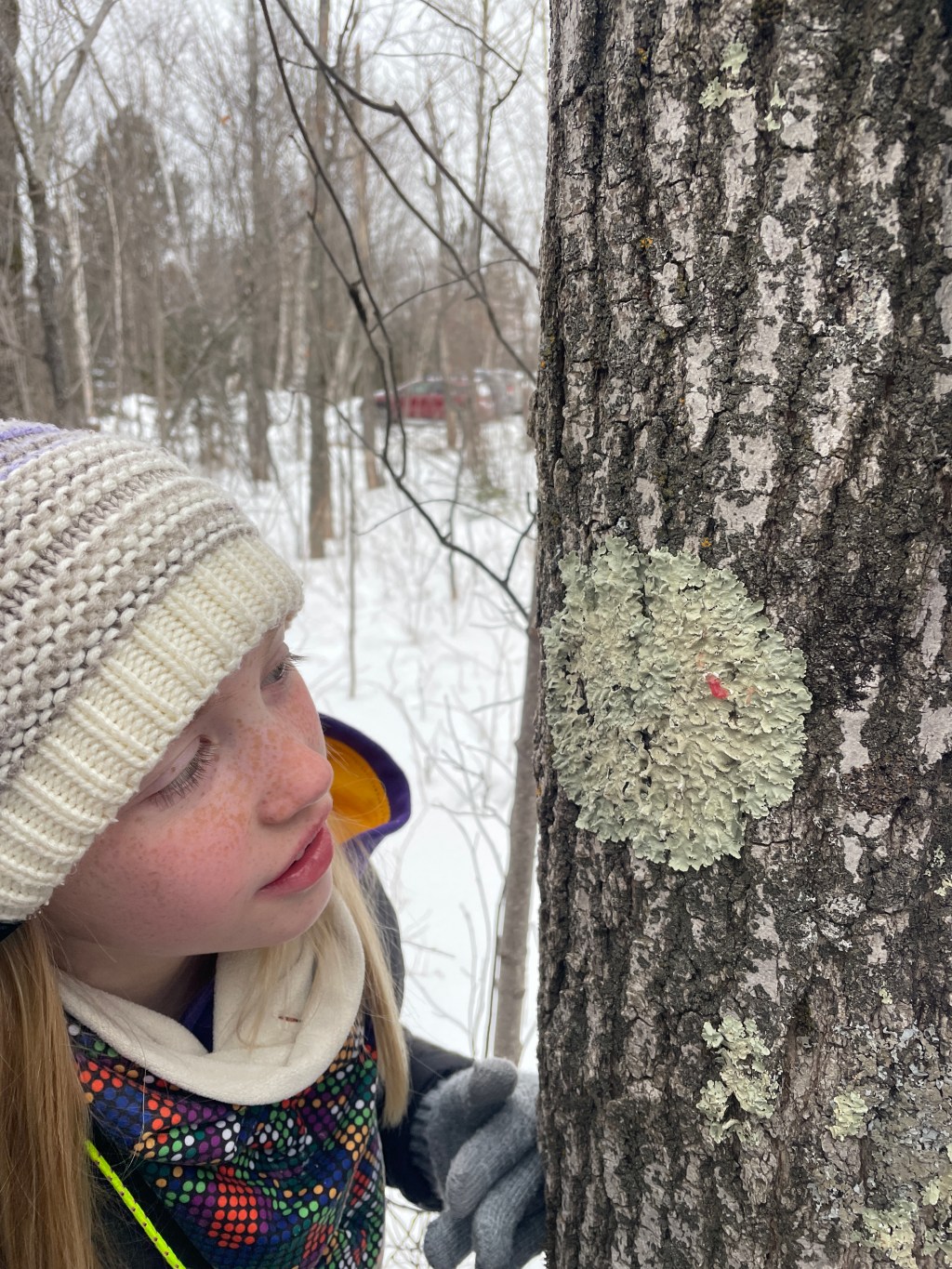
But it wasn't just our phenology observations that were becoming more detailed…I noticed that we were watching everything more carefully. Ice formations, animal tracks, the song of a bird…things were coming into sharper focus for the Herons. Because we were charged with reporting what we saw, we were seeing more.
"Noticing" is an intangible, un-measurable skill. It will never be a part of the MCA. And yet, as the spring came I found myself taking great joy in the small unfoldings I had never been aware of before. The Herons watched carefully for the first dandelion…for the last snow pack…for ice out…for the first red wing blackbird…for the last junco. There was a thrill every time we saw something new (and often a cheer, too!) It felt so good to know a place so well that you could notice the smallest changes.
This summer, I hope that you'll consider keeping your own phenology journal. Pick a tree to watch every day. Choose an ant hill to monitor. Track a bird species at your feeder. Then, if you're feeling brave, share your observations with KAXE. John Latimer, the coordinator of the phenology pod cast, is hoping students will continue to send in observations over the summer (it's a great authentic writing opportunity!)
And, in case you missed some of our podcasts, you can find them all archived here: KAXE Phenology. We recorded almost every week (although it got a little spotty at the end of December and beginning of January.)




 The Rookery
Leave a reply to Brad Cancel reply