Midyear through my first year teaching, the U.S. conducted a four day bombing of Iraq called Operation Desert Fox. The lead up to it had been fraught and my students came in very concerned. At our class meeting, several of the students mentioned that their parents had said we were going to war. I asked if other students had questions or comments and one said with utter and complete authority, "We have to bomb them because of Saddam Hussein's nuclear acid capabilities."
The students nodded, wide eyed with fear. Nuclear acid was nothing to be trifled with. Of course, it doesn't exist outside of Marvel comics, either. Over the course of a half hour, I shared factual child-appropriate information to help them put the news they were absorbing at home into context and help clarify misconceptions. Iraq is no where near Connecticut — so they didn't have to worry about an invasion. Nuclear acid doesn't exist. Yes, there was concern about Iraq developing nuclear weapons but there were several organizations who were in charge of making sure that countries kept their promises about developing nuclear weapons. At the end of the discussion, the students were much less fearful and much more aware of the work they would eventually do independently as citizens in a democracy: asking questions and finding sources of trusted information.
As a teacher, I too learned a valuable lesson. My fourth grade students were much more aware of current events than I realized – but they were gathering bits and pieces and lacked context (and fact checking!) which caused unneeded anxiety. Now when something's happening "outside" the classroom – I know it's happening inside the classroom, too — and it's important to work with that.
So when the House of Representatives started an impeachment inquiry last week, I wanted to talk about it with the Herons. It's an authentic way to learn about our government's structure and it's also a great way to practice civil discourse.
We read an article from the Newsella website (which enables me to use the same article at several different reading levels so the whole class can get background information.) While the class was reading and highlighting confusing parts and new words, I created a diagram of the three branches of government so that I could chart out the process of impeachment as laid out in the Constitution. We came back together and through the students' questions we were able to review the difference between an impeachment inquiry, articles of impeachment and an impeachment trial. The students wanted to know if an inquiry had ever happened before so we talked about Andrew Johnson, Richard Nixon and Bill Clinton.
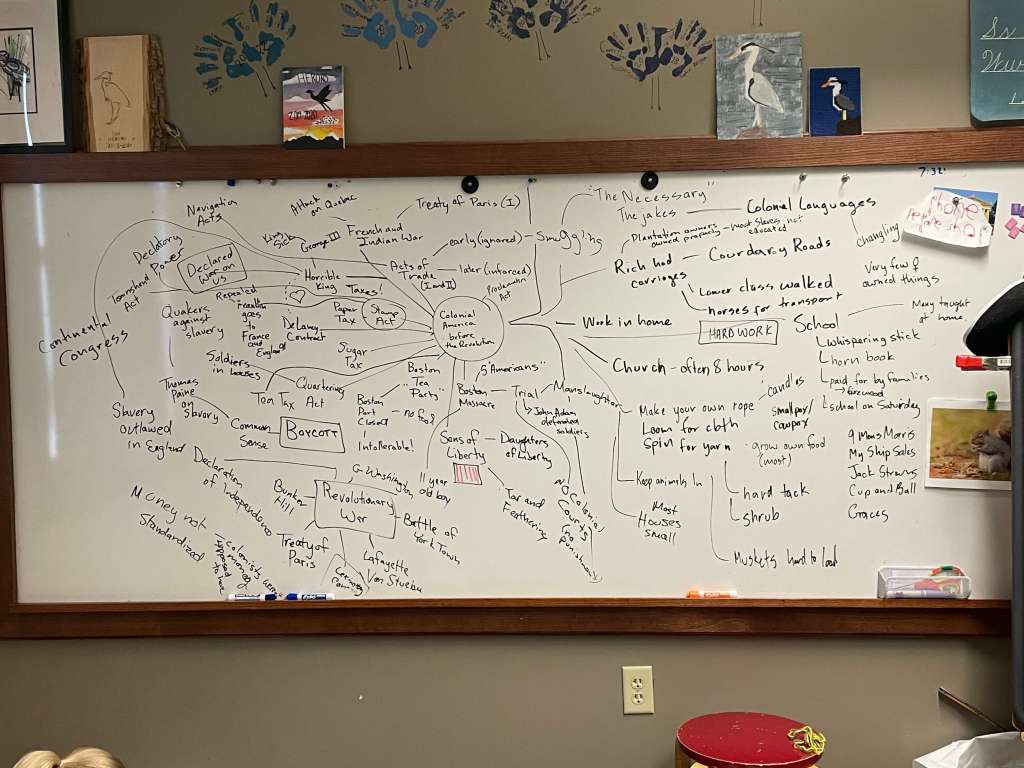
I emphasized that a lot of people were still making up their minds about what they felt about this particular situation and that, essentially, the inquiry was trying to gather information to determine if the president was using the power of being president to benefit him as an individual. The Constitution was clear that that wasn't allowed — and the fifth graders who studied pre-revolution America last year quickly connected the emphasis on limiting the misuse of power in the Constitution to the frustration of the revolutionaries with King George.
One child asked what a whistle blower was — I had to clarify that no actual whistle was used which the Herons found a little disappointing. Another child tried to explain what the phone conversation was about – and I was able to help clarify some of the points.
We also talked about ways to discuss politics without being personal. Chanting or using disrespectful language is not very persuasive. Focussing on issues can lead to deeper conversations. Asking questions of people who hold different view points is a way to better understand the big picture. We'll get a lot of practice in the year ahead – the Herons were off to a great start, delving into a political subject with great curiosity, enthusiasm and respect.



 The Rookery
Leave a reply to Lisa Percy Cancel reply