It was a tough lesson. We have been building the idea of volume for two weeks. First we constructed shapes with interlocking cubes. We talked about layers. We learned about rectangular prisms. We explored the difference between area and volume. We acted things out.
Through a series of tasks we noticed that finding the length, width and height of a prism gave us the information we needed to find the volume. We tested that conjecture (the name for a math hypothesis) and proved it to ourselves. When I used the same dimension twice (for example, if the height was labeled twice) and got the wrong answer, the students acted as my tutor and explained why what I had done hadn’t worked. We learned how to explain our approach using a numerical expression that others could understand.
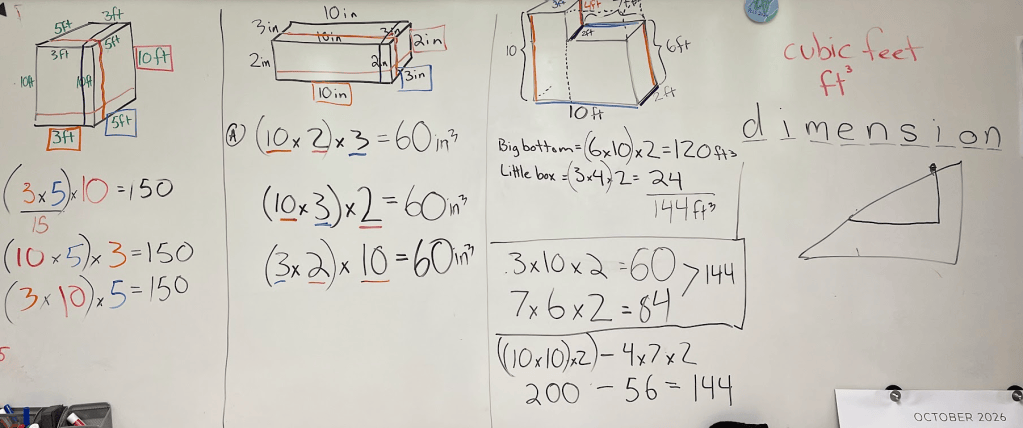
Each lesson began where the last one left off. Each lesson had a series of carefully planned tasks and conversations that would lead us all to a deep, “in the bones” understanding of volume.
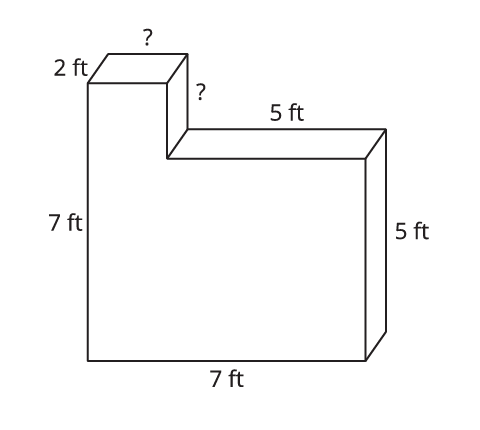
Things seemed to be going well and then…we tried to combine everything. We had been working on individual ideas: you need 3 dimensions to find volume. Sometimes all of the dimensions aren’t provided so you have to puzzle it out by using part-part-whole. Some figures are two prisms put together and you can cut them apart in different ways to find the volume of each and then recombine. When we went to a problem where they had to cut apart a figure, find the missing dimensions and then find the volume, many students…stopped.
I often explain algebra as math where you “use what you know to figure out what you don’t know.” Of course, that’s true of many areas of math (and, really, learning in general). But how do you teach that puzzling? How do you help students take a deep breath and start to identify what they know?
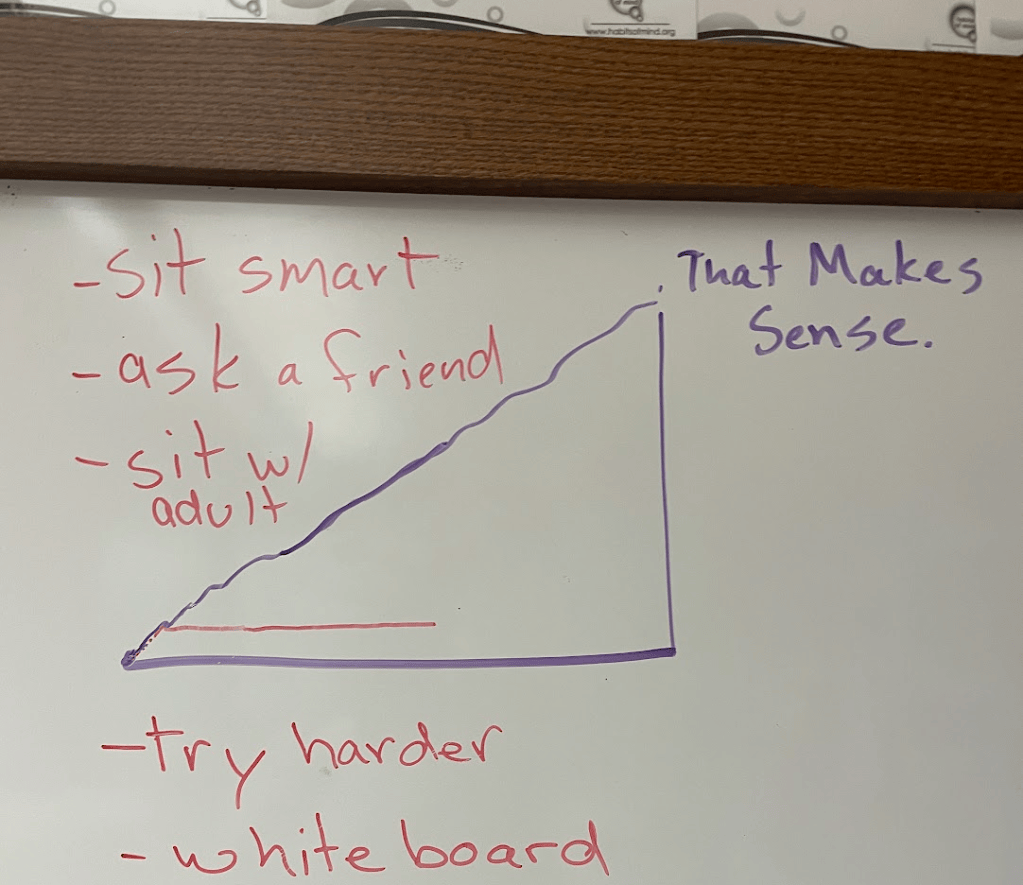
In fourth and fifth grade we’re just at the beginning of that journey as mathematicians. It starts with attending. To figure out what you know, you have to pay attention and resist the urge to let your mind escape when things get hard and confusing. We’ve (Megan and I) have been using the analogy of an inclined plane. Every lesson (and every part of a lesson) is a series of baby steps that we do together through experiences and conversations. When things get confusing, you have several options — give up, zone out, go to the bathroom, doodle, poke your friend or ask a question. We show how when you stop struggling, the class keeps baby stepping up the inclined plane and things for you get harder and harder and harder. It is, sadly, cumulative.
The lesson that got hard combined three different skills we had been developing. It was do-able but it required taking baby steps independently. What do I know? What can I figure out? How can I use what I can figure out? What is still missing? Real world problems don’t present themselves neatly and sequentially.
When we hit the wall, I circled back and did a “think aloud” explaining what I was seeing as I looked at the problem. Together, we baby stepped it and then we celebrated. Together, we can do it! The next steps will be to increase their confidence individually.
The Illustrative Math curriculum is designed to support this kind of deeper math thinking and confidence. We never memorize something without understanding how it works. One lesson builds upon the last one and elements (like using expressions to show one’s thinking) become tools that we use in a variety of settings.
It’s a long process but every kid can be successful if they continue to believe that math can make sense, it’s not arbitrary. When they believe they can make sense of things, they are more willing to struggle and to stay with us on that incline plane so they don’t hit the wall that we’ve been carefully, sequentially, climbing to the top of.
A final thought: when kids are absent, they can feel like they are at the base of the understanding wall through no fault of their own. We will often send home the math work we did on a day that they missed to help them rejoin the learning. Doing that work at home can help them keep their confidence and continue the learning process. Thank you for your help with this.




Leave a comment